How to Choose Between Different Types of Houses

Buying a Home How to Choose Between Different Types of Houses Detached homes, townhouses, condos and more can all make sense. The right choice depends on how you want to live, what you want to maintain, and what fits your budget.
BeyondVisit Property Guide For home buyers Practical home-buying advice

Choosing a home is about more than finding a property with enough bedrooms and a kitchen you like. The type of home you choose affects privacy, outdoor space, maintenance, shared costs, and how you use the property every day. Understanding those differences before you start viewing homes can make your search much more focused.

At a glance

  • Detached houses usually provide more privacy and control over the property.
  • Townhouses can offer a middle ground between a standalone house and a condo.
  • Condos can reduce some of the day-to-day exterior maintenance you handle yourself.
  • Semi-detached homes can provide more space than many apartments while sharing a wall with another property.
  • Multifamily properties can be useful when you want separate living areas or rental potential.
  • Ownership structure and shared fees matter just as much as the appearance of the home.
  • The best choice is the one that fits your daily life, finances, and plans rather than simply looking the most impressive.

Start With How You Actually Want to Live

It is easy to begin a house search by looking at photos and deciding which properties look nicest. But appearance can hide important differences between home types. A modest townhouse may suit your routine better than a large detached house, while a condo may be more practical if you would rather spend less time dealing with exterior maintenance.

Before comparing properties, think about your normal week. Do you want a yard? Do you enjoy gardening and outdoor projects? Do you want fewer maintenance responsibilities? Is having your own entrance important? Would shared walls bother you? Do you need parking, storage, or room for a growing household?

These questions help you narrow the search based on how a property functions, not just how it looks in a listing.

Modest detached family home on a quiet residential street

Understand the Main Types of Houses

Home types vary by country, city, and local housing market, but several categories appear frequently. The important distinction is that a home’s physical structure and its ownership arrangement are not always the same thing. For example, a townhouse can have different ownership arrangements, and a condo can look like an apartment, a townhouse, or another type of building.

Detached single-family home

A detached house generally stands separately from neighboring homes and is designed for one household. You normally have your own entrance and more direct control over the building and surrounding outdoor space.

The trade-off is responsibility. Depending on local arrangements, the owner may be responsible for much more of the property’s upkeep, from the interior to the exterior and yard.

Townhouse

Townhouses are usually attached to neighboring homes and often have multiple floors. They can provide a private entrance and some outdoor space while using less land than a detached house.

Some townhouse communities have shared areas and association fees, so it is important to understand exactly what you own and what is maintained collectively.

Condo

A condo is a privately owned unit within a larger development or building. Shared areas are typically managed collectively, with owners contributing toward their upkeep through association or service fees where applicable.

Condos can suit buyers who value convenience, location, or less direct responsibility for common exterior areas.

Semi-detached home

A semi-detached home shares a wall with one neighboring property while remaining a separate residence. It can provide more of the feeling of a traditional house without requiring a fully detached building.

Before buying, check how responsibilities for the shared wall, roof, boundaries, and other elements are handled.

Multifamily property

A multifamily property contains more than one separate living unit. Duplexes and other small multifamily buildings are examples.

These properties can work differently from a standard family home, particularly if you plan to live in one unit and rent another. Local rules, financing, insurance, and maintenance responsibilities should be reviewed carefully.

Apartment-style ownership

Some homes have the appearance and layout of an apartment but are individually owned rather than rented. In these situations, the ownership structure and building management arrangements are especially important to understand.

Look beyond the interior of the unit and find out how shared spaces, building repairs, fees, and decision-making are handled.

Compare Privacy and Shared Space

One of the clearest differences between home types is how much of your surroundings you share with other residents.

A detached house generally gives you more separation from neighbors. A townhouse or semi-detached home usually means sharing at least one wall. A condo can involve shared walls, entrances, hallways, elevators, parking areas, gardens, or other common spaces.

That does not automatically make one type better than another. It simply changes the experience of living there. If you enjoy having neighbors nearby, shared spaces may be perfectly comfortable. If you value quiet outdoor space and separation, a detached property may be more suitable.

Watch out: Do not assume that two properties with the same number of bedrooms offer the same level of privacy. Check where bedrooms are positioned, whether walls are shared, how entrances work, and how close neighboring homes are.

Think About Maintenance Before You Buy

Maintenance is one of the easiest things to underestimate when comparing houses. A larger property can mean more rooms, more exterior surfaces, more outdoor space, and more systems to look after.

Detached homeowners typically have more direct responsibility for their property. With condos and some planned communities, certain exterior or shared maintenance may be handled collectively in exchange for regular fees. Townhouses can fall somewhere between those arrangements.

The details vary, so never rely only on the label of the property. Find out what you are personally responsible for and what is covered through shared management or association arrangements.

Simple lived-in home with a small front yard and driveway

Look at the Total Cost, Not Just the Asking Price

Two properties at similar prices can have very different ongoing costs. The purchase price is only one part of the picture.

Consider Why it matters Questions to ask
Association or service fees Some homes have recurring charges for shared maintenance or building services. What is included? Can fees change?
Exterior maintenance Roofs, walls, gardens, driveways, and other exterior areas may be your responsibility. Who maintains each part of the property?
Utilities Heating, cooling, water, and other services can vary by property and location. What are typical running costs?
Parking Parking may be private, shared, assigned, or limited. Is parking included with the property?
Repairs Older or larger homes may require more attention over time. What major repairs have recently been completed?

The goal is not to predict every future expense. It is to understand the responsibilities attached to each property so you can compare homes on a more realistic basis.

Consider Your Outdoor Space

Outdoor space can be one of the biggest differences between home types. A detached property may have a private yard, while a townhouse might have a smaller garden, patio, or shared outdoor area. A condo may have a balcony, shared courtyard, or no private outdoor space at all.

Think about what you would actually use. A large garden sounds appealing, but it also creates more work. If you rarely spend time outdoors, paying more for a large yard may not make sense for your priorities.

On the other hand, outdoor space can be important if you have children, pets, enjoy gardening, or simply want somewhere to sit outside. Give it a practical value rather than treating it as a feature that automatically adds value to your decision.

Think About the Layout, Not Just the Number of Rooms

A three-bedroom house can feel very different from another three-bedroom house. The size and position of rooms, stairs, hallways, storage areas, and windows all affect how usable the home feels.

This is especially important when comparing different types of properties. Townhouses often use multiple floors to create living space, while condos may make more efficient use of a smaller footprint. Detached houses may offer more flexibility but can also have larger areas that you do not use often.

When viewing a property, imagine your normal routine rather than simply counting rooms. Where would you leave shoes? Where would groceries go? Where would you work? Where would guests sit? Would carrying laundry between floors become annoying? Small practical details can make a bigger difference than an impressive room.

Think About Your Future, Too

The right home type today may not be the right home type several years from now. Your household could change, your work situation could change, or your priorities could shift.

You do not need to predict the future perfectly. Instead, consider whether the property gives you enough flexibility for the changes you can reasonably anticipate.

Questions to ask yourself

  • Will the number of people living here likely change?
  • Do I need a home office or flexible room?
  • Will stairs become inconvenient if my needs change?
  • Do I want to spend time maintaining a yard?
  • Could I be comfortable with shared walls?
  • Would shared building or community rules affect how I use the property?
  • Do I need extra storage now or in the future?
  • How important is private parking?

Check the Rules and Ownership Details

A property can look perfect during a viewing and still have arrangements that do not suit you. This is particularly important with condos, townhouses, co-ops, and properties in managed communities.

Depending on where you live, there may be rules covering exterior changes, parking, pets, rentals, renovations, shared areas, or other aspects of property use. Fees and maintenance responsibilities can also vary considerably.

Ask for the relevant documents and review them before committing. If something is unclear, ask your real estate professional, lawyer, or another appropriate local professional to explain the arrangement.

Use a Simple Comparison When Viewing Homes

Once you start viewing properties, it can be difficult to remember why one home felt more suitable than another. A simple comparison sheet can help.

Factor Home A Home B Home C
Home type Detached Townhouse Condo
Privacy Your notes Your notes Your notes
Outdoor space Your notes Your notes Your notes
Maintenance Your notes Your notes Your notes
Recurring fees Your notes Your notes Your notes
Parking and storage Your notes Your notes Your notes
Overall fit Your notes Your notes Your notes

There is no need to give every category the same importance. If privacy matters enormously to you, it should carry more weight than a feature you barely care about.

Do Not Choose a House Type Based on Appearance Alone

Online listings naturally emphasize attractive photography. That is useful for discovering properties, but photos rarely tell you how a home will fit into your daily routine.

A small, ordinary-looking house in the right location can work better for you than a much larger property with a layout you dislike. A townhouse with a manageable yard may be easier to maintain than a detached home with extensive outdoor space. A condo may make sense if convenience matters more to you than having private land.

The important thing is to understand what you are gaining and what you are giving up with each type.

Frequently Asked Questions

Is a detached house always better than a townhouse?

No. A detached house generally offers more separation and private space, while a townhouse can provide a useful balance of space, location, and maintenance. The better fit depends on your priorities.

What is the main difference between a condo and a house?

The ownership and maintenance arrangements are major differences. Condo owners generally own their individual unit while sharing responsibility for common areas, whereas owners of detached houses typically have more direct responsibility for the property.

Are townhouses cheaper than detached houses?

They can be less expensive in some markets, but prices vary significantly by location, size, condition, and development. Compare the full cost of each property rather than assuming one type will always cost less.

Do all condos have monthly fees?

Many condo developments have recurring fees for shared maintenance and services, but arrangements differ by location and development. Always check the specific property’s fees and what they cover.

Should I choose a house with more space than I need?

Not necessarily. Extra space can be useful, but it can also mean higher purchase costs and more maintenance. Focus on the space you are realistically likely to use.

What should I check before buying a townhouse or condo?

Look at ownership boundaries, recurring fees, maintenance responsibilities, shared areas, parking, storage, community rules, and any documents governing the development. The exact requirements depend on where the property is located.

Choose the Home That Fits Your Life

Choosing between different types of houses becomes much easier when you stop looking for a universally perfect property and start looking for the right combination of space, privacy, maintenance, cost, location, and flexibility for your situation.

Take the time to understand what you are buying, what you will be responsible for, and how the home will work on an ordinary Tuesday—not just how it looks during a viewing. That approach can help you narrow your search and make your eventual decision with much more confidence.

How to Choose Between Different Types of Houses

House hunting becomes much easier when you know what each type of home offers. Compare houses, apartments, townhouses, semi-detached and detached homes based on space, privacy, maintenance, lifestyle and budget.

How to Choose Between Different Types of Houses
Buying Guide

How to Choose Between Different Types of Houses

Practical property guide · BeyondVisit

The right home is not always the biggest one or the most impressive one. It is the type of property that fits the way you actually want to live.

You start looking for a house and suddenly discover there are far more choices than you expected.

Detached house. Semi-detached. Townhouse. Terrace. Apartment. Duplex. Maybe even a smaller house with a large garden, or a larger apartment with less maintenance.

And then comes the difficult question: Which one actually makes sense for me?

This is where house hunting can get confusing. You may begin with one idea of your dream home and discover that another type of property fits your lifestyle, budget or future plans much better.

The goal is not to decide which type of house is universally better. There isn’t one. The goal is to understand the trade-offs so you can decide what matters most to you.

A quick way to compare your options

  • Detached homes: usually offer more privacy and separation, but may involve more maintenance and a higher purchase price.
  • Semi-detached homes: can balance private outdoor space, indoor space and cost.
  • Townhouses or terraced homes: can make efficient use of space and location, but may have less separation from neighbouring properties.
  • Apartments: can offer convenience and lower exterior maintenance, but usually provide less private outdoor space.
  • Duplex or multi-level homes: can create useful separation between living areas, but stairs may become a consideration.
  • Smaller homes: may simplify maintenance and costs, while requiring more careful thinking about storage and space.

First, Stop Thinking About the House You “Should” Buy

Let’s start with something simple.

You do not have to buy the type of property everyone around you considers ideal.

Maybe your friend wants a huge detached house. Your parents think a garden is essential. Someone else tells you that apartments are easier. Another person says you should always buy the biggest property you can afford.

Those opinions may make sense for them.

But you are the one who will wake up there every morning.

Your decision should start with your actual routine, priorities and plans rather than somebody else’s definition of a perfect home.

Think lifestyle first, property type second. The best starting point is not “Which house should I buy?” It is “What do I need my home to make easier?”

Understand What Each Property Type Actually Gives You

Before comparing individual listings, understand the basic differences between the main types of homes.

01

Detached

A standalone home can provide more separation from neighbours, greater privacy and often more freedom around outdoor space.

02

Semi-detached

These homes share a wall with one neighbouring property and can offer a useful middle ground between separation and affordability.

03

Townhouse / Terrace

Connected homes can provide efficient layouts and convenient locations, often with less exterior space than detached properties.

04

Apartment

Apartments can offer convenient locations and less responsibility for maintaining private exterior areas, depending on the ownership structure.

05

Duplex

A multi-level home can create separation between sleeping, working and living areas while keeping the overall footprint compact.

06

Compact Home

Smaller homes can be easier to maintain and organise, but require careful planning around furniture, storage and future needs.

Detached Houses: More Privacy, More Responsibility

Picture arriving home and having space around your property on every side.

That is one of the biggest attractions of a detached house.

You may have more privacy, fewer shared walls and greater flexibility with outdoor areas. For families, people who entertain often or anyone who simply values personal space, these advantages can be significant.

But there is another side to the equation.

More property can mean more responsibility. The roof, exterior walls, garden, driveway, fences and other elements may all require maintenance.

A detached house can also mean a longer commute if you need to move farther from central areas to get the space you want.

Detached house with private outdoor space and landscaped garden
More outdoor space can be a major benefit, but remember that private space also comes with maintenance responsibilities.

Semi-Detached Houses: The Middle Ground

If a detached house feels like more space and responsibility than you need, a semi-detached home may be worth exploring.

You typically share one wall with a neighbouring property while retaining your own entrance and outdoor area.

For many buyers, this creates an interesting balance: you can have a house rather than an apartment, while potentially paying less than you would for a comparable detached property.

The important thing is to consider what sharing a wall means for you.

Noise, privacy and the layout of the adjoining properties can all matter. During a viewing, pay attention to where bedrooms and living spaces are positioned and think about how much separation you want from your neighbours.

Do not judge a shared wall from the listing description alone. If noise or privacy matters to you, visit the property and pay attention to what you can hear. Ask questions and investigate further where necessary.

Townhouses and Terraced Houses: Space Used Efficiently

Townhouses and terraced homes can be particularly interesting if location is high on your list.

Because several homes are arranged together, land is used more efficiently. That can sometimes mean you get access to established neighbourhoods or convenient areas without needing to purchase a large detached property.

The trade-off is usually less separation.

You may have neighbours on one or both sides, a smaller garden or less outdoor privacy. Some homes may also have multiple floors, which can be fantastic for separating living and sleeping areas but less convenient for someone who wants everything on one level.

Think about your daily rhythm.

Would you enjoy having bedrooms upstairs and living areas downstairs? Would stairs bother you? Is a smaller garden enough? How important is having private outdoor space?

Apartments: Convenience Can Be the Main Feature

An apartment can completely change the way you think about homeownership.

Instead of spending your energy thinking about a garden, driveway, roof or exterior maintenance, you may have a more compact home in a convenient location.

For someone who works long hours, travels frequently or prefers spending weekends outside rather than maintaining a property, that can be a major advantage.

But apartments come with their own questions.

You may have building management arrangements, shared areas, service charges or rules affecting how the property is used. Depending on the building and ownership structure, there may also be less control over exterior changes.

So when comparing an apartment with a house, do not simply compare the floor area.

Compare the entire lifestyle.

Modern apartment living room with large windows and open layout
For some buyers, a well-located apartment can offer the convenience they value more than having a larger private property.

Compare Houses by the Life They Create

Here is where the comparison becomes more useful.

Instead of asking which type has the most space, ask what each type makes easier or harder.

Priority Property types to explore What to think about
Maximum privacy Detached, some semi-detached homes Separation from neighbours, outdoor space and surrounding properties.
Lower exterior maintenance Apartment, townhouse Understand exactly what maintenance is included and what remains your responsibility.
Large garden Detached, semi-detached Garden size, upkeep, privacy and usable outdoor areas.
Central location Apartment, townhouse, terrace Balance location against space, parking and privacy.
Family space Detached, semi-detached, townhouse Bedrooms, storage, bathrooms, garden and flexible living areas.
Lock-and-leave lifestyle Apartment, low-maintenance home Security, maintenance arrangements and ongoing building responsibilities.
Future flexibility Depends on layout more than type Think about rooms that could become an office, bedroom, nursery or hobby space.

Think About Noise Before You Choose

Your tolerance for noise can completely change which property type suits you.

If you love the energy of a busy neighbourhood, an apartment near shops and restaurants might feel perfect.

If you work from home and need quiet, a property with fewer shared walls might be more appealing.

But do not assume.

A detached house can still be next to a busy road. An apartment can be surprisingly quiet. A townhouse can have excellent sound separation. A beautiful rural-looking property can still have noise from nearby roads or businesses.

Visit, listen and ask questions.

Think About Maintenance Honestly

This is one of the biggest differences between property types, and one buyers sometimes underestimate.

Ask yourself: How much time do I actually want to spend maintaining my home?

Some people love gardening. They enjoy fixing things, improving rooms and spending weekends working around the property.

Others would rather close the door on Friday evening and forget about home maintenance until Monday.

Neither approach is wrong.

The important thing is choosing a property that matches your personality and available time.

01

Love DIY?

A house with outdoor space and areas to improve may give you the flexibility you enjoy.

02

Always busy?

A lower-maintenance property may free up more of your time for work, travel, family or hobbies.

03

Not sure?

Think about how you spend your weekends now. That can tell you more than an idealised picture of your future lifestyle.

Do Not Forget Outdoor Space

“Has a garden” is not enough information.

What kind of garden?

Is it large enough for what you want to do? Is it private? Is it easy to maintain? Does it get useful sunlight? Is there space for outdoor furniture? Can children play there? Could you create the garden you imagine?

A small, well-designed outdoor area can be more useful than a huge garden that requires hours of maintenance.

Think about how you will actually use the space rather than simply measuring it in square metres.

Look at the Layout, Not Just the Number of Rooms

Two houses can both have three bedrooms and feel completely different.

One might have large, connected living spaces and tiny bedrooms. Another might have generous bedrooms but a cramped kitchen. A third might have a flexible room that works perfectly as an office.

This is why counting bedrooms is not enough.

Think about how the rooms connect.

Can you move naturally through the house? Is there enough storage? Are bedrooms private? Is the kitchen close to the dining area? Can someone work from home without sitting in the middle of the living room?

Your daily routine happens through the layout, not through the property listing’s room count.

Consider Your Future Without Trying to Predict Everything

You do not need to know exactly where your life will be five or ten years from now.

But it is worth asking whether the property gives you some flexibility.

Could a spare bedroom become an office? Could an office become a nursery? Could a dining area serve another purpose? Is there enough storage if your household grows?

You do not want to buy a huge house purely because of a hypothetical future. At the same time, you do not want to choose a property that only works for your life today if you already know your needs are likely to change.

Look for flexibility, not perfection. A home that can adapt with you may be more useful than one that is perfect for one very specific stage of life.

Think About Stairs and Accessibility

Multi-level homes can be wonderful.

They can give you a clear separation between living areas and bedrooms, create more privacy and make a home feel larger.

But stairs also become part of everyday life.

Think about carrying groceries, laundry, children, luggage or anything else you regularly move around the house.

Also consider whether your mobility needs could change over time. A property that works beautifully today may be less convenient later if everything important is spread across multiple floors.

This does not mean you should avoid stairs. It simply means you should consider them as part of the lifestyle equation.

Location Can Change the Entire Calculation

Imagine two properties.

House A is larger, has a bigger garden and an extra bedroom, but your daily commute takes an hour each way.

House B is smaller, but you are ten minutes from work, close to shops and able to walk to places you visit regularly.

Which one gives you more usable life?

There is no universal answer. But this example shows why property type cannot be separated from location.

A smaller home in the right location can sometimes support your lifestyle better than a much larger home farther away.

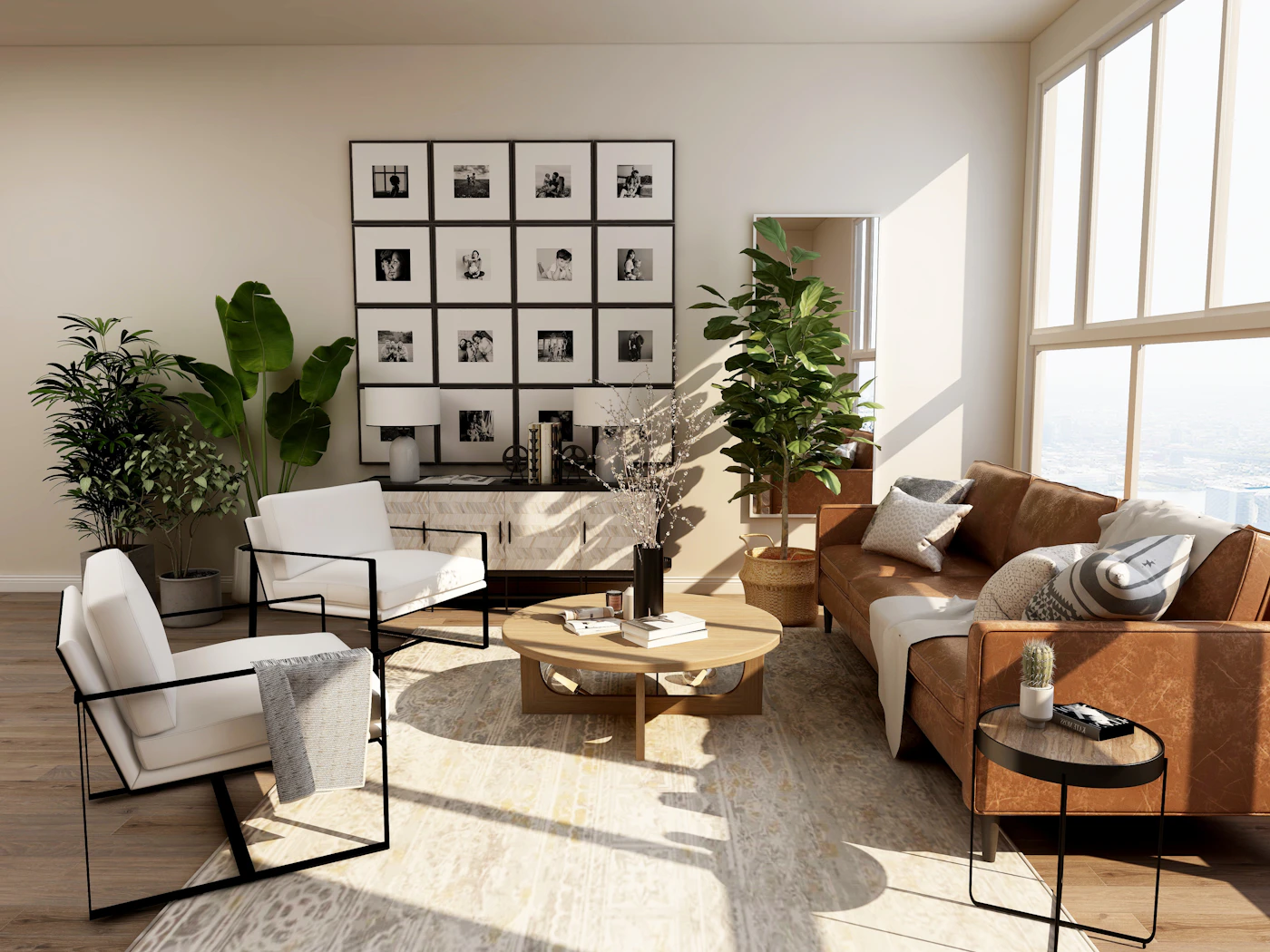
Bright contemporary house interior with comfortable open living space
When comparing properties, consider the time and convenience the location gives back to you—not just the space inside the front door.

Compare the Total Cost, Not Just the Asking Price

A cheaper property is not automatically cheaper to own.

When comparing different types of homes, consider the broader financial picture.

Depending on where you live and the property structure, you may need to account for maintenance, insurance, service or management charges, utilities, taxes, parking, repairs and future improvements.

An apartment might have building-related charges that a detached house does not. A large house might have higher maintenance and utility costs. A townhouse might have a smaller outdoor area but require less work.

Get the full picture before deciding what is actually affordable for you.

A Simple Property-Type Comparison

Property type Potential advantages Potential trade-offs Think carefully about
Detached Privacy, outdoor space, separation Maintenance, price, location How much space and upkeep you genuinely need
Semi-detached House feel, outdoor space, possible value balance Shared wall, neighbour proximity Noise, privacy and layout
Terraced / townhouse Efficient space, established locations Less separation, potentially smaller outdoor areas Stairs, neighbours and outdoor space
Apartment Convenience, compact living, potentially less exterior upkeep Shared building, charges, less private outdoor space Building rules, fees, management and noise
Duplex / multi-level Good separation between areas, flexible layouts Stairs, potentially more complex movement Accessibility and long-term practicality

Ask Yourself These 10 Questions

Your property-type checklist

  • How much privacy do I actually want?
  • How important is having a private garden?
  • How much maintenance am I willing to handle?
  • Do I care more about space or location?
  • How important is parking?
  • Would shared walls bother me?
  • How much noise can I comfortably tolerate?
  • Do I need all important living areas on one level?
  • What might my household need to change in the next few years?
  • What total monthly and annual costs can I comfortably manage?

Try This: Build Your “Must Have / Nice to Have” List

If you are still stuck between property types, divide your preferences into two columns.

Your must-haves are the things that genuinely affect whether a home works.

Your nice-to-haves are features you would love but could live without.

For example, your must-haves might include two bedrooms, parking, a reasonable commute and outdoor space. Your nice-to-haves might include a detached garage, a huge garden and a separate dining room.

Once you make that distinction, the right property types often become much easier to identify.

Common Mistakes When Choosing a House Type

Choosing by status

Buying a larger or more expensive property simply because it feels more impressive can leave you paying for space and responsibilities you do not actually need.

Focusing only on size

Floor area matters, but layout, location, storage, light and usability can make a smaller property feel much more functional.

Ignoring maintenance

More space can mean more things to clean, repair, heat and maintain. Think about the lifestyle that comes with the property, not just the property itself.

Forgetting neighbours

Shared walls and close neighbouring properties can influence privacy and noise. Visit carefully and pay attention to how the home feels.

Buying for a hypothetical future

It is sensible to consider future needs, but do not spend heavily today on a lifestyle you may never have.

Ignoring total costs

Purchase price is only one part of homeownership. Consider the ongoing expenses associated with each property type and ownership structure.

Visit Different Types of Houses Before Deciding

Here is one of the easiest ways to make this decision less theoretical: view different property types.

If you think you want a detached house, view one. But also look at a semi-detached home. Walk through a townhouse. Visit an apartment.

You may discover something unexpected.

Perhaps you thought you needed a garden but realise you would rather have a central location. Perhaps you assumed an apartment would feel too small and discover that the layout works perfectly. Perhaps you always wanted a detached house but realise you do not want to spend your weekends maintaining it.

Real properties teach you things that property descriptions cannot.

Also read: How to Find a House That Fits Your Lifestyle

Once you understand the differences between property types, the next step is matching those choices with the way you actually live, work, relax and use your space.

Explore available properties on BeyondVisit

What If Two Property Types Both Make Sense?

That is completely fine.

You do not have to force yourself into one category immediately.

Keep both options open and compare actual properties rather than abstract ideas.

A semi-detached home with an excellent layout may work better for you than a detached home with an awkward floor plan. An apartment with great storage and a fantastic location may work better than a townhouse that requires a longer commute.

Compare the homes in front of you.

The label tells you the basic structure. The individual property tells you whether it works.

Frequently Asked Questions

Which type of house is best for a family?

It depends on the family’s needs. Consider bedrooms, storage, outdoor space, bathrooms, location, parking, layout and how much maintenance the household wants to manage. A detached, semi-detached or townhouse may each work well in different circumstances.

Is a detached house always better than a semi-detached house?

No. A detached house can offer more separation and privacy, while a semi-detached property may offer a different balance of space, location and cost. The individual property and your priorities matter more than the label alone.

Are apartments easier to maintain than houses?

Apartments can involve less responsibility for some exterior areas, but maintenance responsibilities and charges depend on the building and ownership structure. Always understand what you are responsible for and what is covered by shared arrangements.

Should I choose a house with a garden?

If outdoor space is important to your lifestyle, a garden can be a major benefit. But consider its size, privacy, maintenance requirements and how you will actually use it rather than simply looking for the word “garden” in a listing.

What should I consider when choosing between a house and an apartment?

Compare space, privacy, outdoor areas, maintenance, parking, location, building arrangements, ongoing costs and your preferred lifestyle. Think about what you gain and give up with each option.

Is a townhouse good for first-time buyers?

A townhouse can suit buyers who want a house-style layout without necessarily choosing a large detached property. Whether it fits depends on its price, location, maintenance needs, layout and the buyer’s circumstances.

Should I choose more space or a better location?

Start by considering how the choice affects your everyday life. A larger property may provide more room, while a better location may reduce commuting and make regular activities easier. Compare the actual lifestyle each property would create.

How can I know which type of house suits me?

Write down your must-haves, identify your preferred lifestyle, consider your budget and maintenance preferences, then visit different property types. Seeing them in person can reveal which trade-offs feel acceptable to you.

Ready to compare real homes?

Now that you know what separates detached houses, semi-detached homes, townhouses, terraces and apartments, it is time to see how those differences look in the real market. Compare properties by space, location, layout and lifestyle—not just by the type written in the listing.

Browse available listings

Choosing between different types of houses does not have to mean finding the one with the most space, the biggest garden or the most impressive exterior.

It comes down to trade-offs.

Maybe you value privacy. Maybe you value convenience. Maybe you want outdoor space. Maybe you would happily give up a garden if it means being closer to work and spending less time commuting.

Start there.

Think about how you live now, how you want to live next and what you are realistically willing to maintain. Then let those answers guide the type of property you explore.

Because the right house is not simply the one that looks impressive in a listing. It is the one that makes your everyday life feel right.