What Is a Good Cap Rate for a Rental Property?
Cap rate is one of the most quoted numbers in real estate investing, and one of the most misunderstood. This guide explains the formula, shows how price changes the result, and explains how overstated income can make a property look better than it is.
The short answer
- Cap rate = net operating income ÷ purchase price. It shows the yearly income a property produces relative to its price, before any mortgage.
- There is no universal “good” cap rate. What is reasonable depends on the location, the property type, its condition and how risky its income is.
- A higher cap rate is not automatically better. It often reflects more risk, a weaker location or income that is harder to collect.
- The number is only as good as the NOI behind it. Always rebuild a seller’s NOI from leases, bills and tax records.
What is a cap rate?
Capitalization rate, usually shortened to cap rate, measures the income a property generates compared with its price. You calculate it by dividing the property’s annual net operating income (NOI) by its purchase price. A property that produces $18,000 of NOI and costs $250,000 has a cap rate of 7.2%.
The calculation deliberately leaves out your mortgage. That is what makes cap rate useful: it lets you compare a $250,000 house bought with cash against a $250,000 house bought with a loan, because it describes the property and not the financing.
Cap rate = annual NOI ÷ purchase price
How to calculate NOI correctly
NOI is the rent you actually collect, minus the costs of operating the property. It does not include your mortgage payment, depreciation or income taxes. If you are new to the pieces, our guide on how to calculate cash flow on a rental property builds NOI line by line.
- Start with gross rent and subtract a realistic vacancy allowance.
- Subtract property taxes, insurance, repairs, capital reserves and management.
- Add other income only if it is documented, such as parking or laundry.
- Exclude your mortgage payments and any one-time renovation costs.
A worked example: the same NOI at different prices
Using a house that rents for $2,400 a month, with the expense assumptions from our cash flow guide, NOI comes to about $18,371. The cap rate then depends entirely on what you pay for the property.
| Purchase price | Annual NOI | Cap rate |
|---|---|---|
| $200,000 | $18,371 | 9.19% |
| $250,000 | $18,371 | 7.35% |
| $300,000 | $18,371 | 6.12% |
| $350,000 | $18,371 | 5.25% |
The same income stream is a 9.2% cap rate at $200,000 and a 5.2% cap rate at $350,000. Price is half of the equation, and a falling cap rate simply means you are paying more for each dollar of income.
What is a good cap rate for a rental property?
No single figure applies everywhere, and anyone who quotes one without context is guessing. Cap rates are shaped by several things:
- Location: Properties in high-demand, high-priced areas tend to trade at lower cap rates, because buyers accept less current income in exchange for stability or expected appreciation.
- Risk: Properties with less reliable tenants, an older building or uncertain rent tend to need a higher cap rate to compensate.
- Property type: Single-family rentals, small multi-family buildings and commercial properties are priced against different benchmarks.
- Interest rates: When borrowing is expensive, buyers generally require higher yields, which pushes cap rates up.
A more practical approach is to ask whether the cap rate compensates you for the risk you are taking. Compare it with similar properties that recently sold in the same area, with the return you could earn on safer alternatives, and with what your financing will cost. If a property’s cap rate is lower than your loan’s interest rate, then leverage is working against you on a cash basis, and the investment relies on appreciation or rent growth to make sense.
Cap rate versus the numbers that include your loan
Cap rate describes the property. Cash-on-cash return describes your actual investment, because it includes your down payment, closing costs and mortgage. Two investors can buy the same property with the same cap rate and earn very different cash-on-cash returns if one borrows at a higher rate or puts less money down.
| Measure | What it tells you | Includes your mortgage? |
|---|---|---|
| Cap rate | Income relative to the property’s price | No |
| Cash flow | Cash left after all costs and loan payments | Yes |
| Cash-on-cash return | Annual cash flow relative to the cash you invested | Yes |
| DSCR | How many times NOI covers the loan payments | Yes |
Use cap rate to compare properties. Use cash flow, cash-on-cash and DSCR to decide whether a particular purchase works for you.
How sellers inflate cap rates
The easiest way to make a cap rate look attractive is to overstate NOI. Listings and brochures often show a version of the numbers built to impress. Here is an illustration of how the same property can show two very different cap rates, using a $250,000 price.
| Item | Seller’s pro forma | Rebuilt from records |
|---|---|---|
| Gross rent | $28,800 | $28,800 |
| Vacancy | $0 | -$1,440 |
| Property tax | -$1,400 (old assessment) | -$2,500 (after sale) |
| Insurance | -$1,100 | -$1,300 |
| Repairs and reserves | -$900 | -$3,000 |
| Management | $0 | -$2,189 |
| NOI | $25,400 | $18,371 |
| Cap rate | 10.2% | 7.3% |
Same house, same rent, and a cap rate gap of nearly three points, which is the difference between an apparent bargain and an ordinary deal. The lesson is to never accept a stated cap rate. Rebuild it yourself.
How to verify a stated cap rate
- Ask for the current leases and a record of rent actually received.
- Request utility bills, repair invoices and the last two years of tax returns for the property.
- Look up the property tax and estimate what it will be after the sale.
- Add vacancy, management and a capital reserve if the seller left them out.
- Recalculate NOI and divide by the price you would actually pay.
Common cap rate mistakes
Errors that lead to bad decisions
- Treating cap rate as a return on your cash: It ignores financing and the cash you actually put in.
- Comparing unlike properties: A cap rate for a single-family rental and for a commercial building are not directly comparable.
- Chasing the highest number: High yield often comes with higher risk.
- Using projected rents: Base the calculation on rent being collected today.
- Forgetting capital costs: Big replacements belong in a reserve, even though they do not occur every year.
Frequently Asked Questions
What is a good cap rate for a single-family rental?
There is no standard answer. It varies by city, neighborhood and property condition. A useful method is to compare cap rates on similar rentals that sold nearby recently, and to judge whether the yield is enough to compensate for your risks.
Is a higher cap rate always better?
No. A higher cap rate means more income relative to price, but it is frequently associated with higher risk, such as weaker locations, older buildings or less reliable tenants.
Does cap rate include the mortgage?
No. Cap rate uses NOI, which excludes debt service. This is what allows you to compare properties regardless of how each is financed.
Should I include a capital reserve in NOI?
Many investors do, because large replacements are a real cost of owning the property even if they do not recur annually. Some sources omit them, so always check how a quoted cap rate was calculated.
How is cap rate different from cash-on-cash return?
Cap rate compares NOI with the property’s price. Cash-on-cash return compares your annual cash flow, after the mortgage, with the cash you actually invested.
Where can I run these numbers quickly?
Use the Property Decision Dashboard and the Short vs Long-Term Rental Analyzer on our tools page. Both let you edit the rent and expense assumptions.
Use cap rate to compare, not to decide
Cap rate is a quick, useful way to compare income properties on a level playing field. It is a screening tool and not a verdict. The same house can show very different cap rates depending on who built the NOI and how carefully.
Rebuild the income and expenses yourself, compare the result with similar sales nearby, and then check the cash flow and DSCR with your actual financing before you make an offer.
Your next step: Take a property you are considering, rebuild its NOI from your own assumptions, and compare the cap rate with the interest rate you would pay.
Sources and further reading
These resources provide additional information on the topics covered in this guide.
Read more posts
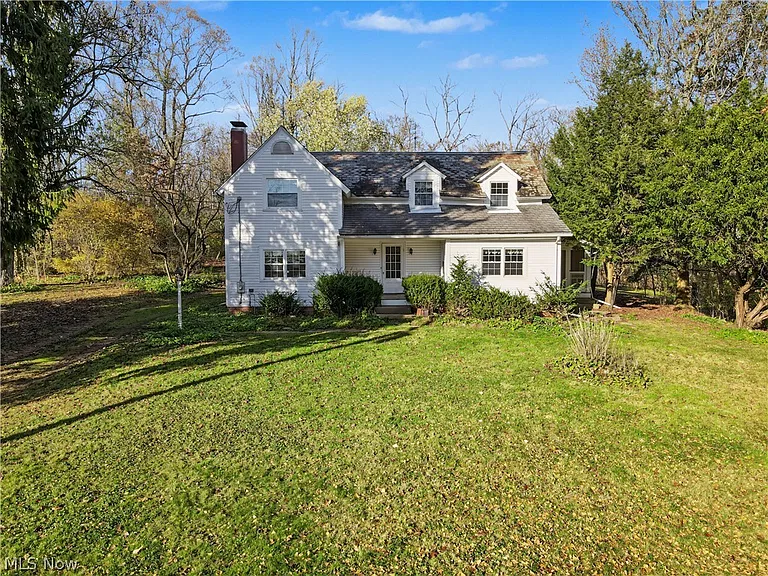
Wooded Colonial Home on 17 Acres with Protected Land in Akron, Ohio — $425,000
Akron, Summit County, Ohio A 1910 Colonial with 17.9 Wooded Acres and Protected Land Set on 17.9 wooded acres in…
Mountain-View Home on 11.23 Private Acres Bordering Cherokee National Forest in Unicoi, Tennessee — $479,900
Mountain-View Home on 11.23 Private Acres Bordering Cherokee National Forest in Unicoi, Tennessee Set high in the mountains of Unicoi,…
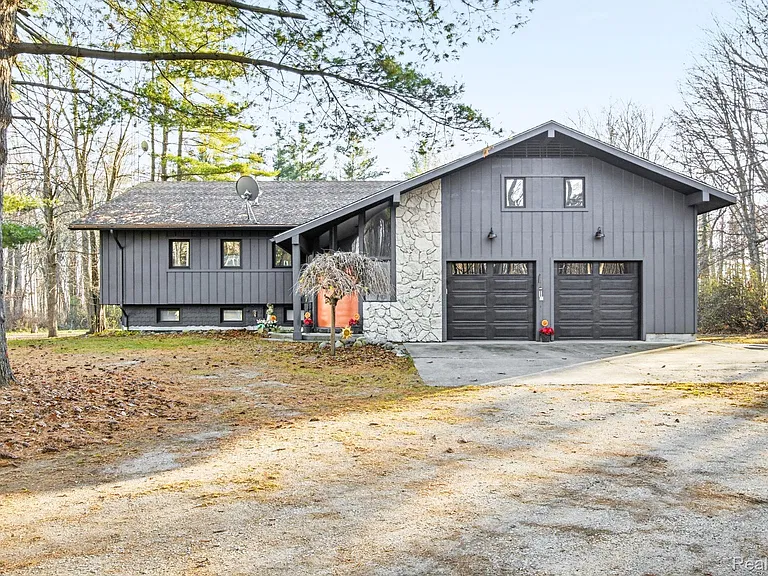
Remodeled Wooded Retreat with Pond, Pole Barn and 10.97 Acres in Columbus, Michigan — $469,900
Columbus Township · St. Clair County · Michigan A remodeled home with a pond, wooded acreage and room for projects…
Join the conversation
Seen this place, or thinking about it? Share what you know, ask a question, or tell us what you would check first.