How to Calculate Cash Flow on a Rental Property
A rental can look profitable when you compare the rent to the mortgage payment, and still lose money once taxes, insurance, repairs, vacancy and reserves are counted. This guide walks through the full calculation step by step, with a worked example at two different rents.
The short answer
- Cash flow = rent you actually collect, minus every operating cost, minus your loan payment. Anything less is a guess about the number that decides whether a rental pays you or costs you.
- Work in two steps. First find net operating income (NOI), which ignores financing. Then subtract your mortgage payment to get cash flow.
- Budget for the costs people forget. Vacancy, repairs, capital reserves, management and property tax changes after a sale routinely turn a promising rental negative.
- Check the result three ways. Cash flow, cash-on-cash return and debt service coverage each answer a different question.
What does cash flow on a rental property actually mean?
Cash flow is the money left in your pocket after the property has paid for itself. Rent comes in. Taxes, insurance, repairs and other running costs go out. The mortgage payment goes out too. What remains, month after month, is your cash flow. If the number is positive, the property pays you to own it. If it is negative, you are subsidizing the property from your own income and betting that appreciation will make up the difference.
That bet is not necessarily wrong, but it should be a conscious one. Many first-time investors look at the rent and the mortgage payment, see that rent is higher, and assume they will profit. The gap between those two numbers is rarely the real answer, because it leaves out most of what it costs to run a rental.
Step 1: Start with the rent you can realistically collect
Use rent from comparable properties that are actually leased, not asking prices from listings that may sit unrented. Then apply a vacancy allowance. Even well-run rentals have gaps between tenants, and a reasonable planning assumption is to set aside some percentage of the year as empty. This guide uses 5% in its examples. Your own market may justify a lower or higher figure, and rural or seasonal markets can run higher.
If the listing gives a rent estimate, treat it as a starting point and not a fact. Automated estimates are built from nearby data and often miss the condition, layout or location details that decide what a particular property can charge. Our deal score methodology explains how we treat estimated rent, and the Property Decision Dashboard lets you overwrite it with your own number.
Step 2: List every operating expense
Operating expenses are the costs of running the property, excluding the mortgage. A complete list usually includes:
- Property taxes. Use the amount the property will be taxed at after you buy it. Some areas reassess at sale, so the seller’s current bill can understate yours.
- Insurance. Landlord policies generally cost more than owner-occupied policies. Get a quote before you rely on a number.
- Repairs and maintenance. The everyday costs: plumbing calls, appliance fixes, turnover cleaning and paint.
- Capital reserves. Money set aside for big, infrequent items such as a roof, HVAC system or water heater. They do not appear every year, which is exactly why they get ignored.
- Property management. Even if you plan to self-manage, include a management fee. Your time has a value, and a plan that only works with free labor is fragile.
- Utilities, HOA fees and other costs that the owner pays rather than the tenant.
The IRS lists the categories of rental expense that are generally deductible in Publication 527, which is a useful checklist when you are trying not to miss a cost. Deductibility is a tax question, though, and it is separate from whether you will actually spend the money.
Step 3: Calculate net operating income (NOI)
NOI is effective rent minus operating expenses. It deliberately ignores your mortgage, so it measures the property itself and not your financing. That makes it the right number for comparing one property against another.
NOI = (Annual rent − vacancy) − operating expenses
Step 4: Subtract your debt service to get cash flow
Debt service is your annual principal and interest payment. Cash flow is NOI minus debt service. If your loan also requires mortgage insurance, add that cost here as well.
Cash flow = NOI − annual mortgage payments
A worked example: the same house at two rents
Take a house priced at $250,000. You put 20% down ($50,000) and borrow $200,000 on a 30-year fixed mortgage at 7.0%, so principal and interest is about $1,331 a month. Closing costs are assumed at 3% of the price ($7,500). Property tax is assumed at 1% of the price, insurance at $1,300, repairs at $1,800, a capital reserve at $1,200 and management at 8% of collected rent.
| Line item (per year) | Rent $2,000 / month | Rent $2,400 / month |
|---|---|---|
| Gross rent | $24,000 | $28,800 |
| Vacancy (5%) | -$1,200 | -$1,440 |
| Property tax | -$2,500 | -$2,500 |
| Insurance | -$1,300 | -$1,300 |
| Repairs and maintenance | -$1,800 | -$1,800 |
| Capital reserve | -$1,200 | -$1,200 |
| Management (8%) | -$1,824 | -$2,189 |
| Net operating income | $14,176 | $18,371 |
| Mortgage payments (P&I) | -$15,967 | -$15,967 |
| Annual cash flow | -$1,791 | $2,404 |
| Monthly cash flow | -$149 | $200 |
At $2,000 a month the rent looks comfortable next to a $1,331 mortgage payment, yet the property loses about $1,791 a year. At $2,400 it earns about $2,404. The difference of $400 in monthly rent decides the whole outcome, which is why testing your rent assumption is the most valuable thing you can do before making an offer.
Step 5: Check the result with three ratios
Cash-on-cash return
Cash-on-cash return is annual cash flow divided by the cash you invested (down payment plus closing costs). In the $2,400 example that is $2,404 ÷ $57,500, or about 4.2%. It answers the question: what yearly return is my actual cash earning, before appreciation and loan paydown?
Cap rate
Cap rate is NOI divided by the purchase price. It ignores financing, so it lets you compare properties without the effect of a particular loan. The $2,400 example has a cap rate of about 7.3%. We cover how to interpret it in our guide to what is a good cap rate for a rental property.
Debt service coverage ratio (DSCR)
DSCR is NOI divided by annual debt service. A DSCR of 1.0 means the property exactly covers its loan payments and nothing else. The $2,000 example comes out near 0.89, which means it does not cover its own mortgage. The $2,400 example is near 1.15. Lenders that qualify loans based on property income often look for a ratio comfortably above 1.0, though the threshold varies by lender and loan type.
Quick screens: useful, but never the answer
Investors use shortcuts to sort through listings quickly. The 1% rule suggests that monthly rent should be at least 1% of the purchase price. The 50% rule suggests that operating expenses will consume roughly half of rent. Both can help you decide which listings deserve a closer look. Neither replaces the calculation above. In the example, a $250,000 house needs $2,500 a month to meet the 1% rule, and at today’s mortgage rates even $2,400 only produces a thin cash flow. High-priced areas rarely meet the rule at all, so a failed screen is a prompt to run the numbers, not necessarily a reason to walk away.
What about taxes?
Rental income is generally taxable, and many costs can be deducted. Residential rental property can also be depreciated over time, which can reduce taxable income even when your cash flow is modest. The details depend on your situation, so read the IRS guidance (linked below) and speak with a qualified tax professional. Depreciation is a tax concept. It does not add a dollar to your bank balance, so we leave it out of the cash flow calculation.
Cash flow checklist before you make an offer
- Confirm rent with two or three genuinely leased comparables.
- Use the property tax bill the property will carry after the sale.
- Get an actual insurance quote for a rental policy.
- Include vacancy, repairs, a capital reserve and a management fee.
- Calculate cash flow, cash-on-cash return and DSCR.
- Run the numbers again at a rent 10% lower and an interest rate 1 point higher.
- Make sure you can cover the payment from other income if the property sits empty.
Common cash flow mistakes
Mistakes that turn a good-looking deal negative
- Comparing rent to the mortgage only: This ignores taxes, insurance, repairs and vacancy.
- Skipping capital reserves: A roof or HVAC replacement can erase several years of profit.
- Trusting the seller’s numbers: Verify income and expenses against leases, bills and tax records.
- Assuming no vacancy: Tenants leave, and turnovers take time and money.
- Using today’s property tax after a reassessment: Your bill may be higher once the sale price is on record.
- Ignoring the stress test: A deal that only works at the best-case rent and rate has no margin for error.
Frequently Asked Questions
What is a good cash flow for a rental property?
There is no single figure that applies everywhere. Many investors look for a positive cash flow after setting aside realistic reserves, and some set a minimum monthly amount per property or a target cash-on-cash return. What counts as good depends on your goals, your risk tolerance and what else the property offers, such as appreciation or loan paydown.
Is cash flow the same as profit?
Not exactly. Cash flow is the cash left after expenses and loan payments. Profit can also include appreciation, the principal you pay down each month and tax effects. A property can have modest cash flow and still build wealth, or look profitable on paper while draining your savings.
Should I include the mortgage principal as an expense?
For cash flow, yes, because the principal portion of your payment leaves your bank account. For overall return, the principal you pay down also builds your equity, so many investors track both views.
How much should I budget for repairs and capital reserves?
Rules of thumb exist, but the right number depends on the age and condition of the property. Older homes with aging roofs, plumbing or HVAC systems need larger reserves. A thorough inspection is the best way to turn a guess into an estimate.
What if the cash flow is negative?
Negative cash flow means you fund the shortfall from other income. That can be a deliberate choice if you expect rents to rise or if you are buying for appreciation, but it increases risk. Test whether you could carry the property through a vacancy or a repair without financial strain.
Can I use a calculator instead of doing this by hand?
Yes. Our Short vs Long-Term Rental Analyzer and Property Decision Dashboard run these calculations with editable assumptions. It still helps to understand each step, so you can spot an unrealistic input.
A rental is a business, so run its numbers
The mortgage payment is only one line in the budget of a rental property. The properties that reward their owners tend to be the ones that were priced against realistic rent, realistic expenses and a financing plan that still works when something goes wrong.
Work through the five steps for every property you consider, compare the result with the cap rate and DSCR, and stress-test the answer. If a deal only works under perfect conditions, it is better to learn that on paper than after closing.
Your next step: Pick one listing you are considering, enter your own rent, tax and insurance numbers in the Property Decision Dashboard, and see whether the cash flow survives a 10% lower rent.
Sources and further reading
These resources provide additional information on the topics covered in this guide.
Read more posts
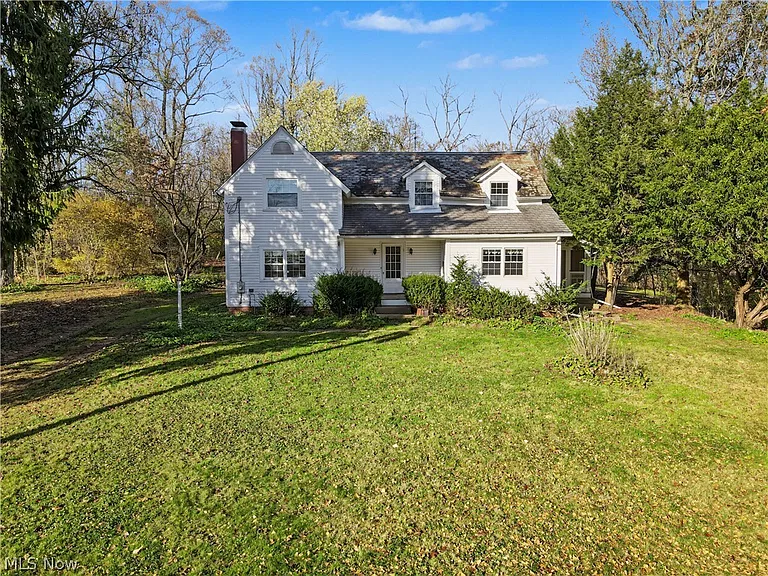
Wooded Colonial Home on 17 Acres with Protected Land in Akron, Ohio — $425,000
Akron, Summit County, Ohio A 1910 Colonial with 17.9 Wooded Acres and Protected Land Set on 17.9 wooded acres in…
Mountain-View Home on 11.23 Private Acres Bordering Cherokee National Forest in Unicoi, Tennessee — $479,900
Mountain-View Home on 11.23 Private Acres Bordering Cherokee National Forest in Unicoi, Tennessee Set high in the mountains of Unicoi,…
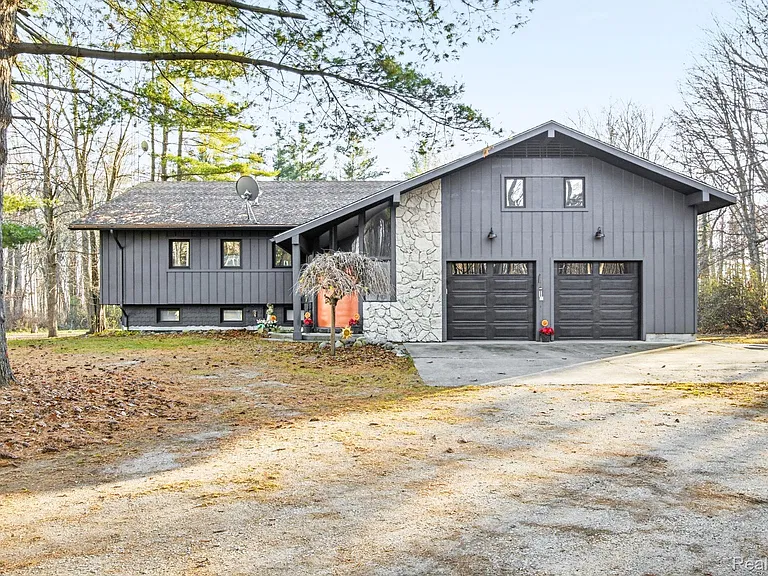
Remodeled Wooded Retreat with Pond, Pole Barn and 10.97 Acres in Columbus, Michigan — $469,900
Columbus Township · St. Clair County · Michigan A remodeled home with a pond, wooded acreage and room for projects…
Join the conversation
Seen this place, or thinking about it? Share what you know, ask a question, or tell us what you would check first.