Rain Collected for Years Inside the Abandoned House Near the Tracks
The house beside the railway crossing belonged to the Ilyin family for most of the 1970s and 80s. Viktor Ilyin worked as a signal operator for the freight rail line that ran behind the property, while his wife Alina managed ticket sales at the small station kiosk two blocks away. Their daughter Nadia grew up hearing freight trains pass through the neighborhood late into the night.
Most evenings followed the same routine.
Dinner around six.
Television after eight.
Then the windows shaking softly whenever the overnight cargo trains rolled through.
Nadia’s Desk by the Window
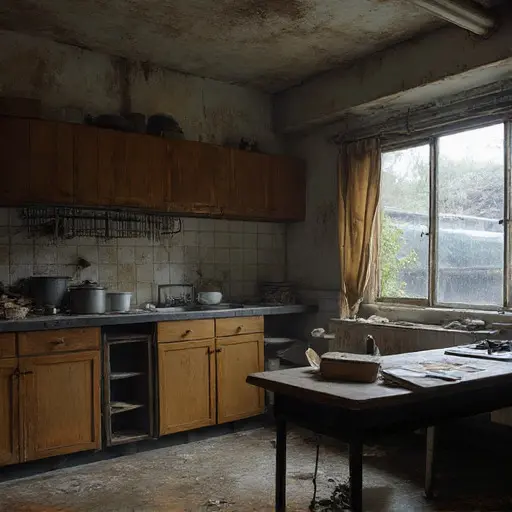
Seven things still remained inside the property years later: Viktor’s railway lantern stored beneath the hallway bench; Alina’s station receipts folded carefully inside kitchen drawers; Nadia’s sketchbooks stacked near the bedroom radiator; a cracked ceiling panel leaking rainwater into a metal bucket; unpaid property tax notices tied together with string; faded train schedules pinned beside the refrigerator; and cigarette smoke stains darkening the wallpaper near the back door.
The family’s problems began after major rail restructuring reduced freight operations through the district during the late 1990s. The station where Alina worked closed first. Several maintenance workers, including Viktor, were reassigned temporarily before layoffs followed less than a year later.
The neighborhood changed quickly after that.
Shops closed.
Families moved away.
Entire rows of railway housing slowly emptied one winter at a time.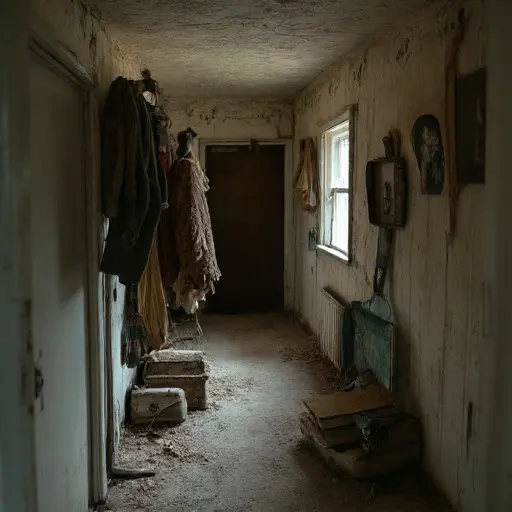
By 2003, water damage from neglected roofing had started spreading through several nearby houses. The Ilyins delayed repairs repeatedly because money had become tight after Viktor’s health worsened. He reportedly spent long afternoons sitting near the kitchen window watching trains that no longer stopped at the crossing station.
Nadia eventually left for university in another city.
Alina later moved in temporarily with relatives after Viktor suffered complications from a respiratory illness connected to years working outdoors in winter conditions.
The house remained empty after that.
Neighbors occasionally checked on it during storms, but nobody really expected the family to return permanently anymore.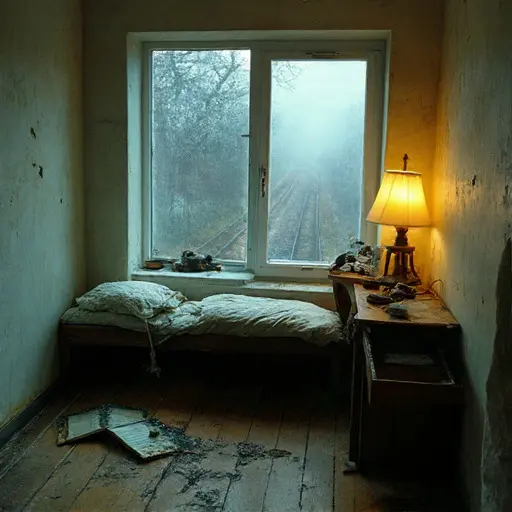
Years later, when workers finally entered the house to clear it, rainwater had collected inside several rooms from holes in the roof.
But much of the home still looked strangely familiar.
The kitchen calendar still hung beside the fridge.
Nadia’s sketches were still near the window.
And written in marker beside the back door were Viktor’s final maintenance reminders:
“Watch the crossing lights if the weather turns.”