Wycliffe Cliff Manor Left Vacant After Storm Debt Collapse
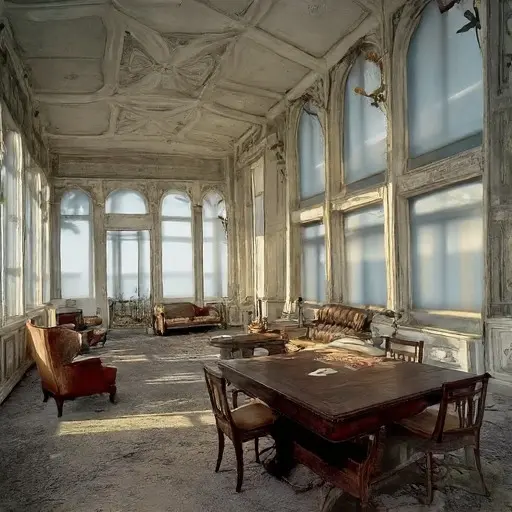
The Wycliffe Cliff Manor was commissioned in 1902 by the Harrowgate engineering family, who sought to adapt Victorian residential design to a hostile cliff-edge environment overlooking the northern sea The structure was built in phases, with its lower limestone foundation anchored directly into bedrock while upper volumes were cantilevered outward over open air using steel reinforcement systems. For its first decade, the manor functioned as a stable though unconventional residence, occupied year-round despite constant exposure to salt winds and heavy storms The Harrowgate household maintained strict engineering oversight of the structure, employing specialist builders to monitor corrosion, structural load distribution, and the gradual stress imposed by shifting cliff erosion beneath the foundation By 1915, however, maintenance costs began to rise significantly as salt corrosion spread across exposed metal joints and replacement materials became increasingly expensive to source in the remote coastal region
Early Coastal Strain and Maintenance Decline
<img src=”https://beyondvisit.com/wp-content/imagecontent/uploads/abandoned victorian house 96398075.
webp” alt=”” />
By the late 1920s, the Harrowgate family’s financial stability had weakened due to failed maritime investments and rising maintenance demands from the manor’s increasingly complex structural needs Storm activity along the coastline intensified during this period, accelerating erosion beneath the cliff face and increasing lateral stress on the cantilevered rooms Sections of the manor were temporarily sealed to reduce heating and repair costs, isolating entire wings from regular use The engineering system that once distributed load across multiple offset volumes began to show strain, particularly in areas where steel reinforcement intersected with salt-weakened limestone
During the early 1930s, repairs became sporadic as creditors pursued partial claims against the estate Ownership of different structural segments became legally fragmented, mirroring the physical segmentation of the building itself Family members gradually relocated inland, leaving only intermittent caretakers to manage critical stabilization work The manor remained inhabited in a reduced capacity, but its original coherence as a unified residence steadily eroded under financial and environmental pressure
Final Evacuation Above the Storm Sea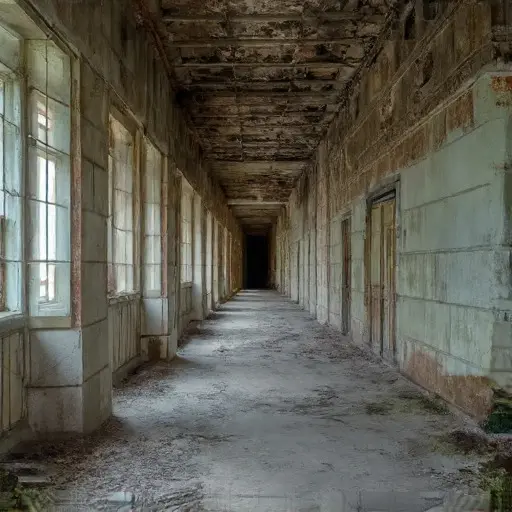
By 1940 the remaining Harrowgate heirs had permanently vacated the Wycliffe Cliff Manor, unable to sustain the escalating costs of coastal reinforcement and repair Wartime restrictions further limited access to construction materials, preventing any large-scale stabilization of the cantilevered wings The structure was deemed too integrated into the cliff to safely demolish, as its steel reinforcement system extended deep into bedrock anchors that also stabilized surrounding terrain
As years passed, the manor remained physically intact but functionally inert, with storm exposure continuing to degrade glass, steel, and limestone surfaces without intervention Occasional surveys noted that while no major collapse had occurred, internal sections were increasingly inaccessible due to sealed corridors and warped structural misalignment By the late 1940s, the building was classified as permanently unmaintained coastal architecture, too dangerous for occupation yet too complex for removal
The Wycliffe Cliff Manor remained standing into 1950, exposed to relentless wind and sea spray, its reinforced Victorian volumes still clinging to the cliff edge No restoration efforts were initiated, no heirs returned, and no authority assumed responsibility for its preservation or dismantling The manor persisted in silent abandonment, gradually weathering above the storm-gray ocean, unresolved and empty without any prospect of return