Wicked Quiet Gathered Around the House Where Matias Trained the Shadows of Glass
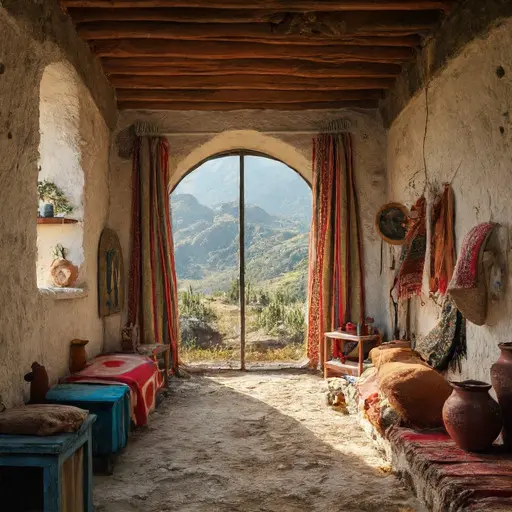
The walls shimmer at dusk.
Not brightly.
Just enough to make people wonder whether the room remembers fire.
Sunlight catches suspended fragments hanging from thin wire and scatters broken colors across the floor—blue, amber, smoke-grey—like pieces of evening caught halfway between falling and fading.
The mountain house belonged to Matias Roldán.
He lived there alone and practiced a profession that existed somewhere between optics and folklore.
Matias was a shadow glass trainer.
His work involved preparing stained and textured glass panels used in ceremonial spaces and seasonal architecture where projected shadow carried symbolic meaning. He shaped transparency, density, and fracture patterns so light created intentional silhouettes across walls and floors.
He worked with absence rather than image.
The glass room still preserves his obsession.
Suspended shards hang above worktables. Heat gloves remain folded beside polishing stones. Sketches of projected forms rest beneath brass clips along shelves lined with cooling racks.
Nothing inside seeks symmetry.
The shadows were always the true material.
Under the Fracture Lantern Span
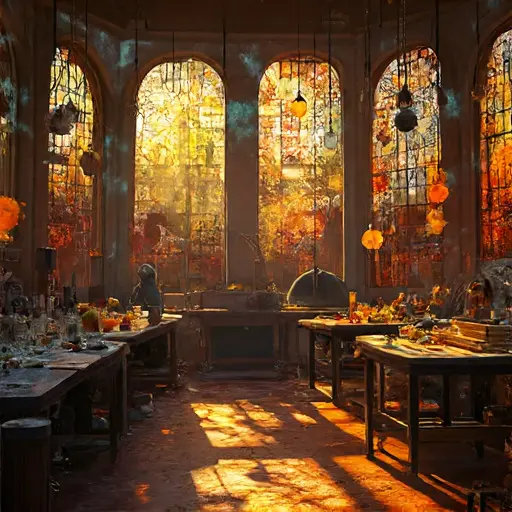
Matias preferred working beneath the Fracture Lantern Span.
The overhead beam held movable lantern mounts allowing him to test shadows under changing angles without waiting for weather or season.
One unfinished panel still hangs there.
The glass fused.
The projected figure incomplete.
Matias learned the profession from itinerant glassworkers and eventually settled inside the mountain house after years of traveling between sanctuaries and public courtyards.
People remembered his patience and his dislike of electric lighting.
For decades his work endured.
Ceremonial buildings and cultural spaces still commissioned crafted shadow glass for festivals, processions, and sacred interiors.
Then illumination flattened.
Cheap projection technology, programmable lighting systems, and digital visual design steadily replaced handmade light architecture. Institutions preferred spectacle over subtlety and shadow work lost its place.
Matias refused digital simulation.
He said machines cast light but never uncertainty.
Still, he continued fusing glass long after commissions faded.
Then the ash stopped.
Nearby volcanic monitoring and protective infrastructure redirected access and restricted movement around traditional mineral gathering zones. The unique ash and silica Matias relied upon became difficult to obtain and prohibitively expensive.
The shadows survived.
The material did not.
Already living with chronic lung scarring from furnace exposure and years of mineral dust, Matias spent longer days alone inside the glass room reworking scraps and salvaged fragments.
One autumn evening a furnace malfunction filled the workshop with smoke while he worked beneath the span.
He never reached the door.
The funeral gathered glass artisans, teachers, and former caretakers who still remembered walls filled with moving silhouettes he had shaped.
The house remained afterward.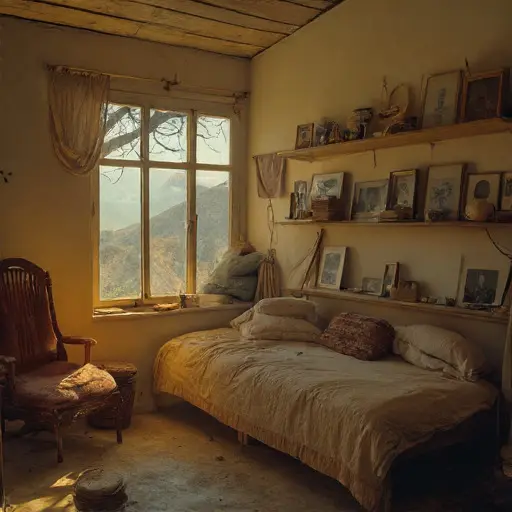
The polishing stones remain beside the gloves.
The projection sketches still cling beneath their clips.
And under the Fracture Lantern Span, Matias’s unfinished shadow glass continues holding a silhouette he never returned to teach the light how to complete.