When the Forest Began Learning Its Shape from the House
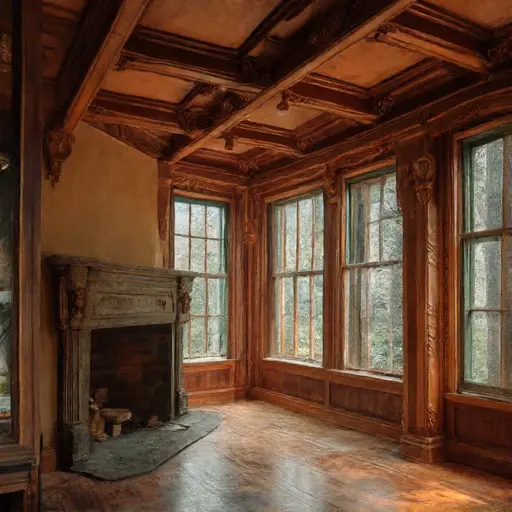
The Henslow Ridge House was built in the late nineteenth century during a period of expanding rural settlement along the forest edge, when timber availability and emerging rail connections allowed families to construct more elaborate homes even in remote clearings. Designed in the Stick-Eastlake tradition, the structure emphasized visible craftsmanship, where decorative stickwork was not merely ornamental but expressed the logic of the underlying frame. The house was placed deliberately at the transition between cultivated land and dense forest, with its asymmetrical massing and intersecting gables oriented toward both sunlight and woodland movement.
Burnt-orange clapboard on the lower level contrasted with cream infill panels and dark walnut structural detailing above, producing a layered visual rhythm that echoed the surrounding verticality of the pine and fir trees.
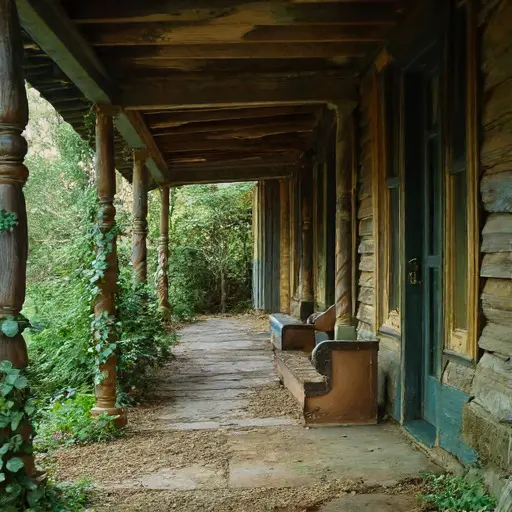
By the early 1920s, the Henslow Ridge House entered a gradual phase of abandonment following the relocation of its original occupants and the decline of nearby rural infrastructure that once supported seasonal and year-round habitation. As access routes deteriorated and maintenance became increasingly infrequent, structural upkeep shifted from regular care to occasional repair, and eventually ceased altogether. The steep gables continued to shed rain effectively, but small failures in roof joints allowed moisture intrusion into upper framing. Over time, interior rooms were progressively closed off, beginning with upper bedrooms and storage spaces that were most vulnerable to temperature fluctuations and forest humidity.
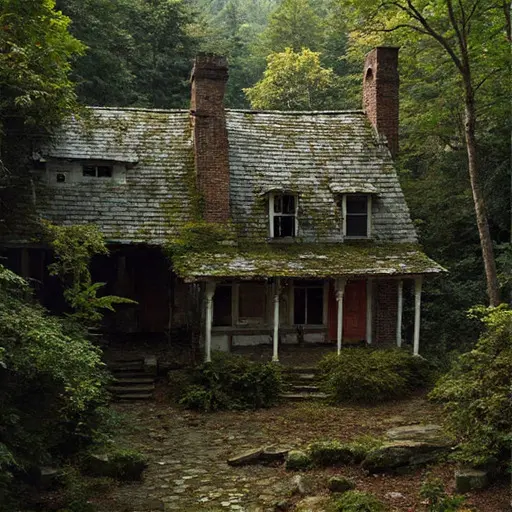
By the early 1930s, the Henslow Ridge House was fully abandoned and never reoccupied. No restoration efforts were undertaken, as its remote forest-edge location and steady environmental wear made continued preservation impractical. Official records eventually ceased referencing the property in active use, leaving it as an unmaintained architectural relic. The house remains intact in its Stick-Eastlake form, its layered craftsmanship still visible beneath weathering and vegetation, standing quietly at the edge of the forest as if the boundary between dwelling and woodland has finally dissolved.