Velum-Crucis: The Collector’s Vanishing Art
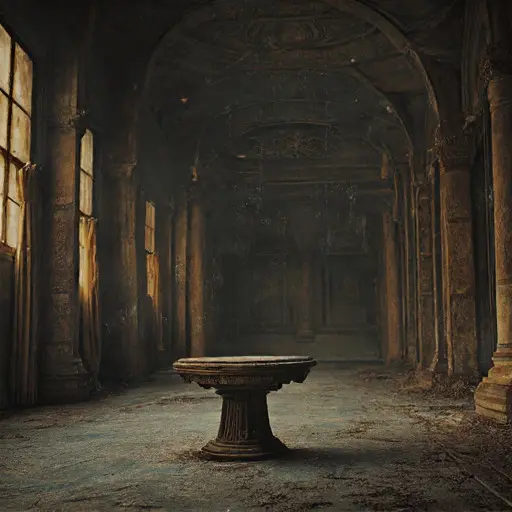
The wrought-iron gates of Velum-Crucis were silent, swinging inward on hinges that had surrendered to rust and time. The name, derived from a Latinate phrase meaning “Veil of the Cross,” hinted at both opulence and religious severity. This abandoned Victorian house was not just neglected; it felt stripped of its soul. The air inside was cold and clean, lacking the usual dense scent of decay, suggesting everything of value—physical and emotional—had been deliberately taken, leaving behind a beautiful, echoing shell.
The house was built and owned by Sir Caspian Finch-Hale, a fiercely possessive collector of antiquities during the height of the British Empire. Finch-Hale’s profession was largely defined by his wealth and his relentless, bordering on manic, acquisition of rare artifacts—particularly those with disturbing or occult histories. He viewed himself not merely as a buyer, but as a custodian of history, believing that by bringing these objects together under one roof, he was controlling their power. His personality was meticulous, secretive, and ultimately, profoundly lonely, his life spent in the company of inanimate, ancient things.
The Curator’s Empty Vault
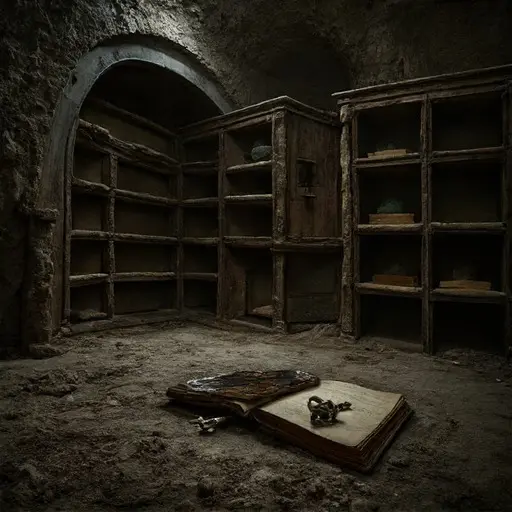
Sir Caspian’s obsession culminated in the construction of a subterranean, iron-doored vault beneath the main gallery. This was his inner sanctum. His journals, found locked within a discreet wall safe, revealed his growing anxiety. He didn’t fear thieves; he feared the objects themselves. He believed his collection was not inert, but actively communicating, demanding things of him. “The Sarcophagus calls for silence,” one entry scrawled wildly, “The clay tablet demands movement. I must placate them.”
The house preserves his terror in the architecture. In the library, several small niches built into the walls, clearly designed for specific, small objects, are now sealed over with fresh, unpainted plaster—evidence of a desperate, late attempt to contain something.
The Last Entry of the Abandoned Victorian House
The final fate of Sir Caspian Finch-Hale is as opaque as the history of his artifacts. Local reports claimed one night, a massive, unseen commotion emanated from the manor—a sound of shattering stone and grinding metal—followed by immediate, absolute silence. When authorities entered, the house was intact, but the entire collection, documented meticulously over decades, had vanished without a trace, and with it, Sir Caspian.
What remains in this abandoned Victorian house is the vault, now echoing, and the singular, chilling fact of the missing collection. It suggests that the collector’s mania became his undoing, and that the objects he sought to possess ultimately, and completely, claimed him. The house stands as a monument to what happens when history decides to pack up and leave its custodian behind.
