Veiled Ocampo and the Lantern Room Where Her Threads Lost Their Way
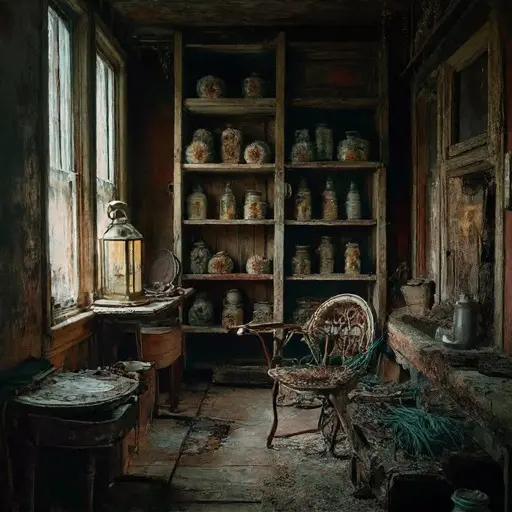
A dim quiet settles over Ocampo House, deepest in the abandoned lantern room, where María Celestina Ocampo, a Filipina pattern-cutter and textile repairer, once shaped domestic fabrics by lamplight. Now that lone blue trace drifting across her unfinished embroidery remains the sole whisper of a choice she left unresolved.
A Trace in the Pattern-Cutter’s Steady Rhythm
María, born 1878 in Iloilo, learned cloth-cutting from her aunt Rosa Ocampo, whose chipped mother-of-pearl scissors rest on the worktable corner.
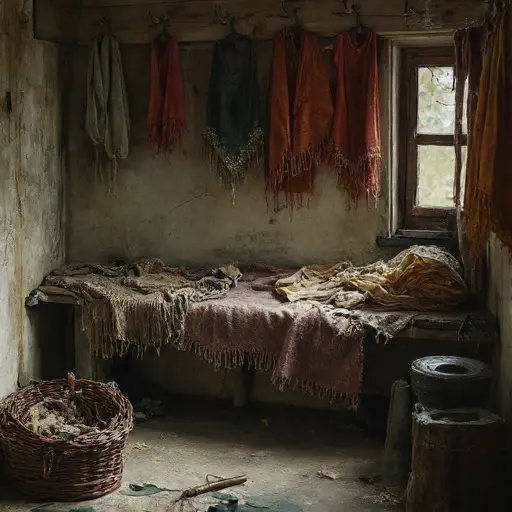
María’s evenings unfolded in gentle sequence: lanterns trimmed low for careful stitchwork, cotton measured against paper outlines, and thread dyed in small pots she kept tucked behind folded shawls. Order lingers in the quiet aftermath—patterns pinned to corkboard in orderly rows, thread spools grouped by shade, chalk markings softened into the wood grain. Even the wicker chair’s sag remembers her posture, leaning toward each detail with exacting calm.
Where Her Work Wavered Out of Sight
Rumor murmured that María mis-measured an expensive mantón for a wealthier neighbor—shortening it beyond repair, a mistake whispered about in tight circles. In the upper hallway, Rosa’s scissors case lies torn at the seam. A spool of indigo thread has rolled beneath a cabinet, unwinding in a wavering line. A folded instruction sheet sits open on the floor, margins smudged by hurried fingertips. A shawl draped over the rail sags unevenly, its tassels tangled as if handled in distress. These fragments suggest strain without naming its trespass.
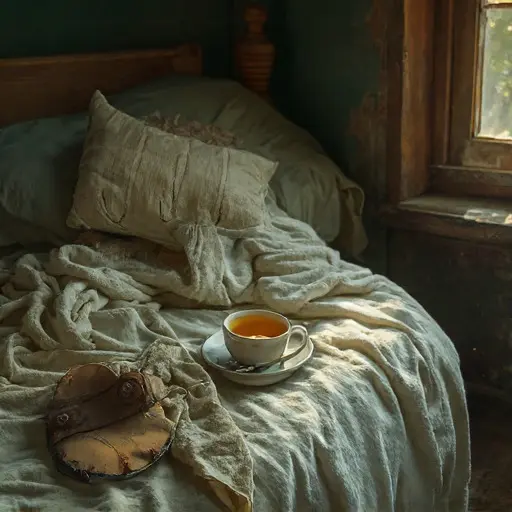
Only the drifting blue trace across the embroidery hoop remains—an interrupted gesture, no longer guiding the pattern. Whatever halted María’s final stitch lingers in these abandoned rooms.
Ocampo House remains abandoned still.
