Vanishing Records in the House of the Lantern Route Keeper
The lanterns are still hanging beside the door.
Most are covered in salt dust now, but a few still contain old fuel sealed inside cloudy glass chambers.
This house belonged to Mateo.
He worked as a lantern route keeper, maintaining manually lit harbor guidance systems used by small fishing boats navigating dangerous coastal inlets before modern navigation systems became standard.
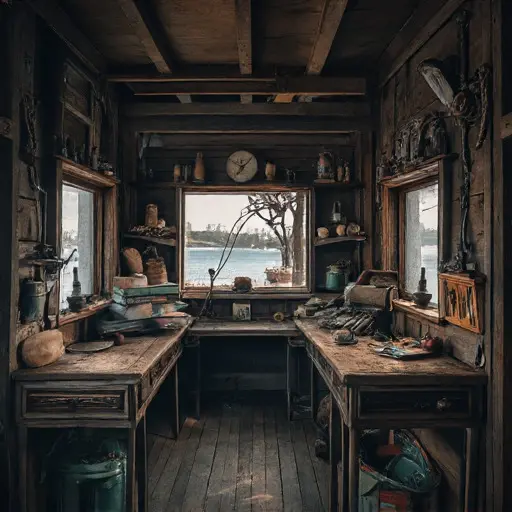
The lower room of the house functioned as both office and storage station.
Harbor maps covered the walls. Tide schedules were pinned beside maintenance logs. Lantern oil drums sat stacked near crates of replacement glass lenses and weatherproof wicks.
Everything inside the house revolved around timing and visibility.
At the Harbor Signal Counter
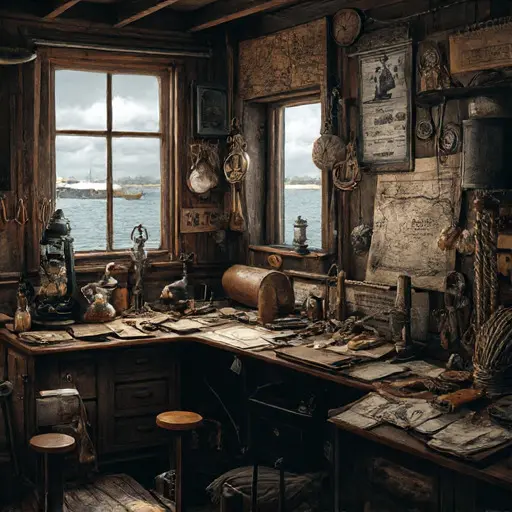
Mateo worked most often at the Harbor Signal Counter.
The heavy oak desk near the front window was where he tracked lantern maintenance schedules and coordinated nightly lighting patterns along the rocky harbor entrance.
His partner died during a winter storm season after a small supply vessel failed to return through the inlet.
After that, Mateo stopped traveling beyond the harbor district.
For decades, the profession remained essential.
Fishing communities depended on manually maintained lantern routes to guide boats safely through narrow coastal passages during fog, storms, and electrical outages.
Then satellite navigation replaced local systems.
Affordable GPS equipment and automated harbor beacons eliminated the need for manually operated coastal lantern networks.
Mateo continued maintaining the lights anyway.
Even after funding stopped.
Even after most lantern poles were scheduled for removal.
But the decline extended beyond technology.
The harbor itself changed.
Commercial fishing activity collapsed after long-term fish stock reductions and new industrial shipping routes bypassed the old coastal town entirely, leaving fewer vessels entering the inlet each season.
Mateo remained in the house through increasingly quiet winters, lighting fewer lanterns each year while documenting weather conditions and abandoned signal points in old harbor ledgers.
During a final storm season, repeated coastal flooding damaged the electrical systems that powered the remaining automated beacons.
He attempted to restore several manual lantern markers from the old network during days of severe wind and rain.
The final maintenance logs on the Harbor Signal Counter describe failing visibility conditions and rising water levels along the docks.
He died before emergency crews reopened access to the flooded harbor district.
The lantern network was never restored.
Most of the poles were later dismantled.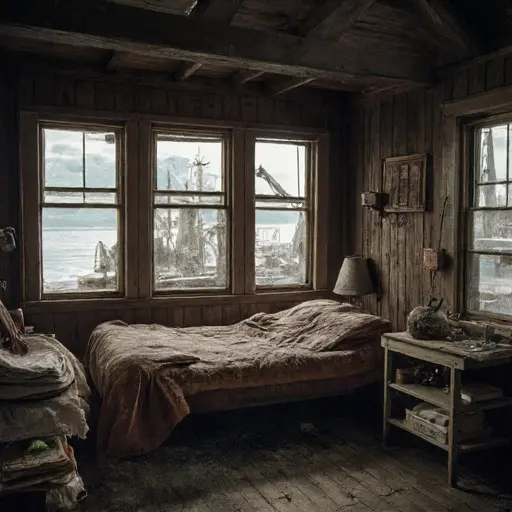
The lantern fuel remains stored in the corner.
The harbor ledgers are still stacked beneath the desk.
And at the Harbor Signal Counter, Mateo’s unfinished maintenance records continue waiting in silence beside a harbor route no one follows anymore.