The Wrenford Manor Left Vacant After Forest Trade Collapse
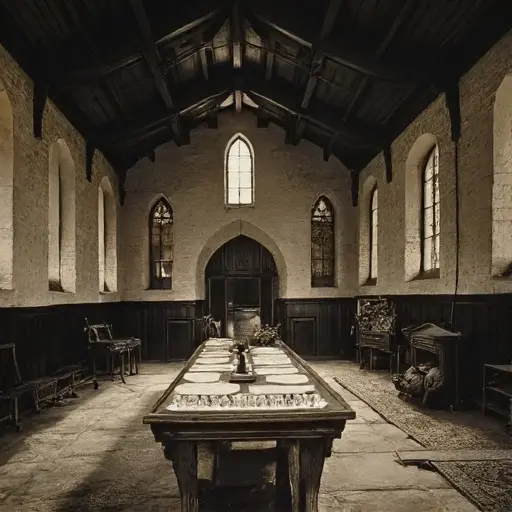
The Wrenford Manor was constructed in 1906 for the Halstead family, forestry commissioners responsible for managing timber yield and woodland boundaries across the surrounding basin. The manor was deliberately designed to follow the ridge of the land rather than impose upon it, resulting in a flowing architectural form where elongated wings extended from a central core at subtle angles. Built from pale sandstone blocks with visible stratification and reinforced with dark timber beams, the structure expressed a philosophy of material honesty and environmental integration.
Inside, life followed a structured but quiet administrative rhythm. Edward Halstead oversaw forestry records and timber distribution contracts, while his wife Eleanor maintained correspondence with regional land offices and managed household logistics. The manor functioned as both residence and operational center, with maps, yield reports, and seasonal forestry assessments circulating through its interconnected wings. For several decades, the household remained stable, supported by consistent demand for timber and regulated woodland management.
Early signs of decline
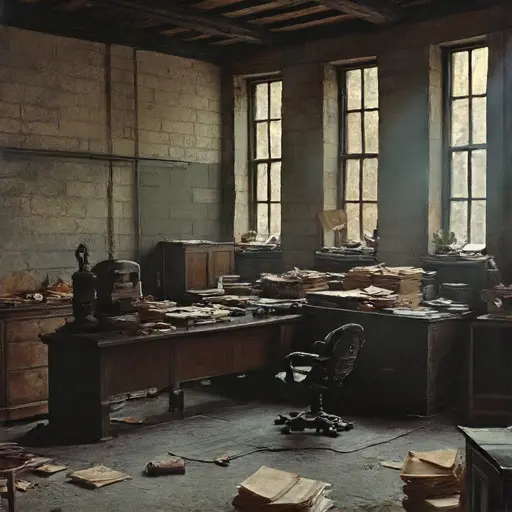
By the early 1930s, changes in regional forestry regulation and consolidation of timber rights under larger state agencies reduced the autonomy of private estates like Wrenford Manor. Contract volume declined, and administrative responsibilities were gradually absorbed by centralized offices. As a result, income diminished, and maintenance within the manor became increasingly deferred. Sections of the extended wings were closed off to conserve heat, and repair cycles for roofing and timber reinforcement were extended beyond practical limits.
As operations slowed, the interior rhythm of the manor shifted noticeably. Documents that once moved frequently between rooms began to accumulate in fixed locations, often left partially processed. The interconnected architectural layout, once efficient for distributed work, became underutilized as fewer rooms remained active. Outside, the forest continued its steady growth, pressing closer to the estate boundaries without urgency or resistance.
Final abandonment phase
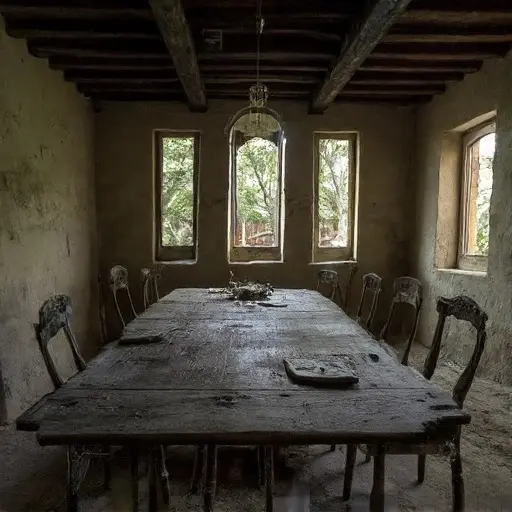
By the late 1940s, Wrenford Manor was no longer actively occupied. The Halstead descendants had relocated to administrative positions in distant urban centers, and no sustained return to the estate was recorded. Utility services were discontinued following prolonged arrears, and the structure was left without formal oversight. Moist forest air entered through aging seals, accelerating interior decay and weakening wooden structural elements across the extended wings.
No legal transfer of ownership was ever fully completed, and administrative records became fragmented over time. The manor remained physically intact within the sloping woodland basin, but no restoration or reoccupation occurred. It persists as an abandoned structure gradually absorbed by the surrounding forest, its architectural order softened by time, vegetation, and the slow convergence of nature and stone.