The Wrenford Canal-Lock House Left After Navigation Closure
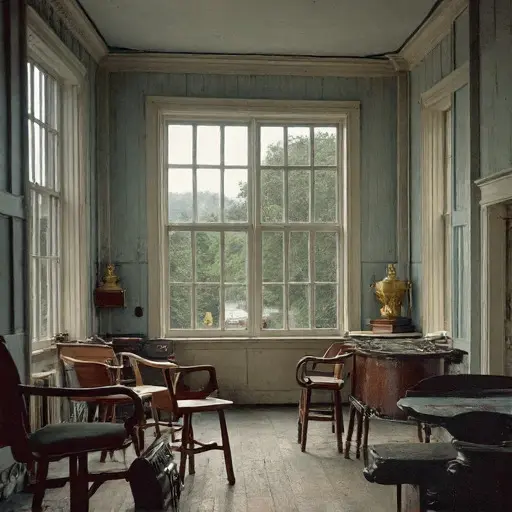
The Wrenford Lock House was constructed in 1883 as part of a rural canal maintenance expansion project designed to regulate water transport between agricultural towns and small industrial mills The structure combined a domestic residence with essential lock operation facilities, allowing a single lockkeeper and their family to live directly beside and partially within the canal infrastructure itself
The main house was built in a compact two-story form aligned parallel to the canal edge while the lockkeeper’s office was embedded directly into the stone lock walls This created a hybrid structure where domestic living space, administrative control, and hydraulic infrastructure were physically intertwined The bay window facing the canal served both as a monitoring point and a visual connection to passing boat traffic
The adjacent lock gates and stone channels were constructed from carved gray masonry reinforced with iron mechanisms that regulated water flow Wooden walkways ran along the canal edge, allowing access for maintenance and operation of the lock system These walkways also functioned as extensions of the domestic space, blurring the boundary between home and infrastructure
Gradual Decline of Canal Navigation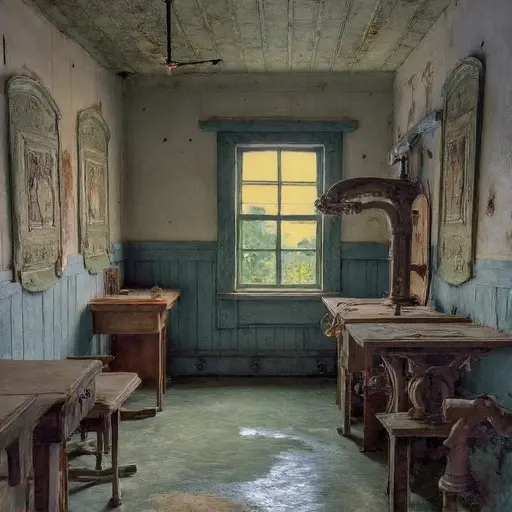
By the early 1930s, commercial canal navigation through Wrenford had significantly declined due to the expansion of rail and road transport systems Freight traffic became irregular, and maintenance schedules were reduced as regional authorities consolidated waterway operations into fewer active routes The lock system at Wrenford transitioned from active control point to intermittent-use infrastructure
As usage declined, the physical condition of the canal infrastructure began to change slowly Wooden walkways warped slightly under constant moisture exposure, and iron mechanisms developed surface rust while remaining mechanically intact The lockkeeper’s house remained occupied during this period, but daily operational duties became increasingly rare
The surrounding rural landscape remained unchanged in form but grew quieter as commercial movement along the canal diminished The stillness of the water became more constant, reflecting the reduced rhythm of human activity along the route
Final Abandonment of the Lock System
<img src=”https://beyondvisit.
com/wp-content/imagecontent/uploads/abandoned victorian house 13663838.webp” alt=”” />
By 1948 the Wrenford Lock House was fully vacated following the decommissioning of the canal navigation route The final lock operations were ceased as regional transport shifted entirely to rail and road infrastructure and no further maintenance was assigned to the site The last lockkeeper relocated inland, leaving the property unoccupied
In the years that followed, the canal remained physically present but inactive Water flow continued at a minimal level, maintaining the structural integrity of the lock system while allowing gradual ecological settling within the channel The house and lockkeeper’s office remained unchanged in form, slowly weathering under uniform overcast conditions
By 1950 the Wrenford Canal-Lock House remained standing beside the silent lock system fully abandoned and structurally intact No collapse occurred, no demolition was undertaken, and no return was recorded The structure persisted in quiet stillness, bound to the canal that once defined its purpose