The Wrenfield House and the Quiet Dissolution of a Botanical Survey Trust
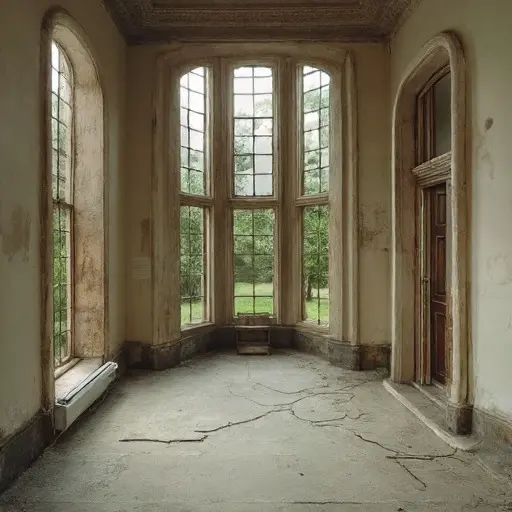
The Wrenfield House was completed in 1892 for Dr. Elias Rowan Wrenfield, born 1840 in Norfolk, a botanical surveyor and land classification consultant specializing in forest ecology mapping and agricultural suitability studies. His wealth came from advising agricultural trusts and timber estates on land productivity, soil cycles, and long-term cultivation planning during a period of expanding scientific land management.
The house was constructed at the forest edge to serve as both residence and field office, allowing direct observation of vegetation patterns and environmental change. He lived there with his wife Margaret Ellison Wrenfield and their daughter Clara, who later assisted in compiling botanical records and ecological assessment ledgers tied to regional land surveys.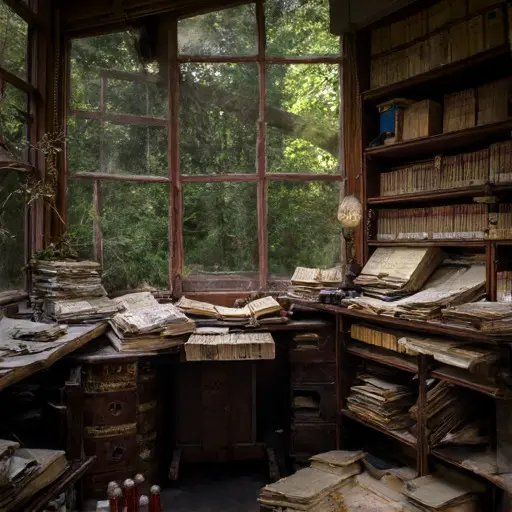
The decline began in 1907 after several contracted land-use reports were challenged due to inconsistent yield projections across surveyed forest plots. Agricultural trusts withdrew funding when soil regeneration rates failed to match long-term forecasts, and timber estates disputed classification methods that had been used to value mixed-use land parcels. Wrenfield had personally guaranteed portions of the consulting framework, assuming updated seasonal studies would stabilize confidence in the model, but revised field data undermined those assumptions. By 1912, institutional clients began dissolving agreements, and correspondence shifted from routine ecological reports to formal disputes over methodology and valuation accuracy. Clara’s participation in field documentation ended abruptly after an external review questioned the consistency of several bundled survey datasets across overlapping forest regions.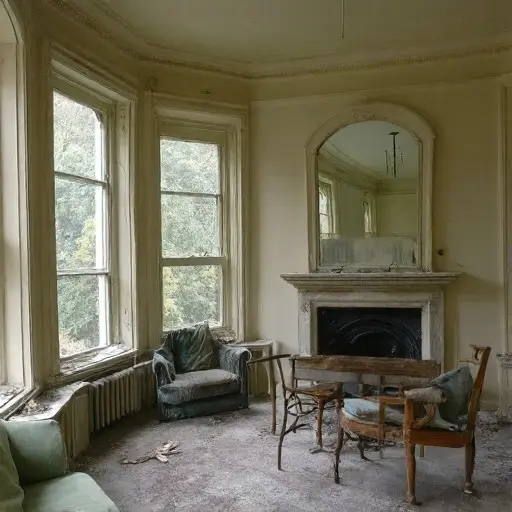
By 1913, Elias Wrenfield had relocated to a regional agricultural bureau to resolve disputed land classification reports, leaving the house under only intermittent caretaker oversight. Margaret’s correspondence ceased shortly afterward, and Clara’s name appears once more in a final institutional file concerning contested ecological survey methodologies. The Wrenfield House remained fully furnished but unmanaged, its botanical archives locked in the study and its greenhouse left to grow unchecked. No sale was completed, no family returned, and the property was recorded as vacant, standing intact at the forest edge while quietly slipping into its own soft, geometric inconsistencies without resolution.