The Wrenfield Edwardian Manor Left at the Forest Edge
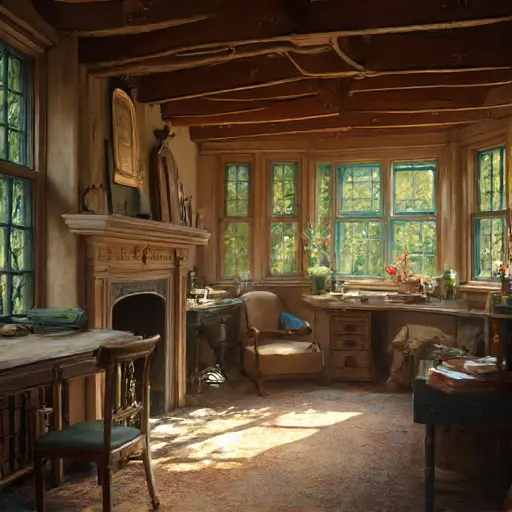
The Wrenfield Manor was built in the early twentieth century on the forest edge by a small landed family who had recently consolidated rural property through agricultural inheritance and modest industrial investments. Designed in the Arts and Crafts tradition, the house emphasized honest materials, human scale, and a rejection of grand formalism, resulting in a compact, asymmetrical structure anchored by a prominent stone chimney and grounded stone basework. The household consisted of a single extended family with minimal staff, primarily gardeners and a housekeeper, all contributing to the maintenance of both the residence and its small but carefully cultivated garden.
Daily life centered around the sitting room and kitchen, where correspondence, finances, and seasonal planning were handled with quiet regularity. For a time, the estate remained stable, sustained by consistent agricultural income and careful stewardship of its modest holdings.
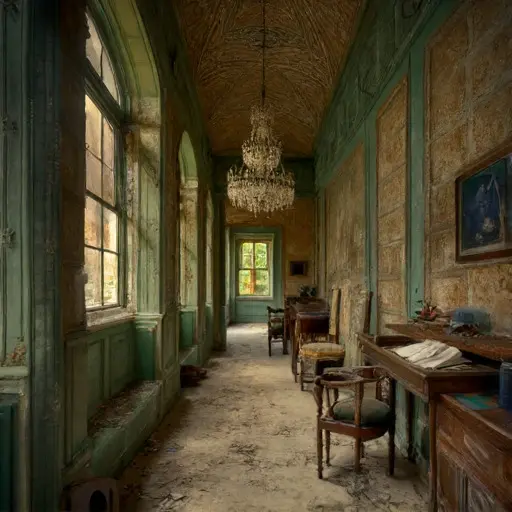
By the late 1920s, the Wrenfield Manor began to experience financial strain as agricultural prices declined and maintenance costs rose beyond what the small household income could comfortably support. Repairs were delayed, particularly to roofing and exterior timberwork, allowing gradual weathering to affect structural details. Parts of the upper floor were closed off to reduce heating expenses, and the household began consolidating into fewer rooms. Gardening, once a defining feature of the property, became increasingly irregular as labor was reduced and resources redirected toward essential maintenance. Unpaid correspondence accumulated on desks, while emotional attachment to the property persisted even as practical ability to sustain it diminished. Over time, the manor shifted from a fully active home to a partially occupied residence marked by quiet neglect.
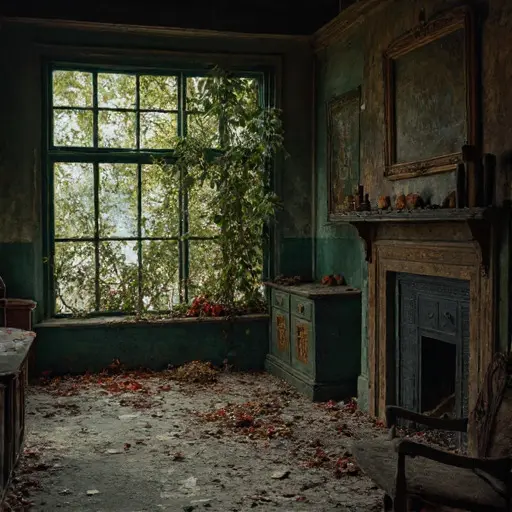
By the early 1940s, following continued financial decline and unresolved inheritance complications, the Wrenfield Manor was fully abandoned. No restoration was undertaken, and the property remained legally entangled in minor disputes that prevented sale or redevelopment. Vegetation from the surrounding forest gradually encroached upon the garden and exterior stonework, accelerating structural decay. Interior furnishings, documents, and personal belongings were left in place, preserving the final years of gradual withdrawal. No occupants returned, and the manor continues to stand empty at the forest edge, slowly dissolving into the landscape while retaining the quiet memory of its former domestic life.