The Withered Manor Above the Rice Terraces Where Jun’s Lanterns Still Wait
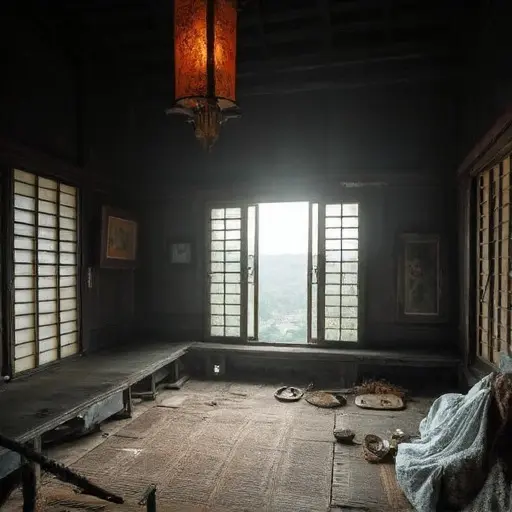
By the time weeds reached the lower steps, the lanterns were still hanging.
No one had taken them down.
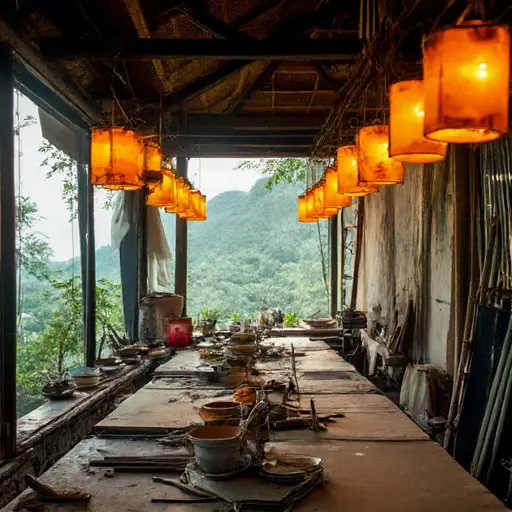
Some remained near the ceiling beams.
Others rested unfinished beside worktables, their bamboo ribs exposed like delicate skeletons paused in midair.
The manor belonged to Jun Wei.
He spent nearly forty years there working as a ceremonial lantern shadow painter.
His task was not building lanterns themselves.
Jun painted the interior silhouettes—birds, mountain scenes, legends, and moving shadows designed to appear when candlelight passed through layered paper. Temples, seasonal festivals, and family ceremonies once relied on artists like him to transform simple lanterns into storytelling objects.
The manor carried those stories inside every room.
Rolled papers leaned beside walls. Pigment bowls sat beneath cloth covers. Wax stains darkened old tables where Jun spent long evenings testing shadows against bare plaster.
Guests rarely entered his workshop without lowering their voices.
The Moonbeam Frame Room
Jun worked closest to the Moonbeam Frame.
It stood beside the eastern window where changing daylight helped him study transparency and shadow depth.
One lantern still hangs there.
Its painted cranes finished.
Its inner silhouette unfinished.
Jun had outlived both his wife and younger brother.
The manor became quieter with age, though never lifeless.
People remembered seeing warm lantern glow through the upper windows during festival months and hearing him humming while mixing pigments.
For decades the craft endured.
Then electric spectacle replaced intimacy.
Large commercial light festivals and imported LED displays gradually displaced handmade ceremonial lantern traditions. Communities rented mass-produced decorations instead of commissioning individual work. The slow artistry of painted shadow lanterns became difficult to sustain.
Jun refused to simplify his work.
He painted fewer pieces but remained stubbornly devoted.
Then the insects arrived.
A severe bamboo blight spread through nearby growing regions and devastated supplies relied upon by local lantern makers. Prices surged. Materials weakened. Many workshops closed entirely.
Jun continued searching for usable bamboo himself.
During one humid summer he developed complications from a neglected infection after weeks of field gathering and overwork.
He passed away quietly inside the manor before treatment could help.
Relatives came for the funeral and carried away documents, little else.
The lanterns remained.
Years later, the manor still darkens gently before sunset.
The brushes remain beside the pigments.
The paper rolls still lean against the walls.
And inside the Moonbeam Frame room, Jun’s final shadow lantern waits unfinished—holding a story that never reached its light.