The Windmere Pinwheel House Where Rooms Kept Turning Toward Light
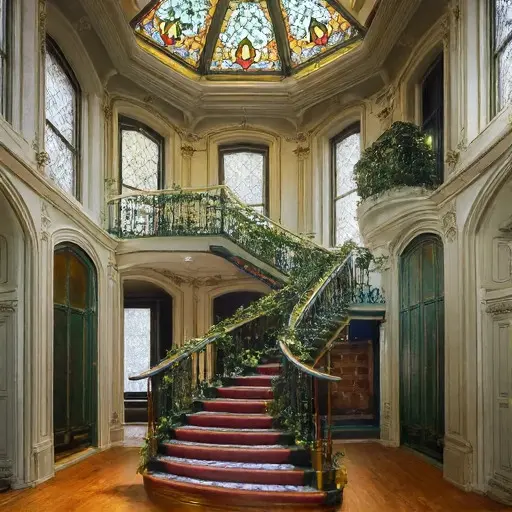
Windmere House rose above a gentle valley like a structure designed to follow curiosity rather than convention. Built in the late Victorian period, its pinwheel floor plan was considered eccentric even by contemporary standards, yet to its owners it simply reflected how life actually unfolded—branching, returning, and circling back toward shared spaces.
The house belonged to Henry Caldwell, an engineer fascinated by mechanical symmetry, and Clara Ellery, a botanical illustrator whose work quietly appeared in natural history publications.
Together they shaped the manor as both residence and experiment. Each wing served a different rhythm of their lives: reading, painting, conversation, and quiet observation of the gardens that seemed to extend the house outward into the landscape.
Their days were built around movement between rooms rather than staying within them. Clara would leave sketches in the conservatory and later find Henry reading notes in the tower, only for both to end the evening in the octagonal stair hall where colored light from stained glass marked the passing hours. The house never felt static; it rotated gently with their routines.
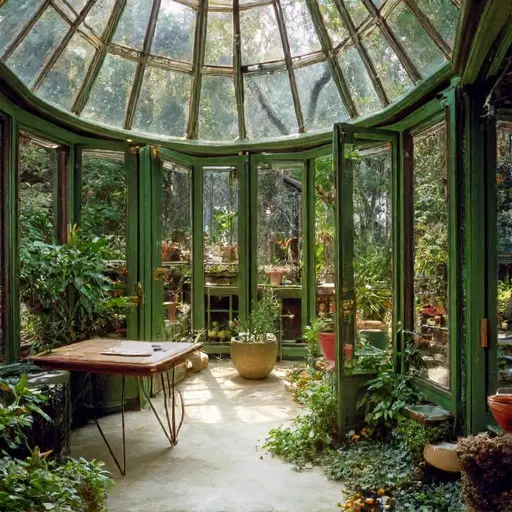
As years passed, financial pressures slowly disrupted the balance they had built. Henry’s engineering contracts became irregular, and maintenance of the increasingly complex structure grew expensive. Repairs were postponed wing by wing, beginning with the conservatory glazing and later affecting the rooflines and timber detailing.
Clara continued working even as conditions changed. Her illustrations shifted subtly from thriving gardens to quieter compositions—empty chairs beneath magnolia trees, abandoned baskets in orchards, and rooms where light entered without interruption from human presence. Henry, meanwhile, spent more time in the tower, studying old plans and calculating ways to preserve what already existed rather than expand further.
Eventually, parts of the house were closed off to conserve heat and reduce upkeep. The wings that once hosted daily movement became still, their doors left shut but not locked, as if waiting for a return that both understood was increasingly unlikely.
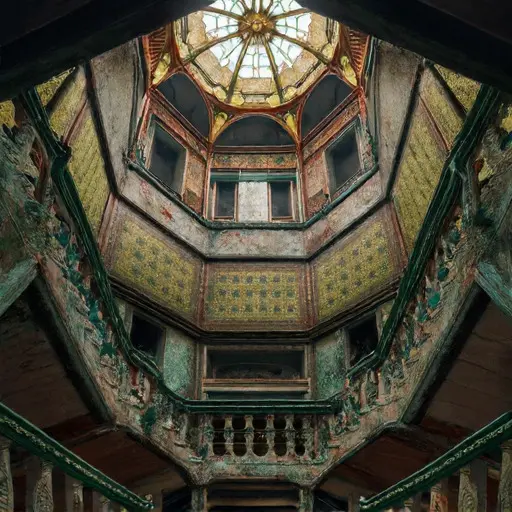
By 1949, Windmere House was fully abandoned. Clara left after Henry’s death, intending to return once arrangements were settled, but legal complications and distance prevented her from ever coming back. No new owners took possession, and the estate gradually slipped into disuse.
The gardens continued without instruction. Orchards overgrew their paths, vines bridged fences and balconies, and flowers filled every curve of the pinwheel design as though the structure itself had invited them in. The house was not destroyed or forgotten abruptly; it simply stopped being visited, while remaining fully intact as if still turning slowly around the memory of the lives it once held.