The Wind Chime That Never Finished Its Sound
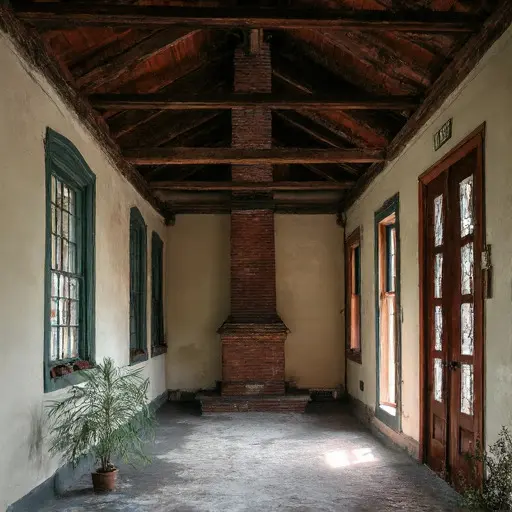
The house stood beneath a low, uniform sky that flattened the light into something gentle and uninsistent. From the street, it looked almost composed—two and a half stories of Stick Style geometry holding itself together through timber, plaster, and memory.
It had belonged to the Halberg family, who were known for never closing their doors fully during summer evenings.
Air moved freely through the house then, carrying the smell of baked bread, dry wood, and the faint sweetness of the garden beyond the porch. The architecture seemed to accept that habit, its open timber framing and layered rooflines behaving like an extension of that relaxed way of living.
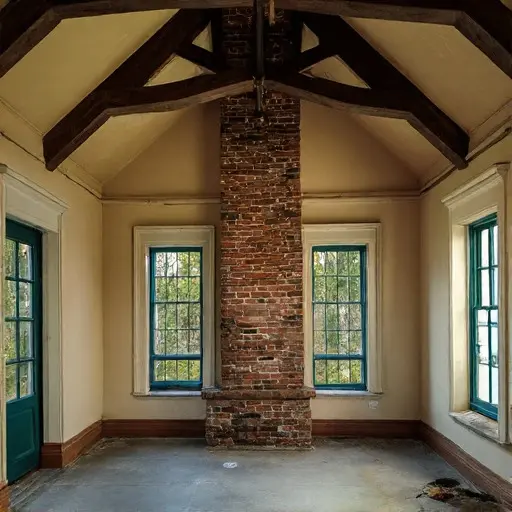
Even now, the structure still feels responsive, as if it remembers how to let light and sound pass through it. The exposed trusses above the entry hall form a rhythm that feels less constructed and more habitual, like something repeated so often it became part of the building’s identity.
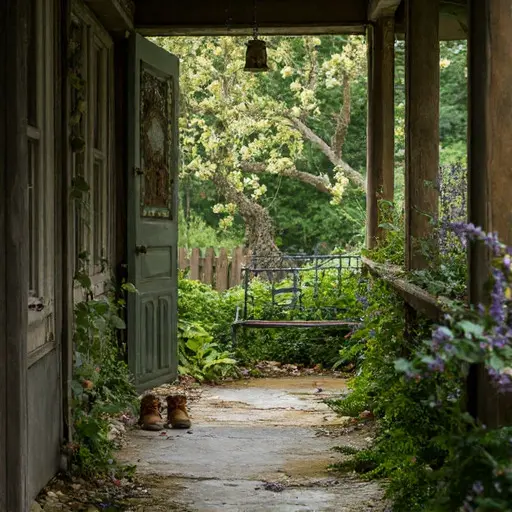
The garden feels like a continuation of the house rather than something separate from it. Nothing is sharply interrupted—only softened by time. The path remains clear enough to follow, though plants have begun to negotiate their own routes across it.
The Halbergs were not known for dramatic departures. Neighbors recalled them more as a presence that gradually thinned rather than vanished. Windows stayed open a little longer each season. The garden was tended less frequently, but never abandoned in intent.
There is a difference in houses like this between abandonment and suspension. This one leans toward suspension. The boots remain by the door not as evidence of leaving, but as if they were set down with the expectation of being picked up again within the hour.