The Willowmere House Left Vacant After Family Fragmentation
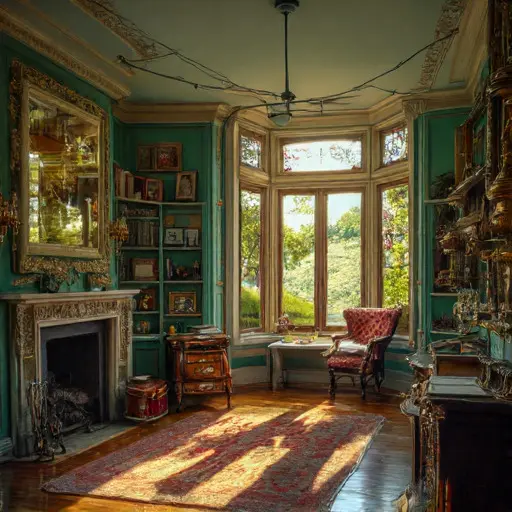
Willowmere House stood beside a narrow crescent-shaped lake hidden within a dense silver birch forest. Built in 1901 by the Fairchild family, the residence began as a modest lakeside Victorian home before gradually expanding through a series of additions funded by successive generations. Reading alcoves, covered balconies, projecting bays, and a square belvedere tower were added over several decades, giving the structure its distinctive asymmetrical silhouette.
Rather than reflecting wealth, these alterations reflected personal attachment, with each generation adapting the house according to changing family needs.
Its colorful exterior became well known among nearby settlements. Walls painted in faded robins-egg blue transitioned into salmon pink and pale butter-yellow upper sections, while decorative trim in warm ivory and forest green tied the structure together. Though eccentric in appearance, the house served a practical role as a gathering place for an extended family involved in small-scale timber accounting and lakeside transport administration.
Inside, life followed predictable patterns. Harold Fairchild managed records related to local timber agreements, while his wife Margaret coordinated family finances and correspondence. Children, cousins, and aging relatives frequently occupied the many additions attached to the original structure. The house remained lively throughout the 1910s and early 1920s, its unusual layout evolving alongside the family itself.
Early signs of decline
By the late 1920s, economic changes began affecting the region. Consolidation within the timber industry reduced the need for local administrative work, diminishing Harold’s income and limiting opportunities for younger family members. Several relatives relocated to larger towns seeking employment, leaving previously occupied sections of the house empty. Maintenance costs increased as the expanding structure aged, and repairs to balconies, roofing, and decorative woodwork were frequently postponed.
Financial pressure and household contraction
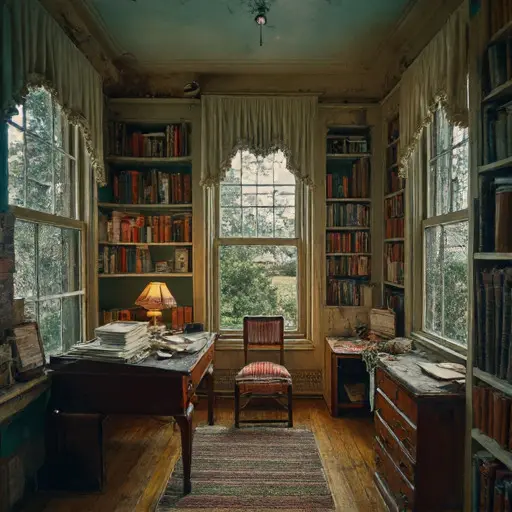
By 1934, entire portions of Willowmere House had been closed to reduce heating costs. The curved balcony attached to the corner tower was no longer considered safe, and several rooms beneath it were abandoned entirely. Household records reveal increasing arrears on taxes and repair expenses. Unpaid invoices accumulated on desks, while correspondence between family members increasingly focused on financial concerns and inheritance questions rather than daily life.
As the decade progressed, disagreements emerged regarding responsibility for the property. With family members scattered across distant towns, no clear successor assumed management of the increasingly burdensome estate. The house continued functioning, but only within a shrinking cluster of rooms near the central parlor.
Final abandonment phase
The onset of the 1940s accelerated the decline. Utility services became intermittent following repeated nonpayment, and maintenance ceased almost entirely. Water intrusion damaged upper rooms beneath aging roof sections, while decorative interior woodwork began to warp from moisture. The once-vibrant additions that had made the house unique now became liabilities, requiring repairs no one could afford.
The house left behind
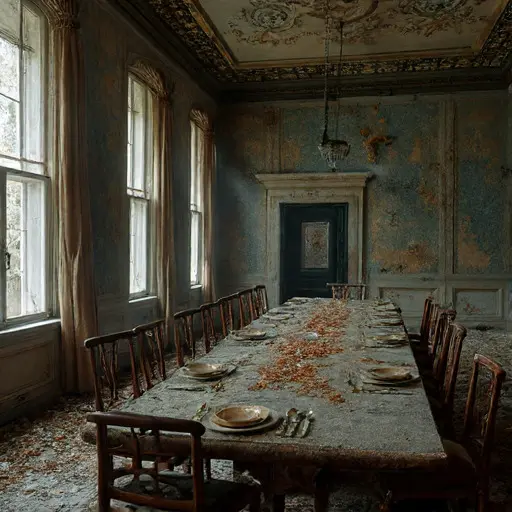
By 1948, Willowmere House was effectively abandoned. Ownership disputes remained unresolved after the death of the final resident, and no heir accepted responsibility for the property. Tax notices continued to arrive for several years before being returned unanswered. No restoration effort was ever undertaken, and no family member returned to reclaim the residence. The house remains standing beside the still crescent lake, deteriorating slowly beneath silver birch canopies, its colorful rooms fading into silence while the forest steadily absorbs the traces of those who once lived there.