The Whispering Shadow of Umbra-Quill Keep
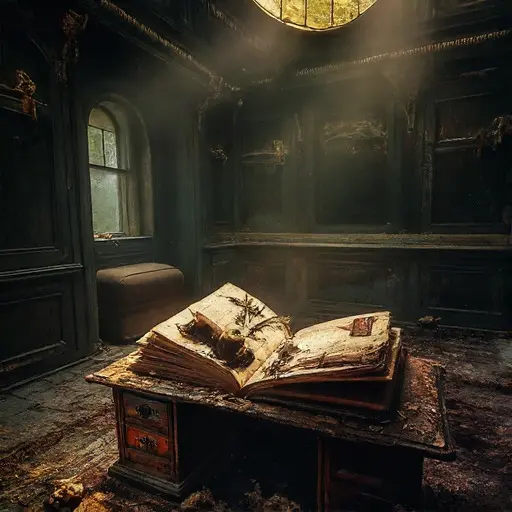
Umbra-Quill Keep was a massive, intimidating structure of rough-hewn, black granite, built with sharp angles and tall, narrow windows that seemed to look out on the world with perpetual suspicion. The name suggested a dark, literary instrument. The house sat high on a desolate, mist-shrouded bluff, giving it an isolated, almost monastic feel. Upon entering the main library, the air was immediately cold, dry, and carried an intense, musty scent of aged paper, leather bindings, and dried printer’s ink. The floors were thick, oak planks that creaked loudly underfoot, a sharp noise that felt instantly absorbed by the surrounding silence. This abandoned Victorian house was an archive of suppressed thought, where the history was buried not in fact, but in the deliberate cessation of the narrative.
The Historian’s Perfect Silence
Umbra-Quill Keep was the fortified residence and final project of Lord Alistair Dubois, a brilliant but deeply misanthropic historian and collector of the late 19th century. His professional life demanded the exhaustive creation of definitive, weighty historical volumes, relying solely on primary, verifiable documentation. Personally, Lord Dubois was consumed by an escalating sense of paranoia and a belief that all public speech and writing was fundamentally corrupted by lies and sentimentality. He saw the house as his final, ultimate censorship project: a fortress designed to silence all frivolous or non-factual narratives, turning his life’s work into a pursuit of perfect, unassailable historical silence.
The Private Press Room
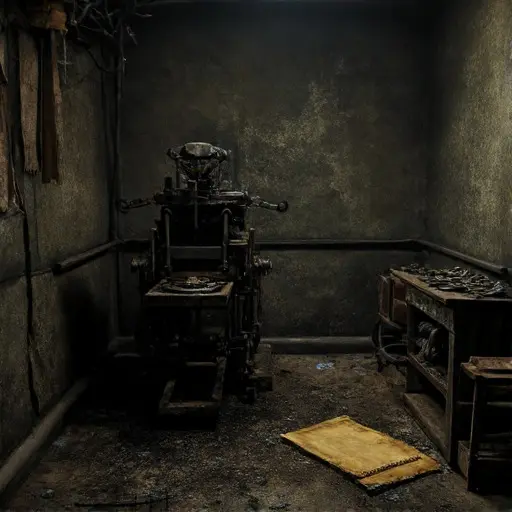
Lord Dubois’s Private Press Room was a small, brutally functional chamber. Here, he personally printed his most sensitive historical supplements, documents he believed too fragile or true for public consumption. His final journal, found under the massive printing press, detailed his intellectual collapse. He began to believe that the very act of printing was a form of contamination, a noisy, physical intrusion on the truth. His final work, detailed meticulously in the journal, was a single, massive volume titled “The Unwritten History.” His notes explained that the book contained no ink, only blank, perfectly bound pages, believing that the truth could only exist in the absence of written lies. His final entry detailed his last, desperate choice: “The truth is in the gap. The narrative must end.”
The Hall of Final Volumes
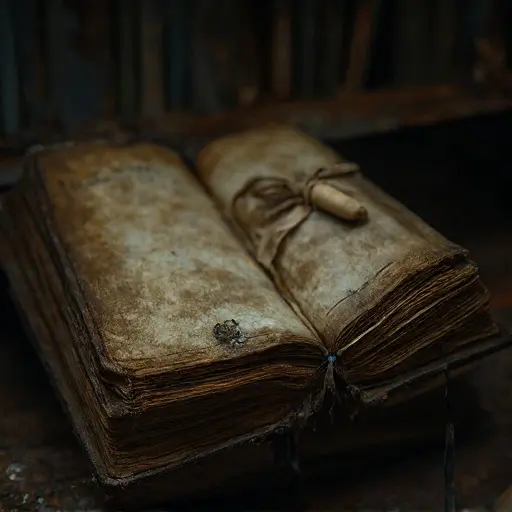
The main library was not merely for storage; it was the ceremonial heart of the Keep. It contained thousands of books, all neatly shelved. However, the true revelation was found in the central reading alcove. Beneath a dust-covered reading lamp, a single, ornate, leather-bound volume sat on a small stand. This was “The Unwritten History.” When opened, the book contained nothing but blank, pristine pages. Tucked into the center was a single, small, rolled-up parchment. This parchment was a suicide note from his wife, Lady Elara, whom Dubois had forbidden from reading, writing, or speaking anything he deemed “non-essential” for two years, isolating her completely in the fortress of his silence. Her note read: “Your perfect silence became my only reality. I leave you to your empty pages.” Lord Dubois vanished shortly after finding the note. The whispering shadow of Umbra-Quill Keep is the sound of thousands of silent, blank pages and the ultimate, tragic futility of a historian who sought to eliminate all lies, only to find the most profound truth he silenced was the voice of the woman he loved within the abandoned Victorian house.