The Volcanic Stone Townhouse Above the Rooftop Garden
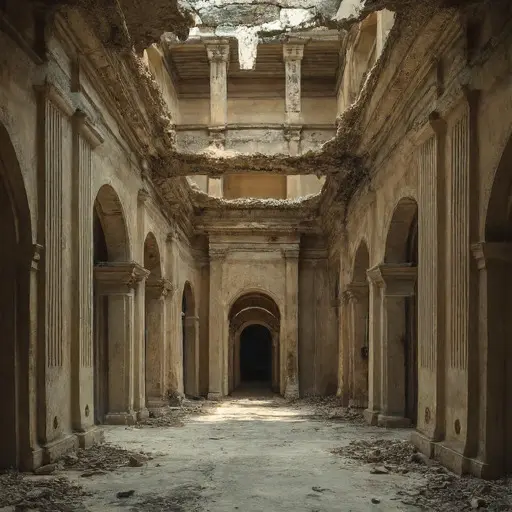
Atop a derelict rooftop garden in a decaying coastal megacity, a Neo-Grec Victorian townhouse rises in pale volcanic tuff stone, its presence both disciplined and quietly destabilized. Sharp ivory stucco pilasters impose a classical order across the façade, while thin horizontal bands of dark basalt reinforce its strict layered geometry.
Yet the structure is not perfectly stable.
A subtle outward bulge runs along the upper façade, gently distorting the intended precision. Unevenly spaced rectangular windows break the rhythm of the elevation, softened by age and long exposure to coastal winds. Faint ornamental lintels and minimal classical carvings remain visible, though eroded almost to suggestion.
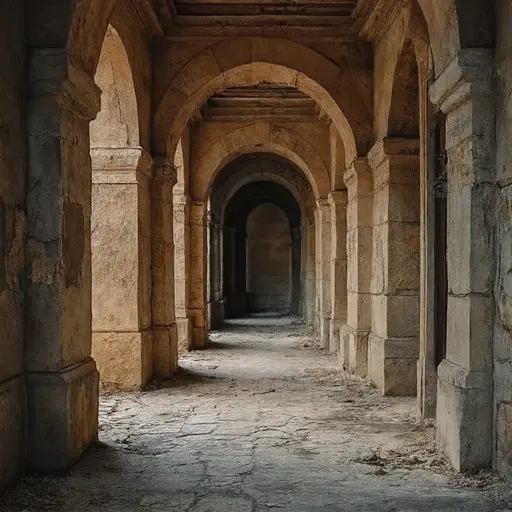
Inside, the townhouse is entirely unlit. No interior glow exists anywhere in the building, and every corridor and chamber remains in deep, silent shadow. Only soft overcast daylight filters in through rooftop-facing windows, carrying the muted brightness of the surrounding abandoned garden.
The setting around the structure is equally fractured. Broken concrete planters lie scattered across the rooftop garden, filled with wind-scoured gravel beds and patches of overgrown reeds and wild grasses. The geometry of the space feels abandoned mid-design, as if the city itself stopped maintaining its uppermost layer.
A rusted iron water cistern stands nearby, its surface dulled and pitted by salt air. Beside it, a collapsed glass pergola frame lies entangled in vegetation, its once-precise structure now reduced to twisted outlines.
In the distance, skeletal high-rises fade into haze-free clarity, forming a stark backdrop to the quiet erosion of the rooftop world. The townhouse remains suspended above it all—classical in intention, yet slowly reshaped by wind, neglect, and time.