The Vellmore Italianate Townhouse Beneath Overgrown Courtyard Silence
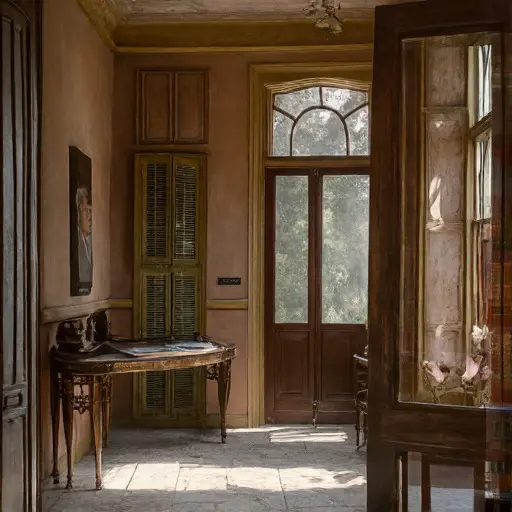
The Vellmore townhouse was completed in 1879 during a period of rapid canal-adjacent expansion, when Italianate architecture was favored for its disciplined symmetry and understated ornamentation. Commissioned by the Marwood family, the residence was intended to reflect both commercial success and cultivated restraint, expressed through its four-story elevation, bracketed eaves, and carefully proportioned vertical window rhythm. The household included two parents, four children, and a live-in steward responsible for both domestic management and garden maintenance.
Daily life followed a strict cadence of morning correspondence, afternoon household oversight, and evening gatherings in the rear-facing rooms. The front garden and side yard were integral to this routine, functioning as both ornamental display and controlled domestic landscape.
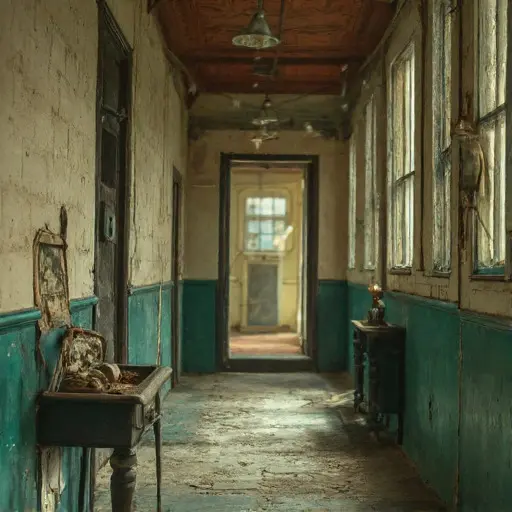
By the early 1930s, the Marwood family began to experience sustained financial pressure as regional trade routes shifted and property maintenance costs increased. The Italianate structure, with its multiple floors, bracketed eaves, and extensive stucco surfaces, required continuous upkeep that became increasingly difficult to sustain. Repairs to drainage systems and exterior plasterwork were repeatedly delayed, allowing moisture to spread through upper levels and accelerate interior deterioration. The garden began to lose its structured geometry as boxwood hedges overgrew their borders and climbing roses spread unchecked across pergolas and trellises. The marble statue in the yard developed visible cracking, while the grape trellis along the side wall sagged under the weight of dried clusters and unchecked vegetation. Household use gradually contracted into fewer rooms, marking a slow withdrawal from full occupation.
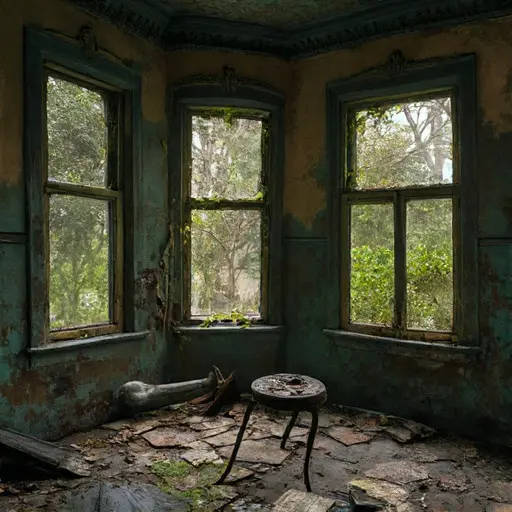
By the mid-1940s, following foreclosure proceedings and the final departure of its remaining occupants, the Vellmore Italianate Townhouse was permanently abandoned. No restoration efforts were undertaken, and the property remained unresolved in ownership, preventing redevelopment for decades. The front gate remained slightly open, while the symmetrical stone path became increasingly obscured by overgrown boxwood and encroaching roses. The pergola collapsed into fragments under its own weight, and the grape trellis along the side wall became fully entangled with dried vines and wild growth. Inside, all possessions were left exactly as they were at the moment of abandonment. The townhouse still stands today beneath a heavy overcast sky, its Italianate silhouette slowly dissolving into vegetation, weather, and silence.