The Vanished Grandeur of the Second Empire Forest Château
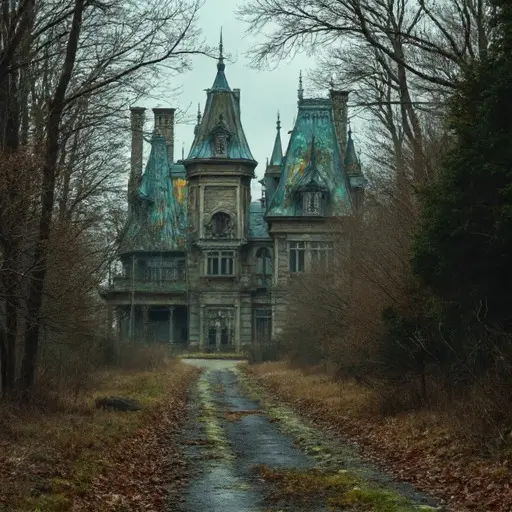
An abandoned Second Empire château emerges at the end of a forest avenue like a fading memory of aristocratic order. The approach is defined by a broken carriage drive, where cracked cobblestones are gradually overtaken by moss, soil, and the roots of overgrown lindens. These trees form a natural tunnel leading the eye forward, their branches arching overhead in irregular symmetry that contrasts with the disciplined geometry of the estate beyond.
The château itself is composed of pale sandstone and weathered brick, materials that once conveyed precision and permanence but now bear the softened patina of time and weather. Its most defining feature is the highly articulated mansard roofscape, layered and complex, with steep slopes punctuated by ornate dormer windows. Each dormer retains its sculptural detail, yet the glass within them has dulled, reflecting only muted fragments of daylight.
Oxidized copper roof panels shift across the upper structure in tones of deep teal and subdued violet, creating a quiet chromatic variation that subtly animates the otherwise still façade. Layered iron cresting runs along the roof ridgelines, delicate yet persistent, like a decorative silhouette still trying to assert its original refinement against the encroachment of nature.
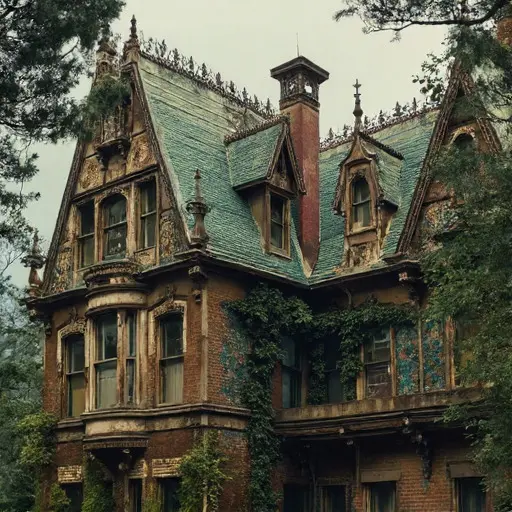
The estate extends outward in asymmetrical wings, each one following a slightly different rhythm of expansion along the broken carriage path. These wings feel less like additions and more like historical layers, accumulated over time but now unified by neglect. Ivy climbs selectively across sandstone pilasters and brick joints, tracing architectural lines without fully obscuring them, as if respecting the original design language.
Windows are tall and vertical within the mansard structure, framed by carved stone and darkened wood. Their panes are fractured or clouded, allowing only soft, indirect light to pass through. No interior illumination is visible, and the château reads as entirely uninhabited, its spaces withdrawn from the present moment.
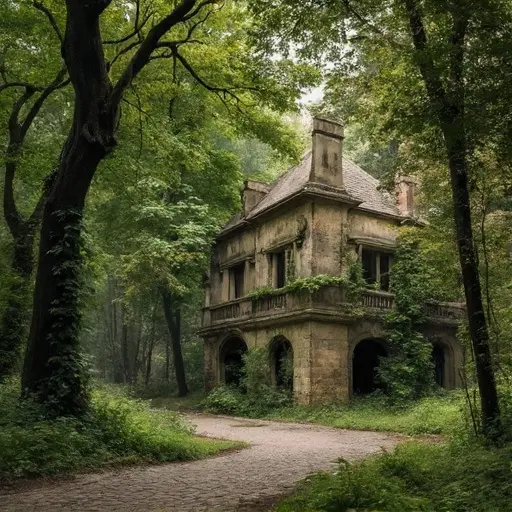
Along the forest edge, the lindens tighten their presence, pressing closer to the structure until branches nearly touch the dormers and rooflines. The avenue that once served as a formal approach has become an organic corridor, where vegetation dictates movement and perspective. The architecture remains visible, but it is now partially negotiated through foliage, shadow, and irregular growth.
Under soft neutral daylight and a clear, haze-free sky, the entire scene is rendered with crisp material clarity. Sandstone grain, brick erosion, copper oxidation, and iron detailing are all legible without dramatic contrast. The atmosphere is calm and observational rather than emotional or theatrical.
The château stands as a structured remnant of Second Empire ambition, gradually absorbed into the forest’s slower geometry—its grandeur still readable, but no longer commanding the landscape it once defined.