The Valmere Canal Italianate Townhouse Left in Still Water
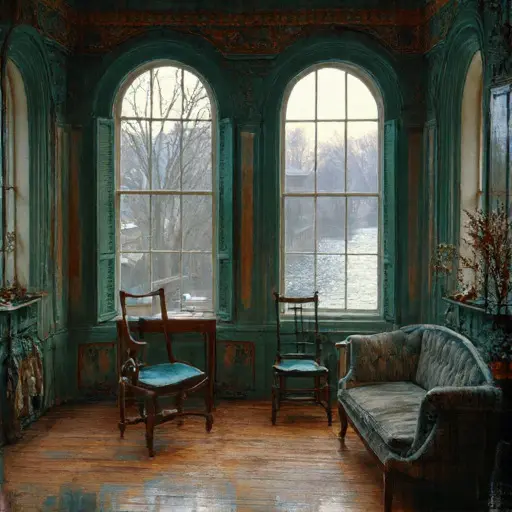
The Valmere Townhouse was built in the late nineteenth century along a quiet canal district, commissioned by a merchant family involved in regional river trade and small-scale shipping logistics. Designed in the Italianate style, the residence emphasized proportion, rhythm, and understated ornamentation, with its long façade oriented directly toward the water. The household consisted of a small extended family supported by a single domestic caretaker, all of whom structured their daily lives around the canal’s steady movement of goods and boats.
The ground floor served as both living and receiving space, while the upper floor contained bedrooms and administrative records tied to trade correspondence. For many years, the townhouse functioned as a calm, efficient residence closely connected to the slow economic pulse of the canal.
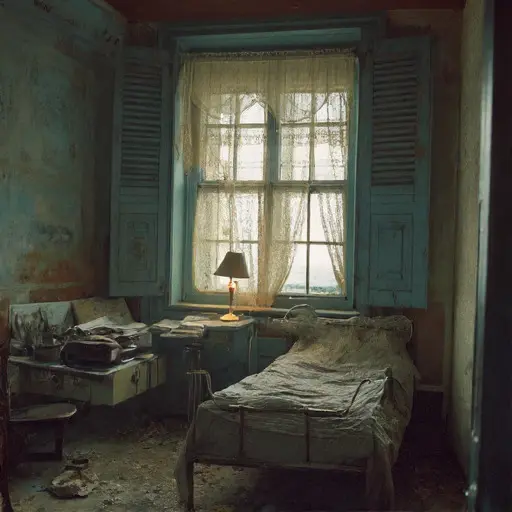
By the late 1920s, the Valmere Townhouse began to experience financial and logistical strain as river trade patterns shifted and canal transport lost commercial importance. Reduced income made it increasingly difficult to maintain the townhouse’s detailed plasterwork, wooden brackets, and decorative terracotta cornice. The household scaled back its activities, and portions of the residence were used less frequently to conserve maintenance costs. The canal-side walkway and balcony planters were no longer tended with regular care, allowing geraniums and jasmine to grow unevenly and wild. Correspondence related to trade became sporadic, and administrative routines gradually slowed, reflected in the accumulation of unanswered letters and neglected household records. Environmental exposure from the canal’s humidity began to soften finishes and subtly degrade both interior and exterior surfaces.
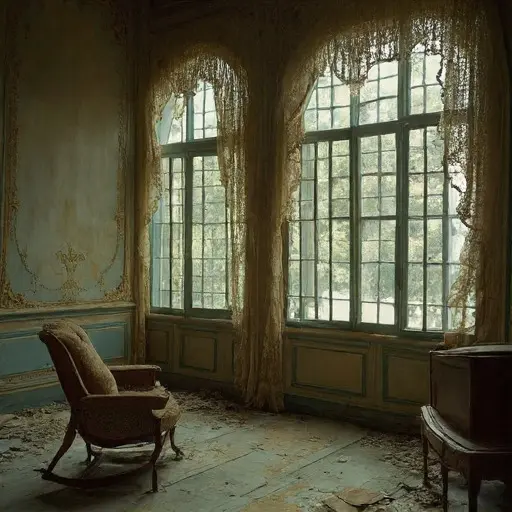
By the early 1940s, following prolonged financial decline and the final dissolution of the family’s canal trade operations, the Valmere Townhouse was fully abandoned. No restoration efforts were undertaken, and ownership became entangled in unresolved inheritance claims. The structure remained intact along the waterway but deteriorated steadily under constant humidity and lack of maintenance. Interior spaces were left in their final state of use, preserving furniture, documents, and domestic objects beneath layers of dust. The townhouse persists as an unoccupied canal-side residence, slowly fading into silence while its reflection continues to ripple across the still water outside.