The Valerienne Villa Left Vacant After Hillside Patronage Collapse
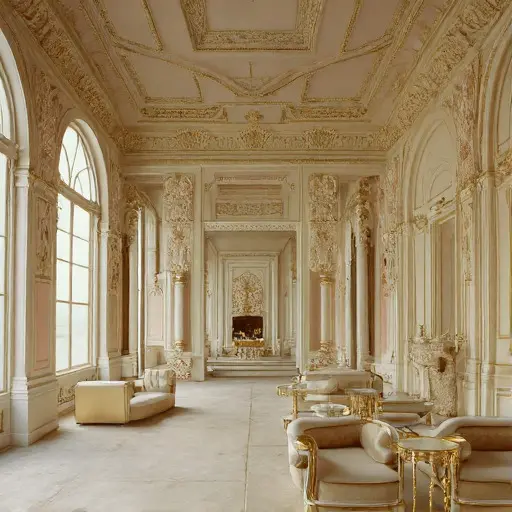
The Valerienne Villa was constructed in 1798 for the de Montclair family, minor aristocrats who maintained hillside estates as seasonal residences tied to cultural patronage and regional land stewardship. Designed in Rococo style with asymmetrical elegance, the villa emphasized flowing decorative curves, shell-like reliefs, and floral scrollwork across its façade. Built from faded ivory stucco and pale sandstone with blush-toned plaster accents, the structure was intended to embody refined leisure and artistic cultivation rather than administrative function.
Inside, the household operated on a rhythm of seasonal occupation and social gathering. Lucien de Montclair oversaw estate correspondence and patronage arrangements, while his wife Élodie managed cultural salons and household organization. The villa functioned as a retreat for artistic and social engagement, hosting intermittent gatherings supported by inherited wealth and regional influence. For over a century, it remained intermittently active, sustained by diminishing but stable aristocratic resources.
Early signs of decline
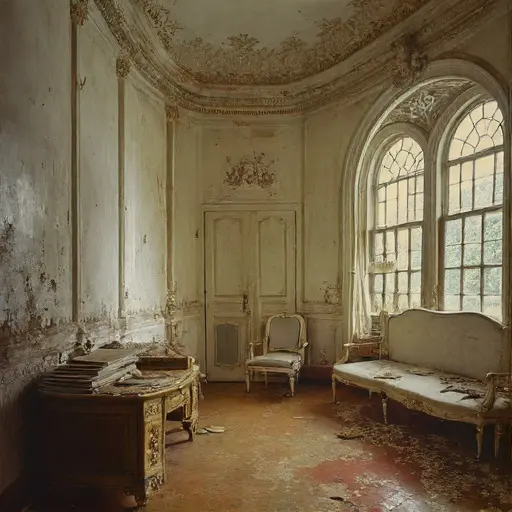
By the early 1930s, the decline of aristocratic estates and reduction of patronage systems significantly impacted the de Montclair lineage. Financial support structures that once sustained hillside villas diminished, and maintenance of the property became increasingly inconsistent. Decorative restoration was deferred, and sections of the villa were closed off to reduce operational costs. The once-vibrant salon spaces became quieter, used less frequently and eventually left idle.
As the household contracted, the villa’s internal rhythm slowed. Rooms that once hosted gatherings remained unoccupied for long periods, and correspondence became sparse and irregular. The ornamental architecture, though still intact, began to lose its refined upkeep, with gilded details fading and plaster surfaces softening under time and humidity. Outside, the terrace gardens began to loosen in structure, with pathways less precisely maintained.
Final abandonment phase
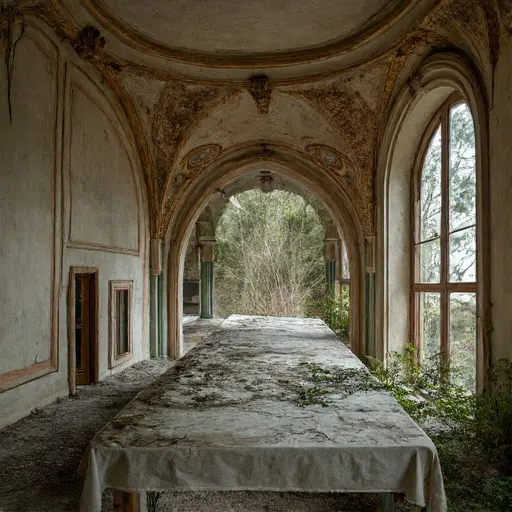
By the late 1940s, Valerienne Villa was no longer actively inhabited. The de Montclair descendants had fully relocated, and no return visits to the estate were recorded. Legal and financial ties to the property dissolved gradually, leaving ownership unresolved. Utility services were discontinued, and the villa was left without maintenance or oversight. The surrounding hillside forest expanded slowly but did not overwhelm the structure, instead framing it in quiet separation.
No formal restoration or reoccupation ever occurred. The villa remains standing within the terraced garden hillside, its Rococo elegance softened by time, weather, and structural settling. It persists as an abandoned architectural memory, gracefully dissolving into the edge of the forest while retaining its ornamental dignity.