The Valemont Second Empire Estate Left in Forest Quiet
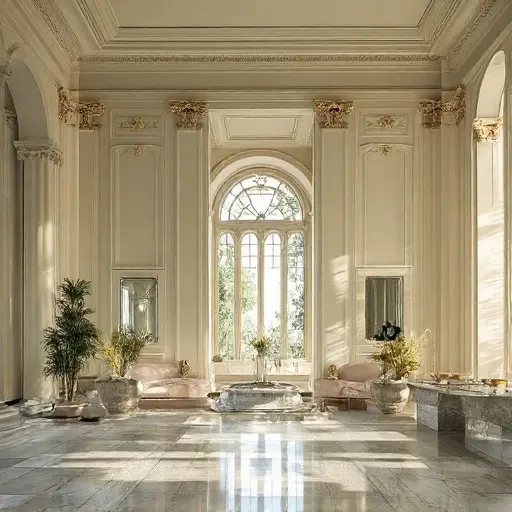
The Valemont Estate was constructed in the late nineteenth century as a secluded aristocratic residence for a family engaged in administrative governance and land stewardship across the surrounding forested region. Designed in the French Second Empire style, the mansion emphasized symmetry, vertical hierarchy, and controlled ornamentation, with a dominant mansard roof system and central pavilion anchoring its composition. The household consisted of multiple generations who divided their time between urban responsibilities and seasonal occupation of the estate.
Life within the mansion was governed by structured routines of estate management, correspondence, and formal gatherings held within the grand salon and adjoining reception halls. The surrounding forest was intentionally preserved as part of the estate’s visual and ecological identity, reinforcing the sense of isolation and controlled natural integration.
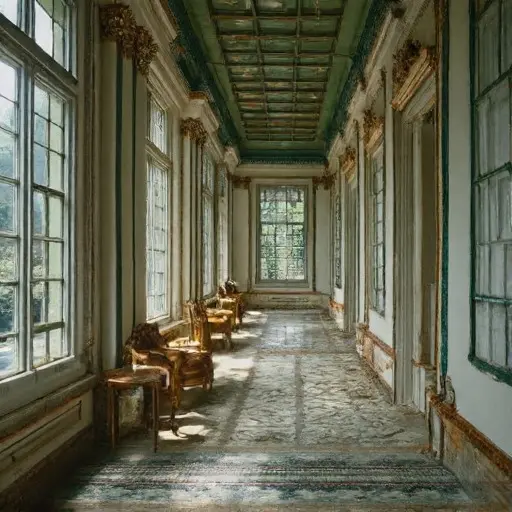
By the early twentieth century, the Valemont household began to experience gradual withdrawal from full-time estate occupation as administrative responsibilities shifted toward urban centers and regional governance structures changed. The cost and complexity of maintaining the expansive mansion, formal gardens, and marble water features increased significantly with reduced staffing. Seasonal visits became shorter and less frequent, leading to partial closure of wings and reduced heating of upper floors during colder months. The formal parterre gardens began to lose precision, with creeping vegetation softening geometric flowerbeds and white gravel paths. While the estate remained structurally intact and visually dignified, its role as a continuously inhabited residence diminished into intermittent seasonal use.
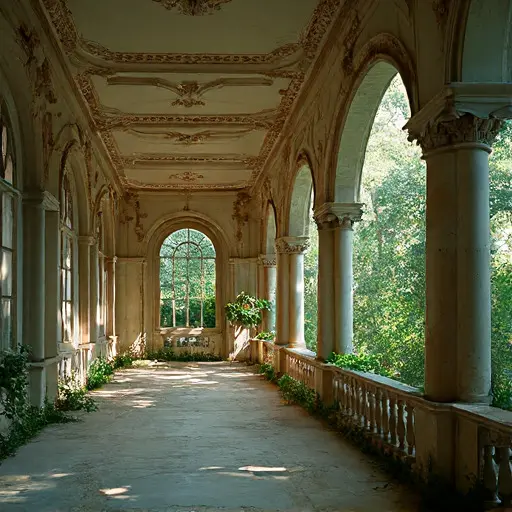
By the mid-twentieth century, the Valemont Second Empire mansion had been fully vacated following the dispersal of its final occupants and the dissolution of its administrative estate functions. No restoration or redevelopment efforts were initiated, as the property remained remote and financially impractical to sustain at its original scale. Ownership records became fragmented through inheritance divisions, leaving the estate without unified stewardship. The mansion remained standing within the dense forest, slowly weathering under seasonal cycles while retaining its architectural coherence. Interior spaces were left undisturbed, preserving the final arrangement of aristocratic domestic life. The estate endures in quiet abandonment, neither restored nor demolished, existing as a refined architectural relic embedded within a living forest landscape.