The Valdorne Romanesque Fortress Palace Left in Ravine Silence
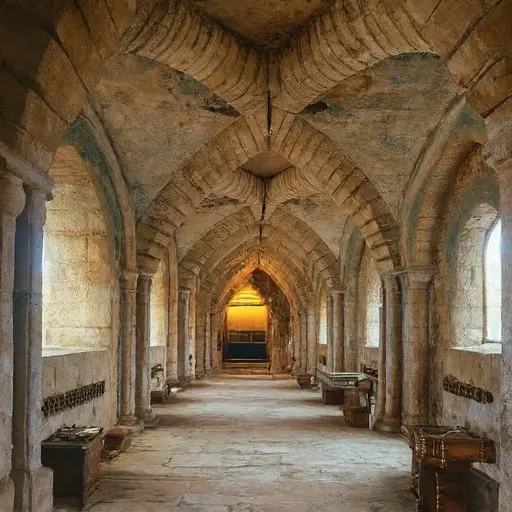
The Valdorne Fortress Palace was constructed along a ravine edge in the early 1900s by a northern Lombard lineage that sought to combine defensive architecture with aristocratic residence. Designed in a Romanesque revival style, the structure emphasized mass, stability, and rhythmic repetition, with stepped silhouettes following the natural contours of the cliffside terrain. The household included extended family members and administrative stewards responsible for managing agricultural terraces, forest rights, and regional tax obligations tied to surrounding valley settlements.
Early operation of the estate was highly structured, with governance conducted in the great hall and logistical coordination distributed across the arcaded chambers. The fortress functioned as both residence and fortified administrative center, sustained by stable land revenues and strict hierarchical management.
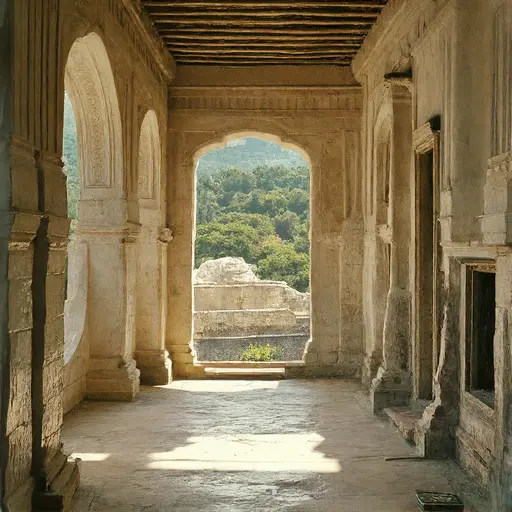
By the late 1920s, the Valdorne estate began to experience financial strain as regional agricultural output declined and maintenance costs for its massive Romanesque stonework increased significantly. The fortress-like construction required continuous structural upkeep to manage moisture intrusion from the ravine environment, which gradually exceeded available resources. Staff numbers were reduced, and entire sections of the palace were sealed off to conserve heat and limit deterioration. Administrative correspondence accumulated without timely response, particularly regarding land taxation and terrace agriculture yields. Moisture infiltration began weakening mortar joints and surface inlays, subtly eroding the crisp mineral contrast of travertine, sapphire, and emerald stonework. The once-cohesive defensive administration gradually fragmented into delayed and incomplete cycles of oversight and maintenance.
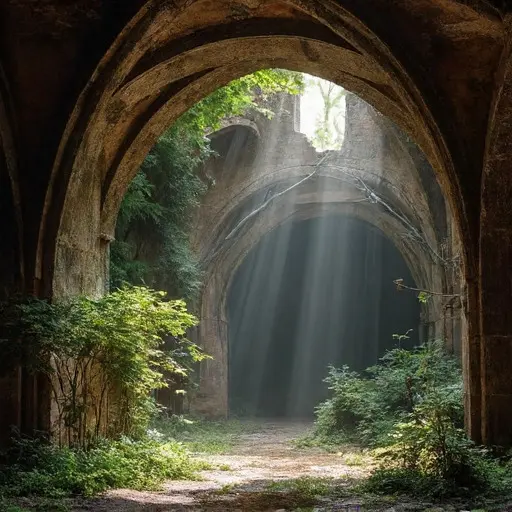
By the early 1940s, following prolonged financial collapse and unresolved inheritance fragmentation, the Valdorne Fortress Palace was fully abandoned. No restoration efforts were undertaken, and legal disputes prevented any unified stewardship or redevelopment of the estate. The structure remained anchored to the ravine edge but deteriorated steadily under seasonal weathering, vegetation encroachment, and geological pressure from the cliffside environment. Interior spaces were left in their final operational states, preserving records and furnishings beneath accumulating dust and moisture. Over time, the once monumental Romanesque system dissolved into silent decay, leaving the fortress-palace as an uninhabited relic slowly reclaimed by forest growth, ravine winds, and stone erosion over time.