The Uncut Bloom of Gnomon-Seed Keep
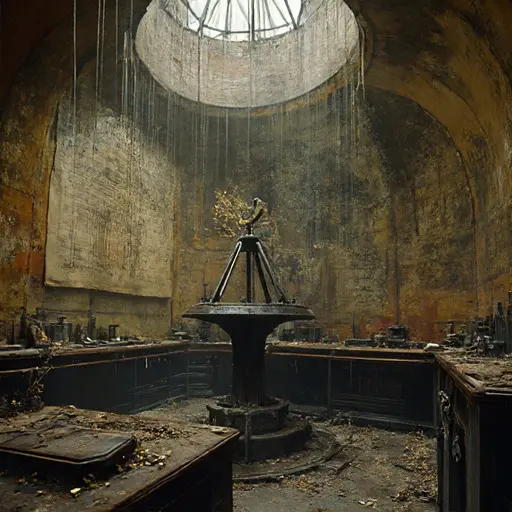
Gnomon-Seed Keep was an architectural statement of celestial and terrestrial synchronization: a massive, pale-stone mansion built around a single, towering observatory designed to track the sun’s path. Its name suggested a blend of shadow-casting stick and potential life. The house stood on a prominent, isolated rise, giving it an uninterrupted view of the sky and the surrounding fields. Upon entering the main solar observation room, the air was immediately cold, thin, and carried a potent, mineral scent of aged brass, dried earth, and a subtle, metallic aroma. The floors were covered in rough, stone flagstones, amplifying every faint sound into an unsettling echo. The silence here was not merely quiet; it was an intense, temporal stillness, the profound hush that enforces the memory of both constant solar movement and patient, rhythmic growth. This abandoned Victorian house was a giant, sealed clockwork garden, designed to achieve and hold a state of absolute, unchangeable, synchronized life.
The Biologist’s Perfect Timing
Gnomon-Seed Keep was the fortified residence and elaborate laboratory of Dr. Elias Alcott, a brilliant but pathologically obsessive chronobiologist and agricultural scientist of the late 19th century. His professional life demanded the precise charting of solar cycles, the flawless measurement of plant growth rates, and the pursuit of absolute temporal and biological unity—a life cycle perfectly in sync with the universe. Personally, Dr. Alcott was tormented by a crippling fear of temporal drift and a profound desire to make the unpredictable, fluid nature of biological life conform to the rigid, perfect rhythm of the sun. He saw the Hall as his ultimate experiment: a space where he could finally engineer and preserve a single, perfect, unsprouted seed that contained the entire, predictable life cycle of a plant, held forever at the moment of its greatest, unmarred potential.
The Dormancy Chamber
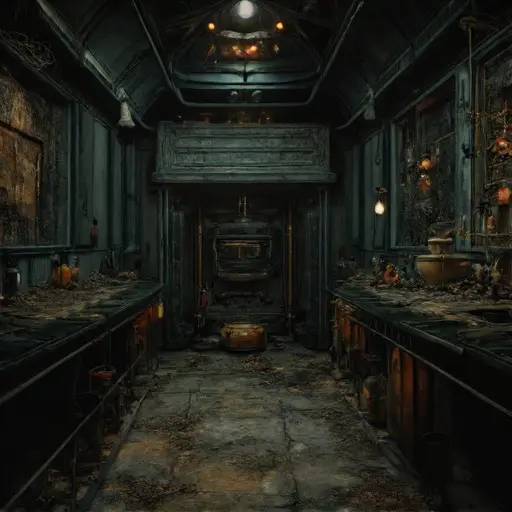
Dr. Alcott’s Dormancy Chamber was the engine of his obsession. Here, he worked to isolate and stabilize the living potential of the seed. We found his final, detailed Life Cycle Compendium, bound in thick, heavy brass covers. His entries chronicled his escalating desperation to find the “Zero-Germination Seed”—one that could remain perpetually ready to sprout but never actually do so. His notes revealed that he had begun to believe the most beautiful stage of life was the unsprouted seed, which held the perfect promise of its final, flawless form, untainted by the imperfections of actual growth. His final project, detailed meticulously, was the creation of a massive, unique, internal “Master Seed”—a final, massive, single seed grown under highly controlled conditions, designed to be perfectly preserved in a state of eternal, chemical dormancy.
The Final Seed
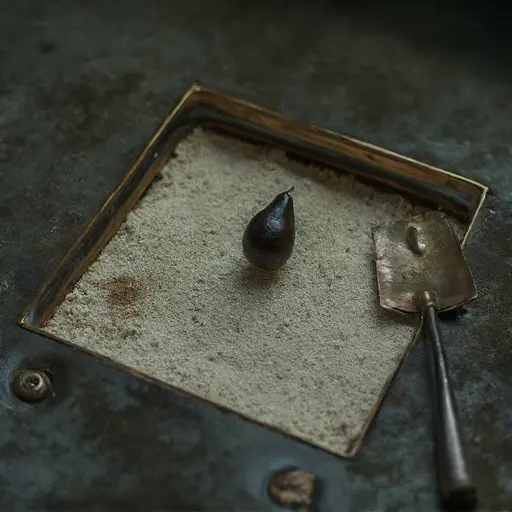
The most chilling discovery was made back in the main observation room. Tucked directly beneath the fractured gnomon pedestal was a massive, custom-machined brass box, bolted firmly to the stone floor. The box was sealed, and when opened, it contained nothing but a bed of sterile, white silica sand. Resting in the very center of the sand was a single, immense, perfectly formed, dried seed—massive in scale and unnaturally preserved. Tucked beneath the seed was Dr. Alcott’s final note. It revealed the tragic climax: he had successfully created and preserved his “Master Seed,” believing that by preserving its perfect, unmarred potential, he had achieved eternal life in its ultimate, flawless form. However, he realized that a seed that never sprouts is a seed that never lives, rendering its potential meaningless. He had exchanged life’s flawed beauty for perfect, silent stasis. His final note read: “The seed is perfect. The potential is infinite. But the only truth of life is the sprout.” His body was never found. The uncut bloom of Gnomon-Seed Keep is the enduring, cold, and massive single seed, a terrifying testament to a chronobiologist who achieved biological perfection only to find the ultimate, fatal flaw was the removal of the very process of life and growth, forever preserved within the silent, potential-filled stasis of the abandoned Victorian house.}