The Twisting Stone Villa Above the Abandoned Vineyard
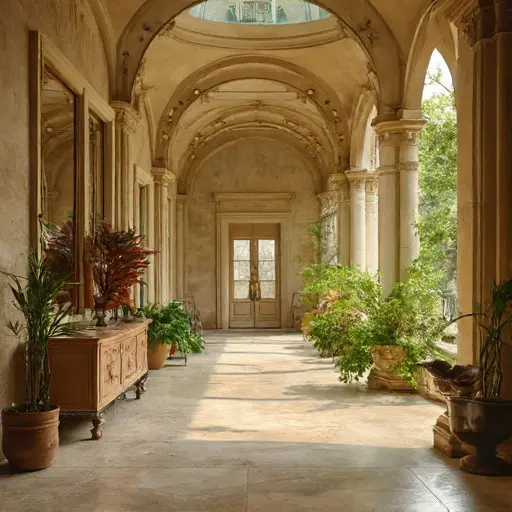
The Renaissance Revival Victorian villa was constructed as the centerpiece of a once-thriving hillside vineyard estate. Designed with warm pale travertine stone and soft terracotta inlays, the three-story structure embodied a restrained interpretation of classical Renaissance symmetry, deliberately disrupted by a gentle longitudinal twist in its massing. This subtle distortion was not structural failure but an intentional architectural experiment meant to echo the curvature of vineyard terraces surrounding it.
Tall arched windows of slightly irregular spacing admitted diffuse daylight into elongated interior halls, while carved pilasters along both interior and exterior surfaces appeared to shift and settle with the building itself. The low domed roof of weathered copper, now softened to sea-green, originally reflected the seasonal cycle of the vineyards below.
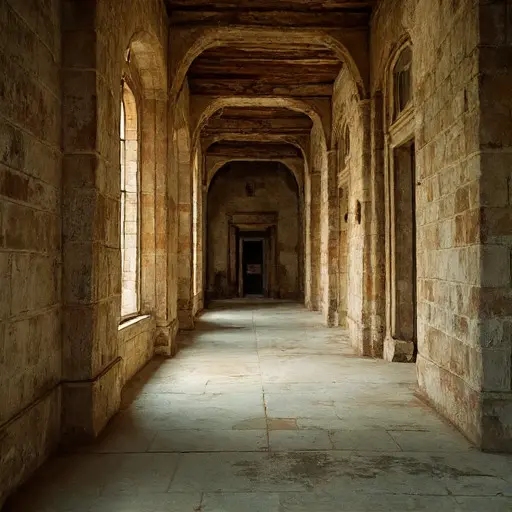
As the vineyard declined due to shifting agricultural markets and prolonged drought seasons, the estate gradually lost its economic foundation. Dry stone walls collapsed in sections as maintenance ceased, and the once-ordered rows of vines grew wild and entangled across the terraces. The villa itself began to reflect this abandonment in its physical condition: minor settling along its twisted façade became more pronounced, and pilasters developed subtle undulations where stone joints relaxed over time. The iron wine press in the lower courtyard ceased operation long before the final harvest, and administrative records documenting production were left incomplete as staff departed one by one.
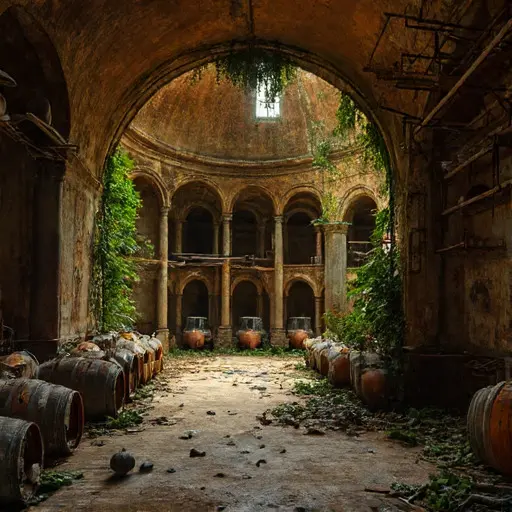
Today, the Renaissance Revival Victorian villa remains within the quiet vineyard terrace, surrounded by overgrown vines and fractured stone enclosures. The faded cherub statue lies where it fell, and the iron wine press stands immobilized in tall grass as a relic of abandoned production. The building persists as a slow-moving convergence of classical intent and natural reclamation—its twisting façade, weathered copper dome, and settling stonework holding the memory of cultivation long after the vineyard ceased to exist.