The Turquoise Bastion of the Cliffed Crown
An abandoned Victorian mansion clings to a storm-sculpted basalt cliff, where the coastline drops into a restless gray-blue sea under a heavy lavender overcast sky. The light is diffuse and weighty, flattening shadow while amplifying color saturation across the architecture, as if the building itself refuses to fade despite the weathered atmosphere. Royal turquoise, citrine-yellow lacquer, and neon coral surfaces still pulse faintly against the stone and salt.
The manor is compact but aggressively dimensional, compressed into a tight architectural knot. A square central core anchors the composition, wrapped in continuous balconies that fold inward like a sealed ceremonial mechanism.
Four short, angular wings jut outward in restrained bursts, resembling defensive bastions shaped for ritual display rather than practical habitation. Everything feels intentionally constrained, as if grandeur was forced into a smaller vessel.
Roof structures stack into ribbed vaults and clustered chimneypods, each topped with lacquered finials shaped like frozen instruments of ceremony. Gold-thread iron filigree traces the rooflines and balcony edges, catching faint highlights from the overcast sky. Coral-stained glass inlays scatter muted color across the façade, producing soft internal glow even without direct sunlight.
The cliffside environment is raw and elemental. Wind-bent grasses grow in thin seams between fractured basalt, and salt mist drifts upward in slow veils from the ocean below. The mansion does not sit on the cliff so much as adhere to it, as if its weight is balanced by architectural will alone. At the rear terrace, a fractured obsidian-glass sundial pedestal leans toward the sea, its broken face still oriented as though attempting to measure time that no longer exists.
Interior glimpses
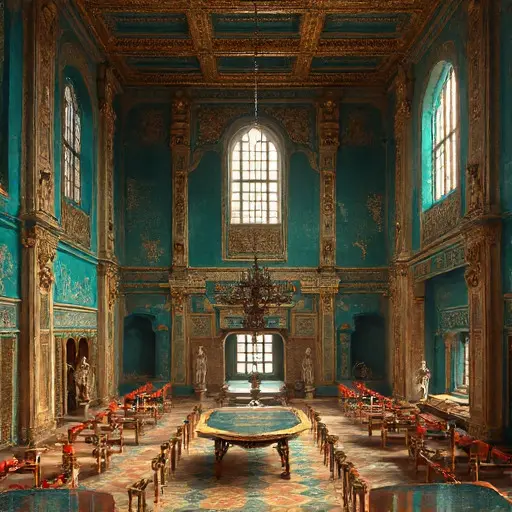
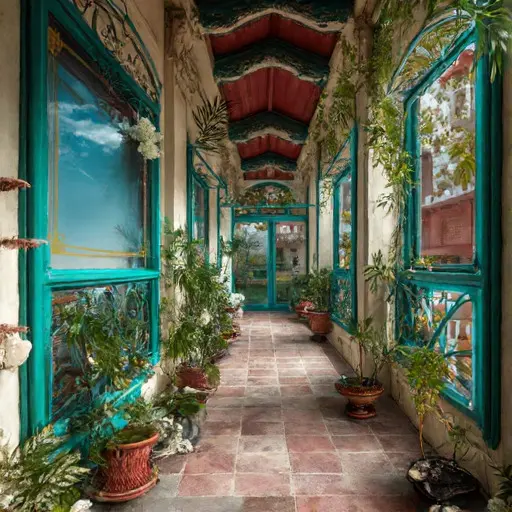
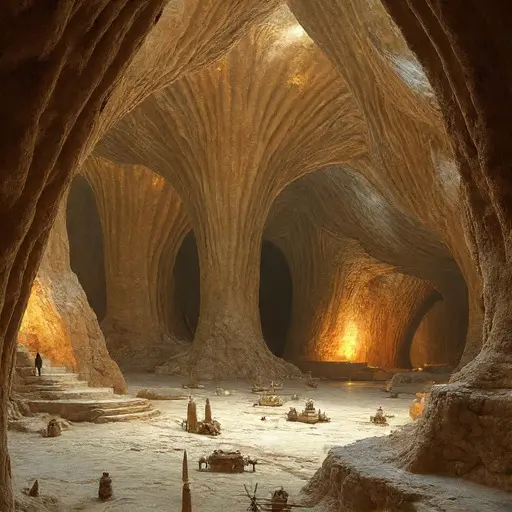
Inside, the mansion feels even more compressed than its exterior suggests. Rooms are tightly interlocked, each one shaped by curved transitions and ornamental partitions rather than straight corridors. Surfaces remain intact—polished lacquer, enamel stone, and softened metallic detailing—creating a sense of preserved intensity rather than decay.
The atmosphere is not abandoned in collapse but in suspension. Every surface holds a trace of inherited ceremony, as if the building is still waiting for a lineage that never returned. No erosion, no ruin beyond natural weathering, no supernatural presence—only the slow pressure of salt wind and centuries of aristocratic ambition folded into a cliff that refuses to yield.