The Townhouse Where Even Silence Kept Its Shape
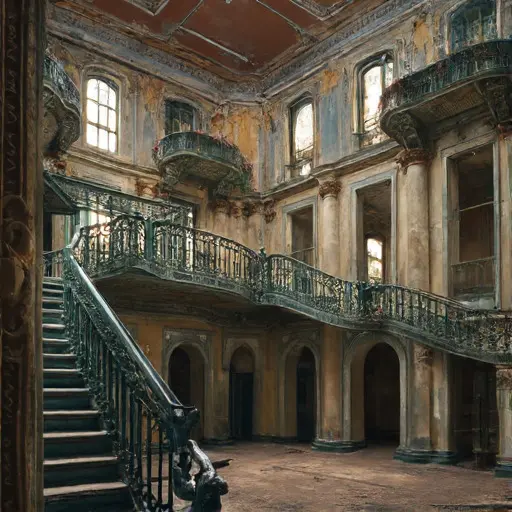
The townhouse stood with a composed certainty that even time seemed reluctant to disrupt. Its mansard roof rose in disciplined geometry, each slate tile forming part of a larger pattern that still read clearly against the bright overcast sky. Nothing about it felt collapsed or lost—only withheld, as if the building had paused at the edge of an unfinished sentence.
It had belonged to the Vancourt family, known for their evening salons where conversation unfolded slowly, like music without urgency. Guests arrived through the cobalt gate at unhurried intervals, passing beneath the grape-laden pergola before stepping into rooms that always felt slightly warmer than expected. The house seemed designed for that rhythm of arrival and lingering departure.
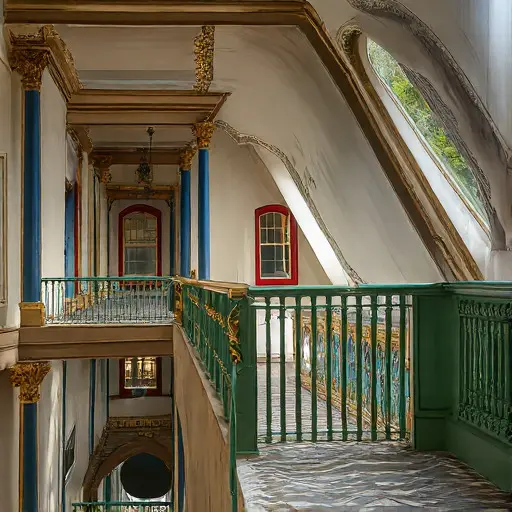
Even now, the structure holds that cadence. The emerald balconies feel like places where someone might still lean out to listen. The ruby window surrounds retain their sense of emphasis, as if framing moments that have simply not occurred yet. And the pale butter-cream stone continues to carry light with the quiet precision of something still attentive.
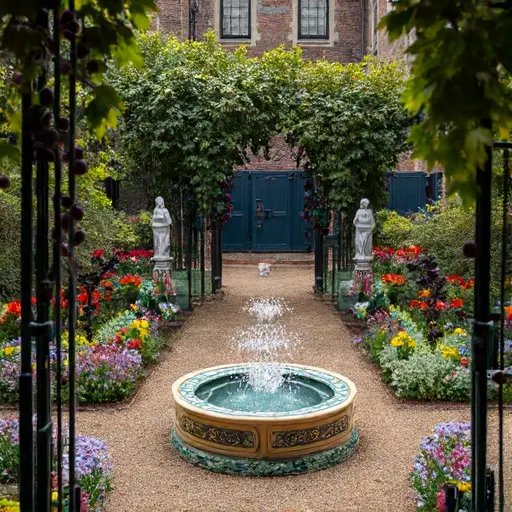
The garden was always described as “composed rather than planted.” Every hedge, path, and statue belonged to a larger rhythm of placement, as if the space itself had been arranged to host pauses in conversation. Even now, that rhythm remains visible, though no one continues to conduct it.
Locals recall the Vancourts not as people who left, but as people who gradually stopped being heard. The house did not empty in a single moment—it simply lost its voices one layer at a time, until only structure remained.
Yet nothing about it feels incomplete. The fountain still defines the center. The statues still share their quiet attention. And behind tall windows layered in ivory and rose curtains, the suggestion of ongoing life lingers just enough to make the absence feel deliberate rather than final.