The Svalenmark Nordic Renaissance Manor Left at the Valley Edge
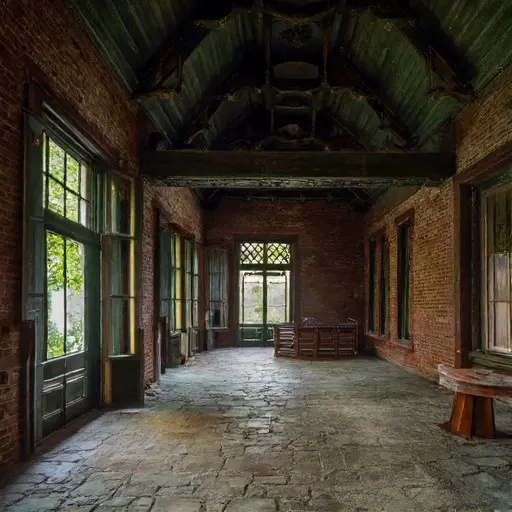
The Svalenmark Manor was built in the early twentieth century on a valley-edge clearing where Nordic forestry routes met small agricultural plots and seasonal trade paths. Designed at true residential scale, it combined Renaissance symmetry with regional material pragmatism, using basalt for structural grounding, brick for upper massing, and ceramic detailing for weather protection. The household consisted of a small extended family supported by a forestry steward and a seasonal laborer, all of whom maintained both the residence and its surrounding productive garden.
Daily life was shaped by long winters and short productive summers, with the winter garden serving as a vital intermediary space between interior life and the surrounding forest. For many years, the manor remained stable, sustained by timber income and modest agricultural exchange within the valley economy.
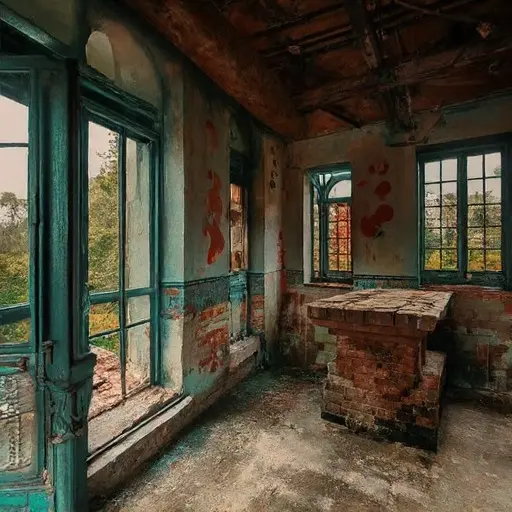
By the late 1920s, the Svalenmark Manor began to experience financial strain as timber yields declined and transportation costs across the valley increased. The maintenance of mixed-material construction—particularly ceramic detailing, copper roofing, and layered masonry—became increasingly difficult to sustain. Portions of the upper rooms were used less frequently during colder seasons, leading to a gradual consolidation of daily life around the central hall and winter garden. Repairs were delayed, allowing moisture and freeze cycles to subtly affect brick joints and timber shutters. Correspondence regarding land use, timber contracts, and estate expenses accumulated without timely resolution. Over time, the manor shifted from a fully active rural residence into a partially maintained household marked by quiet reduction in daily activity.
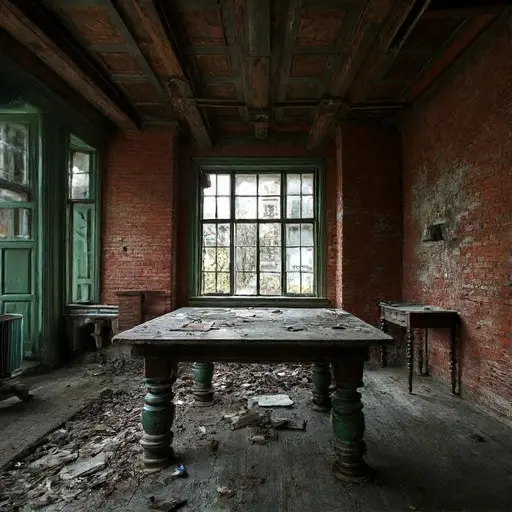
By the early 1940s, following prolonged economic downturn and unresolved inheritance complications, the Svalenmark Nordic Renaissance Manor was fully abandoned. No restoration efforts were undertaken, and the property remained legally unsettled, preventing transfer or redevelopment. Vegetation from the surrounding valley forest gradually encroached upon the gravel paths and winter garden glazing, while seasonal weather accelerated deterioration of brick, timber, and copper elements. Interior furnishings and documents were left in place, preserving the final years of decline in precise detail. No occupants returned, and the manor continues to stand empty at the valley edge, slowly merging into its landscape while its grounded Renaissance silhouette remains faintly visible beneath forest growth.