The Strange Decline of Hollowbriar Hall
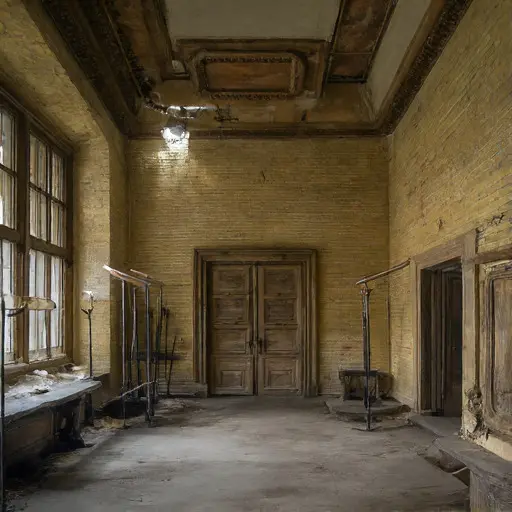
Hollowbriar Hall was built in 1890 for Frederick Alton Merrick, born in 1848 near York. Merrick earned his fortune through publishing and paper manufacturing, supplying newspapers, legal firms, and commercial printers throughout northern England. By the 1890s he had become a respected businessman whose success allowed him to commission an ambitious country residence deep within privately owned woodland.
He lived there with his wife Clara and their only son, Edwin. The house served both as a family home and a retreat where Merrick managed investments through correspondence and account books stored in an extensive library.
The decline began after 1903. Competition from larger industrial paper producers reduced profits, while several poorly timed investments in regional printing ventures failed to generate expected returns. Merrick borrowed heavily to sustain operations and protect his reputation.
Letters preserved within the library reveal growing concern. Contracts were renegotiated. Staff were dismissed. Portions of the business were sold. By 1908, debts had overtaken income.
Clara died in 1909 following a prolonged illness. Edwin moved to London seeking employment, leaving his father alone in the increasingly costly house. Maintenance ceased. Water damage spread through upper floors, while sections of the estate were quietly auctioned.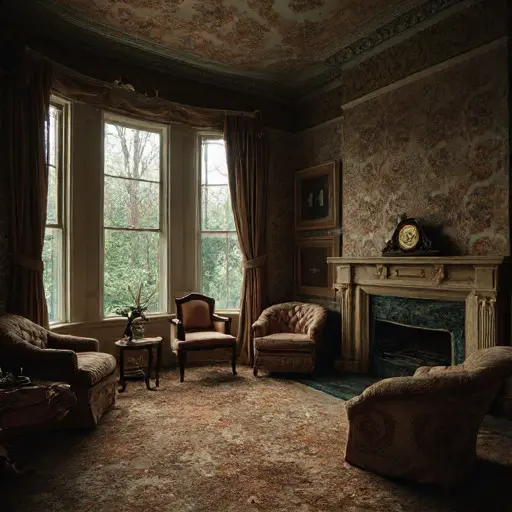
The final document found at Hollowbriar Hall was an unsigned debt settlement dated 1912. Beside it rested unpaid invoices, foreclosure notices, and a ledger that ended halfway through a column of figures.
Nothing indicates the dispute was ever resolved.
The furniture remains where it stood, the ledgers remain unfinished, and the house still waits beneath the forest canopy. Hollowbriar Hall was abandoned without sale, restoration, or conclusion, leaving only the quiet record of a fortune that slowly collapsed within its walls.