The Skarvholm Greenhouse Mansion Left Abandoned After Botanical Research Closure
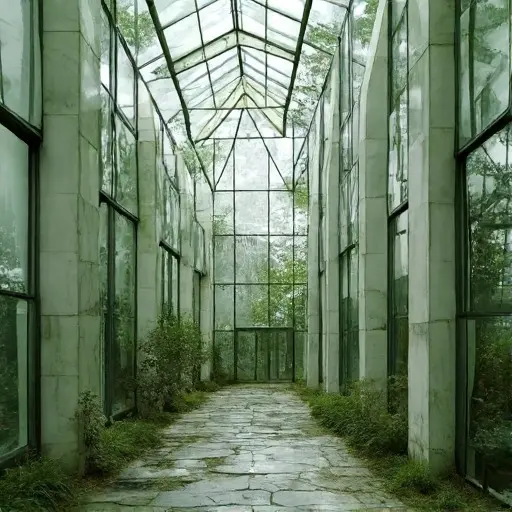
The Skarvholm Greenhouse Mansion was completed in 1908 as part of a Scandinavian botanical research initiative focused on controlled climate cultivation and alpine plant hybridization. Located within a wide forest clearing, the structure was designed as both experimental laboratory and seasonal residence for visiting botanists. Its architecture combined pale glacial granite foundations with steel-reinforced glass volumes intended to maximize diffuse northern light while maintaining internal environmental stability.
The original research program was led by Dr. Ingrid Halvorsen, who oversaw cross-species botanical acclimatization studies alongside seasonal ecological mapping. The mansion housed both laboratory spaces and controlled cultivation chambers, each organized within geometric glass enclosures that responded to environmental conditions. For several decades, the facility maintained steady academic output, contributing to early 20th-century alpine botanical classification systems.
Gradual withdrawal of scientific activity
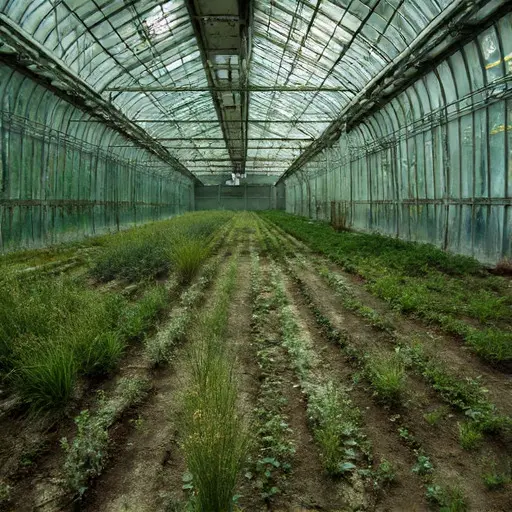
By the early 1930s, funding for large-scale botanical climate research in remote forest environments began to decline as academic priorities shifted toward laboratory-based genetic studies. Field stations such as Skarvholm experienced reduced staffing and intermittent maintenance cycles. Research expeditions became less frequent, and long-term cultivation programs were gradually discontinued.
As activity diminished, sections of the greenhouse mansion were closed off to preserve structural integrity. Climate regulation systems were shut down in phases, and experimental planting zones were left unmanaged. Without controlled environmental input, internal ecosystems collapsed, leaving behind only resilient alpine species and invasive moss growth. The once-precise botanical architecture began to function more as passive structure than active research environment.
Structural silence and ecological reclamation
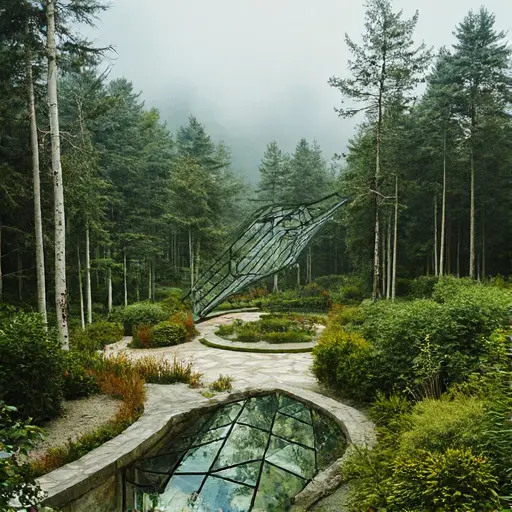
By the late 1940s, the Skarvholm facility had been formally decommissioned as a research site. Remaining equipment was removed or left in place depending on chamber accessibility, and no comprehensive restoration effort was undertaken. Legal ownership transferred through institutional restructuring but was never actively enforced or utilized.
The surrounding forest gradually stabilized around the clearing without fully reclaiming it, maintaining an open boundary that preserves the greenhouse mansion’s full visibility. The structure remains abandoned, its crystalline geometry still intact but fractured, its botanical purpose dissolved, and its interior permanently unlit. It endures as a silent relic of scientific ambition, slowly dissolving into the forest through fragmentation, decay, and ecological adaptation.