The Silent Quiroga Smoking Room Where the Frame Was Left Open
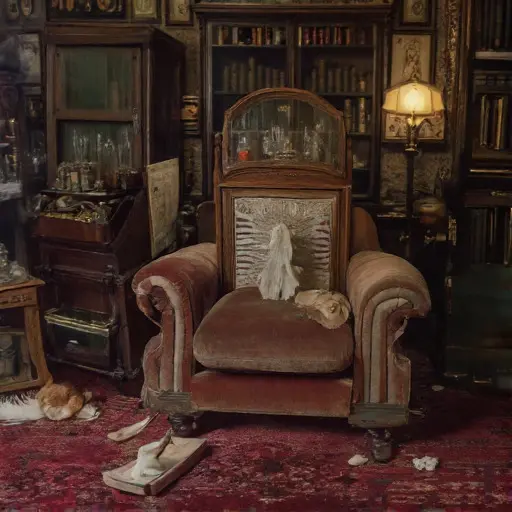
The smoking room holds a tempered hush, touched with the scent of dried herbs and faint preservatives. No struggle marks the parquet, yet an unsettled care lingers over tools halted mid-arrangement, as though a practiced sequence wavered in its final breath.
A Craftsman Working at the Edge of Stillness
Julián Mateo Quiroga, born 1879 in Mendoza, prepared modest mounted birds for collectors passing through provincial ports.
A woven kerchief from his sister Isabel cushions forceps laid with sparing pride. Julián favored dawn skinning, midday wiring, and evening grooming beneath a steady lamp. His humble upbringing echoes in reused cotton strands and improvised pins flattened under small brass weights.
Quiet Labor Pressed Into a Room of Smoke and Velvet
A glass dome sits beside a drift of contour maps stamped in Spanish script. A cardinal specimen, partly fluffed, rests under a lamp whose wick has burned low. On the mantle, grooming brushes lie fanned beside a ledger of measurements, one entry crossed out twice. A drying board shows pinholes from repeated adjustments, their pattern neither chaotic nor calm—merely searching.
Strain Gathering Behind Closed Cabinets
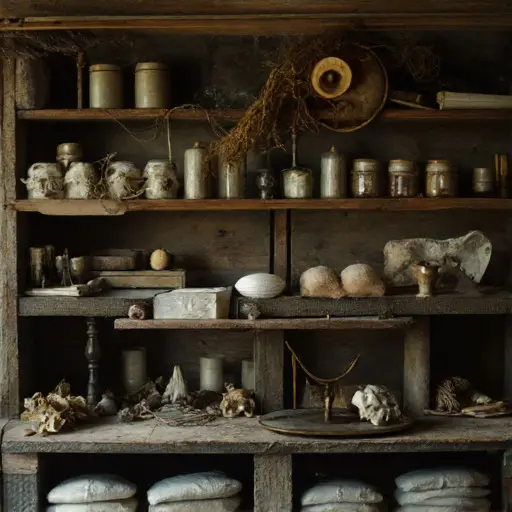
Behind a low humidor box lies a returned commission slip: “improper sourcing.” A dove specimen, tail unevenly spread, rests on a cloth whose corner is twisted by restless hands. The chaise stands nudged from its usual place, as though paced around during a long, uncertain hour. A mounting needle sits point-down in the board gap, placed too gently to be accidental.
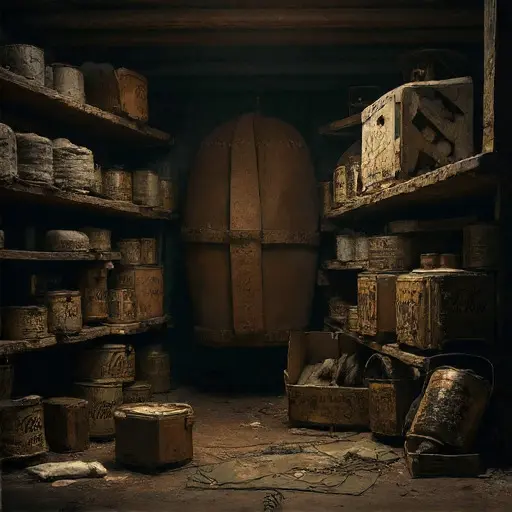
Returning to the smoking room, one clue remains: a perfect mounting frame set beside its incomplete twin—certainty and hesitation lying side by side.
The house remains abandoned.
