The Silent Moreau Linen Attic Where the Glaze Turned Wrong
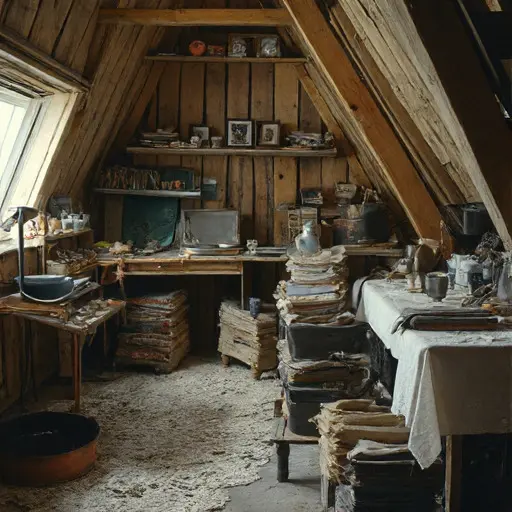
Crossing into the linen attic, warmth fades into a stillness threaded with mineral scent and cooled enamel. The hush feels suspended between decision and retreat, every surface bearing the gentlest marks of a hand trying to continue despite narrowing sight.
The Miniaturist Who Labored in Quiet Brightness
Étienne Claude Moreau, born 1877 in Lyon, painted enamel miniatures for modest patrons.
A linen kerchief from his sister Lucile cushions pigment jars. Étienne favored precise dawn sketching, steady midday layering, and dusk firings under low flame—habits shaped by careful training and frugal means. His blurred handwriting on French-script notes hints at eyes growing uncertain.
Work Pressed Into Corners of Linen and Light
Brushes trimmed to needle-thin points rest beside unfinished portraits whose features waver subtly. A cracked palette shows repeated mixing, its center worn pale. On a folded quilt lies a tile etched with a patron’s silhouette—outline perfect, colors faint. A tiny gilded frame sits askew, as though tested for fit then set aside in doubt.
Strain Settling Beneath Slanted Beams
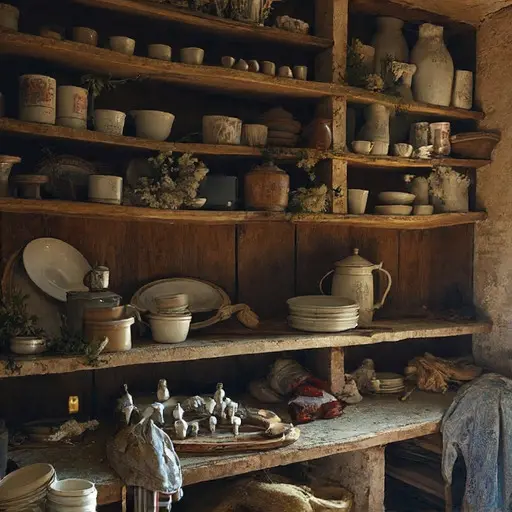
Behind bundled linens hides a returned order slip—“inconsistent likeness.” A portrait tile shows a curved lip blurred at its edge. Étienne’s stool stands angled toward the dormer, as though he rose repeatedly, searching for steadier light. A palette knife rests handle-first in a drawer gap, placed too deliberately to be accidental. Near the quilts, pigment dust forms soft arcs shaped by uncertain footsteps.
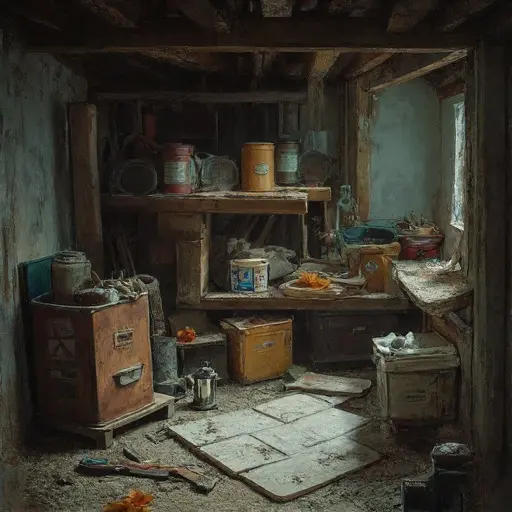
Back in the attic, one quiet sign remains: a perfect frame placed beside the blurred miniature—precision and doubt resting together in fading light.
The house remains abandoned.
