The Silent Looms of the Okafor Textile Chamber
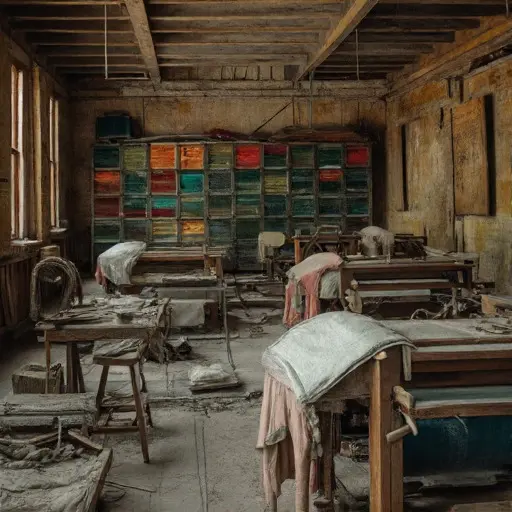
The Textile Chamber hums with suspended diligence. On a loom, penciled weft notations for a ceremonial wrap trail off unfinished. Each shuttle, spool, and partially woven panel evokes exacting routines suddenly abandoned, the rhythm of craft paused indefinitely.
Life in Threads and Pattern
These implements belonged to Chinonso Okafor, master weaver (b. 1881, Lagos), trained in Yoruba textile traditions and skilled in indigo dye resist techniques. Ledger entries show commissions from local chiefs and merchants. A folded note references his apprentice, Tola Okafor, “deliver ceremonial cloth Friday,” revealing meticulous daily routines of threading, dyeing, and weaving with careful precision.
Implements of Craft
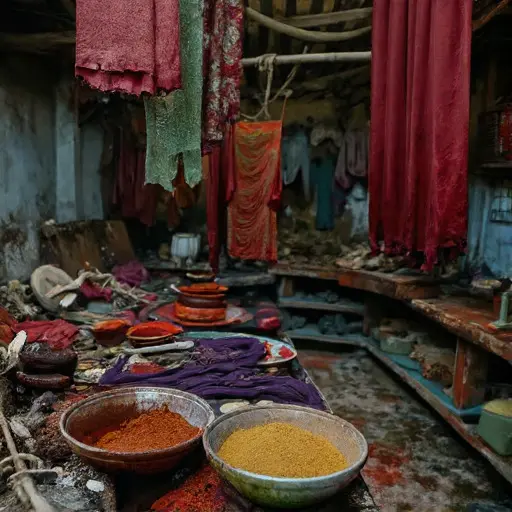
Looms hold partially completed textiles. Spools of dyed cotton thread are arranged by hue, some fraying. Shuttles and scissors lie amid loose fibers. Brushes and dye jars, some dried and cracked, rest nearby. Chinonso’s ledger, under a small weight, details client names, patterns, and deadlines. Dust settling over threads and tools emphasizes sudden interruption of repetitive, patient motion.
Evidence of Declining Precision
Later ledger entries reveal uneven weft spacing and pattern misalignments. Margin notes—“Tola questions tension”—are smudged. Shuttles show uneven wear, scissors chipped, threads tangled. Chinonso’s fading eyesight and trembling hands subtly deform motifs. Pencil notations trail off mid-instruction, a quiet testament to declining mastery and interrupted craft.
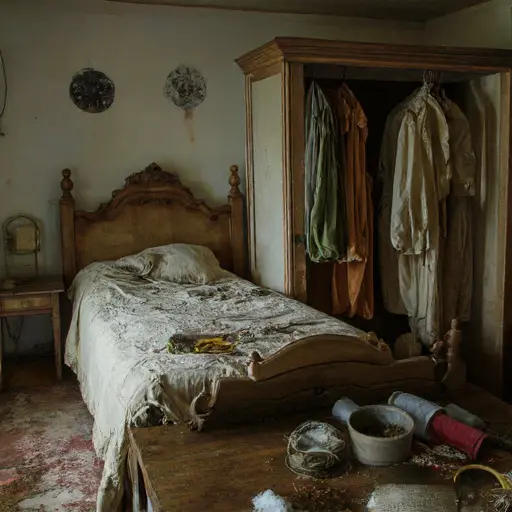
In the Chamber’s final drawer, Chinonso’s last panel ends mid-pattern, weft lines trailing into silence. A penciled note—“verify with Tola”—abruptly stops.
No record explains why he abandoned his work, nor why Tola never returned.
The house remains abandoned, looms, threads, and dyed cloth awaiting hands that will not return, the quiet heavy with unfinished craft and lost mastery.
