The Silent Loom of Harrington’s Forgotten Weaver
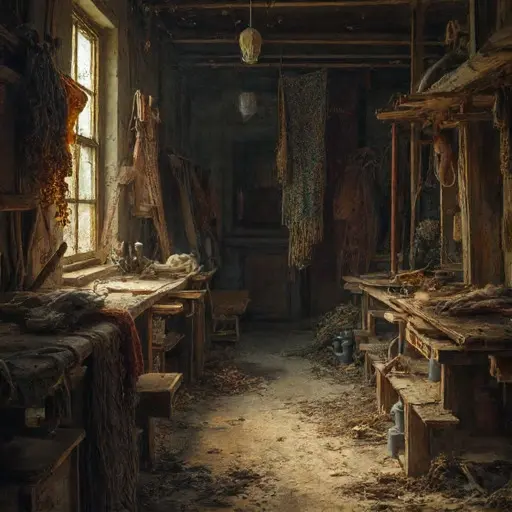
The loom dominated the east wing, a sanctuary of rhythm and textile craft. Dust gathered on partially woven patterns, and small piles of threads indicated where hands had paused. The air still smelled faintly of boiled wool and linseed oil, relics of meticulous work left incomplete.
Life of Matilda Harrington
Matilda Harrington, born 1880 in Lyon, France, grew up in a family of artisan silk dyers. Educated in pattern design and dye techniques, she became a professional weaver for private commissions, her social standing modest but respected. Her routines were precise: warping the loom at dawn, aligning threads, sketching intricate floral patterns, and noting dye recipes in a leather-bound journal. Physical traces of her life survive in worn finger guards, ink-stained swatches, a cracked dye pot, and a faded shawl draped over a chair. Ambitious and patient, she aimed to supply wealthy Parisian clients, but relentless deadlines and personal illness began to interrupt her steady work.

Decline and Halting
Matilda’s decline arose from progressive arthritis, which made fine weaving impossible. Evidence appears in unfinished wall hangings, skewed looms, and dyes left to dry unused. Letters to clients were stacked and never mailed; receipts and invoices lie untouched. A wooden shuttle rests mid-motion across a loom, a poignant visual of disrupted continuity. The house retains no explanation for her final days, only these abandoned traces of labor.
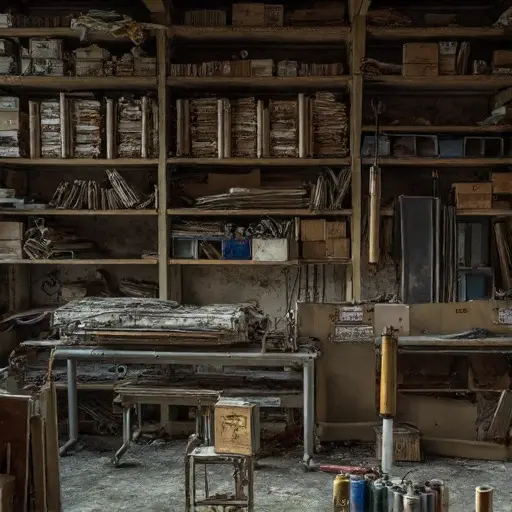
No heir or caretaker restored the weaving rooms. Tools, fabrics, and journals remain untouched, dust layering every surface. The house preserves the silent, precise rhythm of a life devoted to textile artistry, frozen mid-motion. Matilda Harrington’s disappearance and the abandoned loom endure as an unresolved interior mystery, a quiet testament to a craft halted too soon.