The Silent Italianate Villa Beneath the Overcast Sky
Hidden along an established American residential street stands an abandoned three-story Italianate Victorian villa that once represented elegance, prosperity, and refined architectural taste. Though decades of neglect have softened its details, the mansion still commands attention with its grand proportions, graceful tower, and carefully crafted ornamentation.
The square tower rises above the neighborhood like a quiet monument to another era, framing the villa’s tall arched windows and sweeping curved veranda. Carved wooden balconies wrap around the upper levels, while elaborate roof brackets and ornamental stonework reveal the extraordinary craftsmanship that defined the home’s original design.
Constructed from pale lavender-grey stone, the mansion carries a subtle faded beauty beneath its years of weathering.
Warm ochre sandstone columns provide contrast along the veranda, while dark terracotta roof tiles and aged copper accents create a rich palette of historic materials. The facade has developed a graceful unevenness over time, with gentle curves and softened edges created by decades of exposure.
The front garden, once carefully maintained, now exists somewhere between nature and architecture. A weathered iron fence surrounds the property, enclosing cracked limestone paths, overgrown garden beds, and forgotten landscape features. A stone fountain sits near the entrance, its stagnant reflective water collecting fallen leaves and moss, while a faded wooden rocking chair remains beneath the porch as if waiting for a former resident to return.
The surrounding neighborhood continues quietly around the villa. Utility poles line the street, nearby rooftops fade into the distance, and a rusted mailbox stands beside cracked pavement. Despite its abandonment, the mansion remains a remarkable presence among ordinary residential homes.
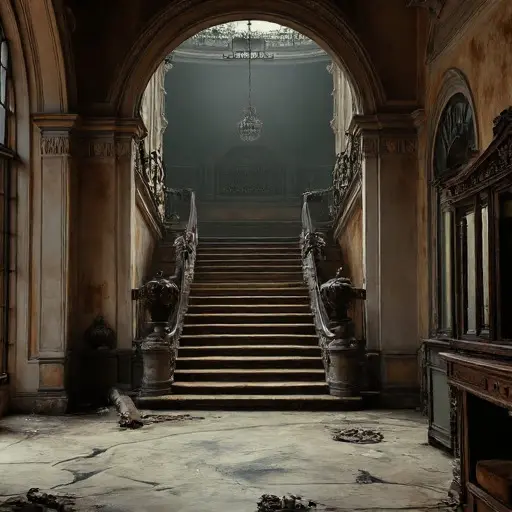
Inside, the villa reveals the same elegance that defined its exterior. The entrance hall opens into a spacious interior filled with carved wood details, tall doorways, and carefully designed architectural features. Dust covers the marble floors, yet the craftsmanship remains visible in every railing, column, and decorative molding.
The central staircase curves upward beneath the tower, connecting the mansion’s three floors. Its wooden balustrades show years of wear but retain their original beauty. Along the walls, faded finishes and abandoned furnishings hint at the generations who once moved through these halls.
The formal rooms surrounding the entryway were designed for entertaining. Large windows once filled the spaces with natural light, while fireplaces, carved trim, and elegant furniture arrangements created a sophisticated atmosphere. Now, peeling surfaces and quiet rooms reflect the passage of time.
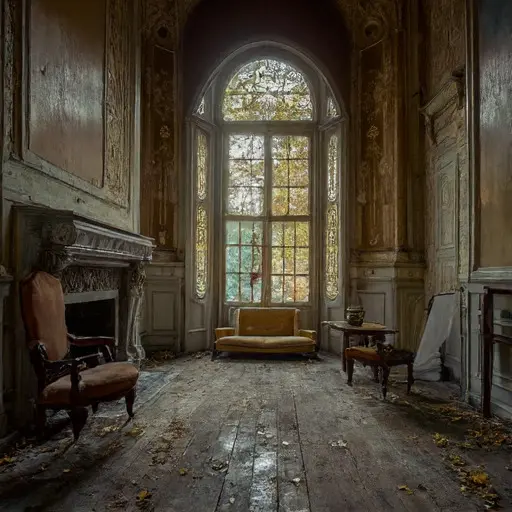
The main parlor remains one of the mansion’s most captivating spaces. Its tall windows overlook the neglected gardens, while the ornate fireplace and decorative details preserve the room’s former grandeur. The furniture has faded beneath layers of dust, but the proportions and craftsmanship still suggest the importance of the room.
Beyond the public areas, the upper floors contain quieter family spaces. Bedrooms open along long corridors beneath the tower, with worn wooden floors and faded wallpaper revealing years of abandonment. Forgotten closets, old fixtures, and remaining household objects create a sense that life simply paused within the mansion.
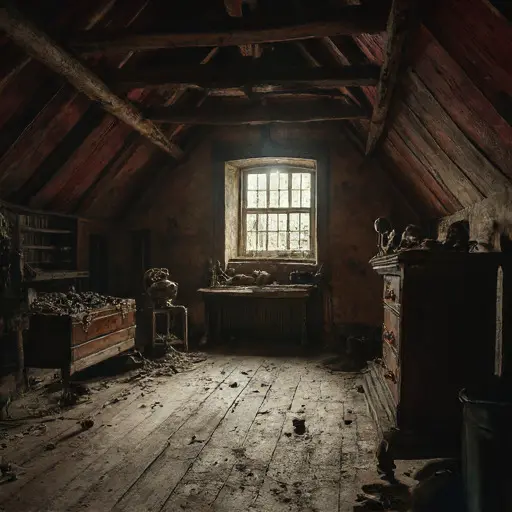
The attic spaces beneath the terracotta roof hold the remains of the villa’s long history. Wooden beams stretch across the ceiling, storage trunks sit untouched, and small windows provide views over the surrounding neighborhood. These hidden spaces preserve the personal side of the estate, away from its formal public rooms.
Outside, the villa continues its slow transformation. Vines creep across stone surfaces, garden beds grow wild, and moss spreads along the foundation. The fountain reflects the empty surroundings, while the rocking chair beneath the porch remains a quiet symbol of the home’s vanished residents.
Although abandoned, the Italianate mansion has not lost its character. Its tower, balconies, arched windows, and handcrafted details continue to tell the story of a time when homes were built as lasting expressions of identity and achievement.
Today, the villa stands quietly on its residential street, surrounded by modern life but belonging to another century. Every weathered stone and faded wooden detail preserves the memory of the families who once filled its rooms, leaving behind a remarkable architectural portrait of elegance slowly reclaimed by time.