The Silent Gables of the Forgotten Grove
Hidden beyond a quiet forest lane, the abandoned Gothic Revival Victorian house stands as a haunting reminder of another era. Built from pale grey limestone and crowned with dark blue slate roofing, the three-story residence rises among ancient beech trees with a solemn elegance that time has slowly softened. Its weathered copper accents have aged into muted tones, blending naturally with the surrounding woodland.
The architecture carries the dramatic character of the Gothic Revival movement, yet decades of abandonment have transformed its sharp details into something gentler and more organic. Tall pointed arches frame narrow stained-glass windows, their colored panes faded but still intricate beneath layers of dust and age.
Carved stone tracery stretches across the façade, softened by years of rain and changing seasons.
The house no longer stands perfectly rigid. A bowed side wall, uneven dormers, and a roofline that dips between steep gables reveal the slow effects of settlement. The slender turret above the deeply recessed entrance leans almost imperceptibly, giving the entire structure the feeling of a living monument that has quietly adjusted to the landscape around it.
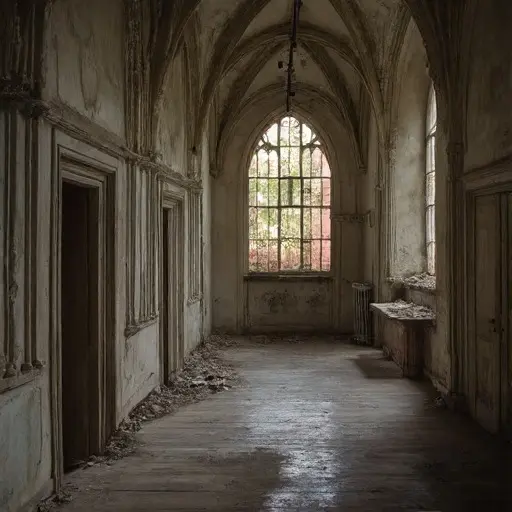
Inside, the silence of the abandoned residence is overwhelming. Long corridors stretch through the darkness, lined with carved wood trim and forgotten architectural details. The interior spaces retain traces of former grandeur, with empty rooms where fireplaces, decorative moldings, and aged flooring remain untouched. The absence of light behind the windows creates a mysterious atmosphere, as though the house has been sealed away from the passing world.
Outside, the surrounding forest has slowly reclaimed the property. Ancient beech trees surround the quiet residential lane, their branches forming a natural canopy above moss-covered stone walls and ivy-covered paths. Wildflowers spread freely through the front garden, weaving between cracked paving stones and forgotten architectural fragments.
A weathered stone fountain rests beside the walkway, its small reflective pool collecting rainwater beneath a layer of fallen leaves. The fountain’s worn carvings suggest years of careful craftsmanship, now softened by moss and exposure. Nearby, a rusted old pram sits beneath a tree near the porch, frozen in place as a silent artifact of the home’s forgotten history.
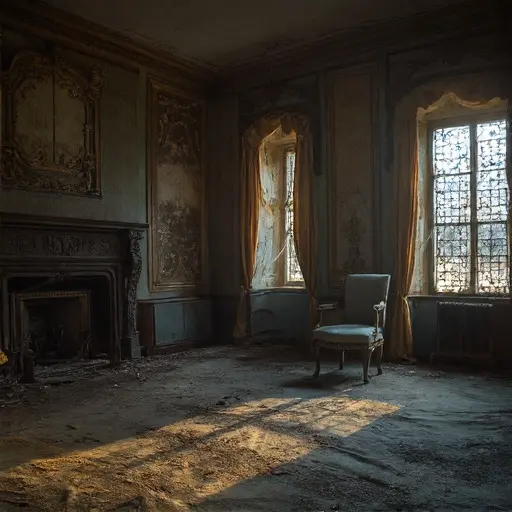
The upper floors remain untouched by modern restoration, preserving the authentic decay of the residence. Narrow staircases wind upward into shadow, leading toward rooms where old wooden beams and forgotten ornaments slowly deteriorate. Every surface tells a story of craftsmanship, neglect, and the quiet passage of time.
The Gothic Revival house feels less like a ruin and more like a preserved memory. Its leaning tower, weathered stonework, and overgrown gardens create a rare harmony between architecture and nature. The forest has not destroyed the residence—it has embraced it, allowing the old home to become part of the landscape it once overlooked.
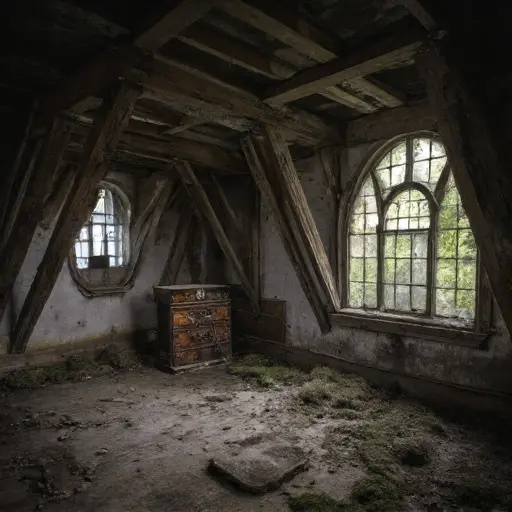
Today, the house remains hidden among the trees, standing quietly along the forgotten lane. The cracked fountain, rusted pram, and ivy-covered paths are the only witnesses to its past, while the pale limestone walls continue to endure beneath the grey skies. It remains a graceful monument to Victorian imagination, slowly fading into the peaceful forest that surrounds it.