The Silent Fate of the Fenwick Glade
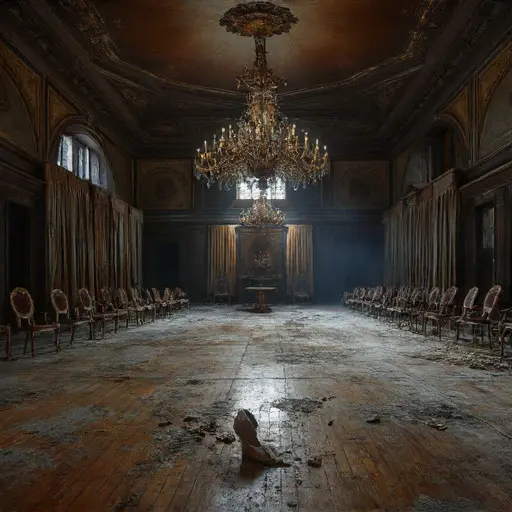
The air inside the Fenwick Glade is a dense, stagnant medium that carries the cold scent of damp stone and decaying silk. It is a house where the sound of one’s own breath feels sacrilegious. The Entrance Foyer is an eloquent testament to the sudden stoppage of life: a heavy oak coat-tree still bears the marks of where multiple hats once rested, and a chipped porcelain vase on a side table holds a cascade of dried, skeletal hydrangea blooms, their blue pigment faded to a pale grey.
The entire house stands as a monument to the disastrous marriage of ambition and financial fragility that was the life of Lucien Fenwick. There are no sounds but the creak of the house settling deeper into its foundation, a quiet, geologic process of return to earth.
Lucien Fenwick’s Grand Delusion
The owner and the source of the house’s tragedy was Lucien Fenwick (1855–1912), a self-made industrialist who built his fortune on the volatile business of chemical dyes. His ambition was monumental, his personality characterized by aggressive social climbing and a desperate need for aristocratic recognition. His social role was defined entirely by his grand hostess wife, Adeline, who hosted legendary, expensive social events designed to cement their position. Lucien’s great, blinding fear was the loss of his newly acquired social standing, which he believed was anchored only by the sheer scale of the Fenwick Glade.
The house was built late in the Victorian era, specifically to project an image of impregnable wealth. Every room, especially the spectacular Ballroom and the ornate Music Room, was designed for performance. The most private, and telling, space was Lucien’s Study, a room that changed dramatically after the Panic of 1907. Before the crash, it held the heavy, locked safe containing his ledgers. Afterward, it became a repository for the objects he was secretly selling to stay afloat. Evidence of his attempts to maintain the facade is found in the Music Room, where the grand piano still stands, but its velvet-lined bench hides stacks of pawn shop receipts tucked beneath the cushions—receipts for silver and jewelry Adeline believed were simply sent out for cleaning.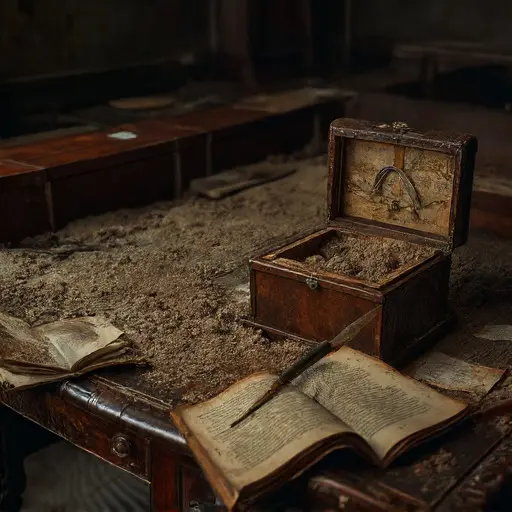
The Gown in the Dressing Room
The tragedy culminated in 1912. Lucien had desperately over-leveraged his company on an obsolete dye formula. The subsequent failure was total. He did not tell Adeline, allowing her to proceed with the preparations for their grand annual New Year’s Eve ball, his final, desperate attempt to attract an investor. The physical manifestation of this lie rests in Adeline’s Dressing Room. On a headless mannequin sits her last Ball Gown, a magnificent, heavily beaded black silk creation, the fabric now brittle and torn. Tucked into the bodice, a small, tightly folded telegram reveals the truth: a cold, terse notice from his bank stating they were foreclosing on all assets, effective January 2nd.
The Final Bill in the Butler’s Pantry
The Butler’s Pantry, a small room adjacent to the Dining Room, holds the most conclusive evidence of the house’s sudden end. On the slate counter, next to rows of tarnished silver trays, rests the unopened final catering bill for the aborted New Year’s Eve ball. It remains wrapped in its original string, addressed to Lucien Fenwick. On the evening of December 31, 1912, as Adeline was preparing for the ball upstairs, Lucien suffered a massive, quiet cerebral hemorrhage in his Study, dying instantly. Adeline discovered the body hours later. Facing financial ruin and unable to bear the public disgrace, she left the house on January 1st, taking only a small valise.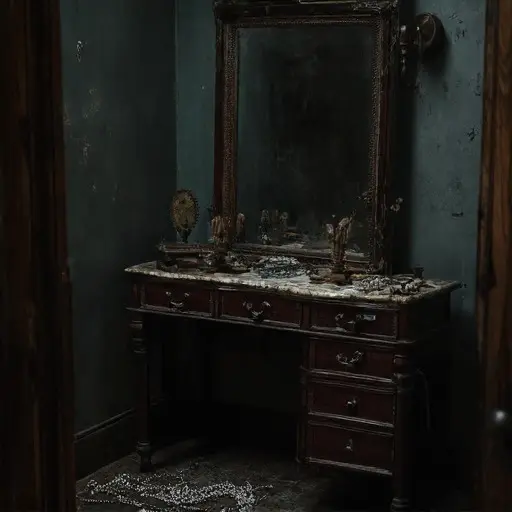
Adeline never signed the transfer papers or provided an inventory; she simply walked away from the house, the debt, and the life. The Fenwick Glade, a monument to a grand delusion, was sealed by the bank receivers in mid-January 1913, its doors locked with the grand gown, the tarnished silver, and the final, unpaid bill remaining inside. It stands today, untouched and utterly abandoned.
