The Silent Fate of Goldsmith’s Wane
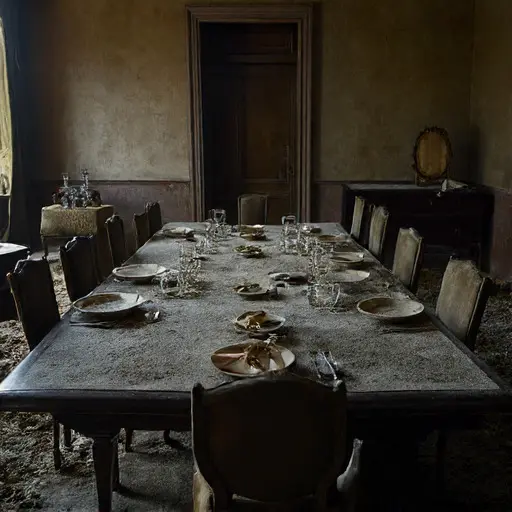
The atmosphere inside the Goldsmith’s Wane is heavy, cold, and intensely motionless, saturated with the dry, coppery scent of old metal and decaying velvet. The Main Entrance Hall is an immediate record of instantaneous abandonment; a massive, gilt-framed mirror on the wall is dull and cracked, reflecting only the overwhelming gloom. A pair of formal, men’s leather gloves rests neatly on a small, marble-topped table near the door, placed with an intention that was never fulfilled.
The entire house serves as the silent, unedited chronicle of Silas Goldsmith, a man whose life was a brilliant display of wealth, ended by a single, catastrophic act of emotional recklessness he could not undo.
Silas Goldsmith’s Reckless Generosity
The proprietor who sealed the house’s fate was Silas Goldsmith (1868–1919), a hugely successful, flamboyant entrepreneur and financier known for his extravagant philanthropic gestures. His profession was the risky accumulation and dispersal of wealth; his personality was defined by intense, public-facing optimism and a profound, private aversion to admitting financial limits. His social role was the generous, yet secretly pressured, benefactor, living with his beloved wife, Beatrice, and their three children. Silas’s single, all-consuming fear was the loss of his reputation—the public discovery that his legendary generosity was not matched by his actual solvency.
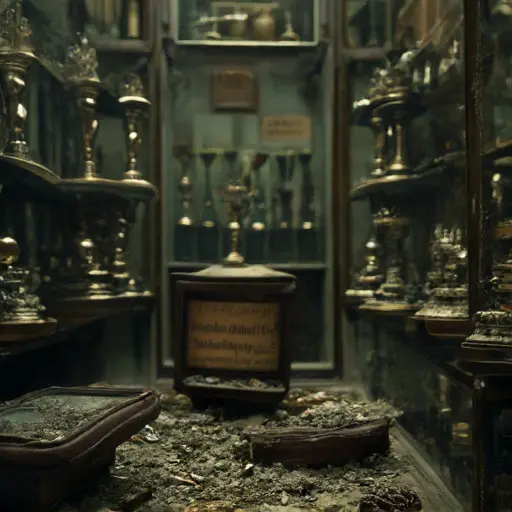
The house, completed in 1910, was a stage for his performance of inexhaustible wealth. The Ballroom and the Music Room were rarely used for private family life, but were frequently opened for immense, costly charitable events. The house’s tragic decline began with a series of massive, poorly secured loans he issued to a collapsing industrial project in 1917. His response was to intensify his public giving, desperately trying to use the illusion of wealth to attract new investors. He started spending hours alone in the Third Floor Trophy Room, a space filled with awards and commendations, nervously polishing his trophies—a futile, physical attempt to maintain his tarnished reputation.
The Stack of Blank Checks in the Study
The financial evidence of Silas’s ruin—a direct result of his fear of public disgrace—is found in the Ground Floor Study. On the heavy, carved oak desk, a leather-bound checkbook lies open. The last page contains twenty-five blank checks, each signed by Silas Goldsmith but left undated and unassigned, a final, reckless preparation for last-minute, desperate transactions. The checks, covered in a permanent layer of dust, are a silent testament to the extreme financial brinkmanship he practiced until the end.
Beatrice’s Gloves in the Music Room
The emotional rupture occurred in the late summer of 1919. Beatrice, discovering the catastrophic extent of the debts and the finality of the insolvency, prepared to leave. Evidence of her silent departure is found in the Music Room. On the open, dust-coated grand piano, rests a single pair of black velvet evening gloves, placed carefully over a sheet of music (Chopin’s Funeral March). The gloves belonged to Beatrice, who left the house hours after discovering her husband had liquidated the last of her inheritance to cover a debt. Silas Goldsmith, facing absolute ruin and the loss of his family, died of a sudden, quiet stroke in the Study that same evening.
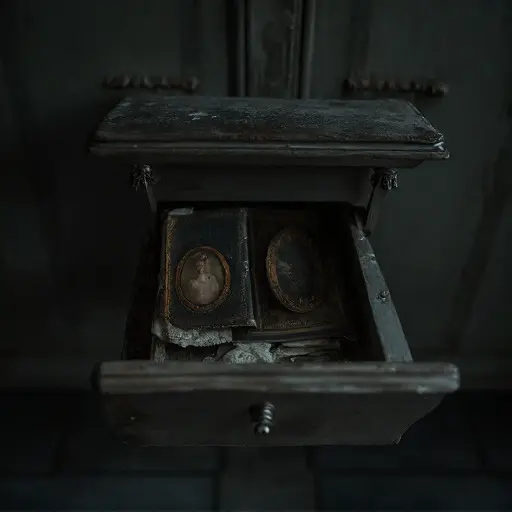
Beatrice was notified of her husband’s death but refused to re-enter the house, stating she could not face the scene of his final, reckless act. She and the children moved to her family’s property. The bank seized the Goldsmith’s Wane in 1920 but, due to the magnitude of the debt and the house’s connection to a public scandal, it was deemed legally toxic and unsalable. The receivers simply secured the imposing doors and left it. The Goldsmith’s Wane stands today, every room holding the material record of a life consumed by its own overweening, devastating fear of public failure, forever silent and abandoned.
