The Silent Atelier of Hawthorne’s Forsaken Designs
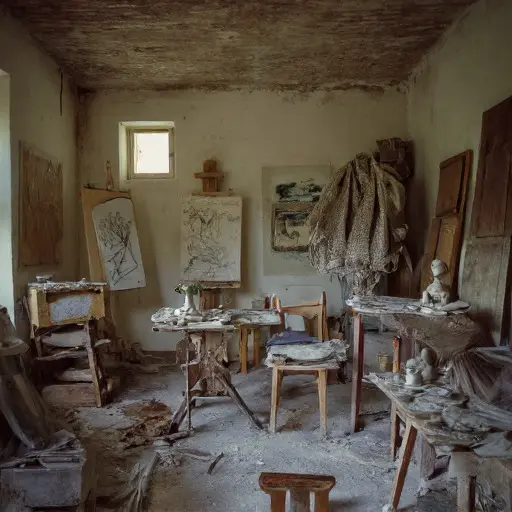
The atelier murmurs with suspended creation. Oils hardened into textures, sketches left incomplete, and brushes abandoned in water jars illustrate routines suddenly broken. Canvases, moldings, and design drafts trace an artist’s exacting workflow, the labor of imagination meticulously structured yet abruptly halted.
Each chair angled for comfort, each palette left in mid-mix, hints at a life devoted entirely to the act of making.
Portrait of a Designer
This atelier belonged to Margaret Hawthorne, sculptor and costume designer, born 1887 in Lyon, France. Raised in a bourgeois family appreciative of the arts, she studied at the École des Beaux-Arts, her sister Lucille Hawthorne often assisting with sewing and design. Margaret’s day was regimented: morning sculpting, afternoon sketching, evenings dyeing fabrics and preparing molds. Physical traces remain: ink-stained sketchbooks, plaster dust on floors, paint flecks across work tables, and measuring tapes left mid-use. Her temperament combined precision, creative vision, and discipline, shaping a life that balanced invention and careful technicality.
Decline and Evidence
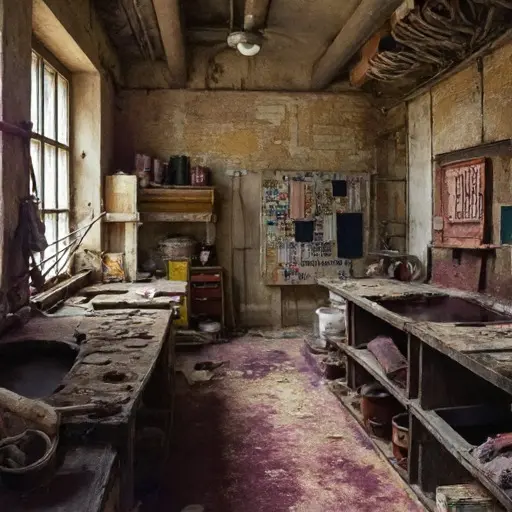
Margaret’s decline resulted from progressive arthritis, restricting her ability to sculpt and manipulate fabrics. Canvases lean unfinished, molds remain unset, and sketches lie half-colored. Evidence of interrupted creative work permeates the atelier: paint-stained cloths, scattered sculpting tools, and partially mounted costumes all point to routines halted. The atelier preserves these traces, capturing the sudden cessation of labor, intention, and meticulous artistry.
No explanation accompanied her departure.
Margaret Hawthorne never returned to her atelier.
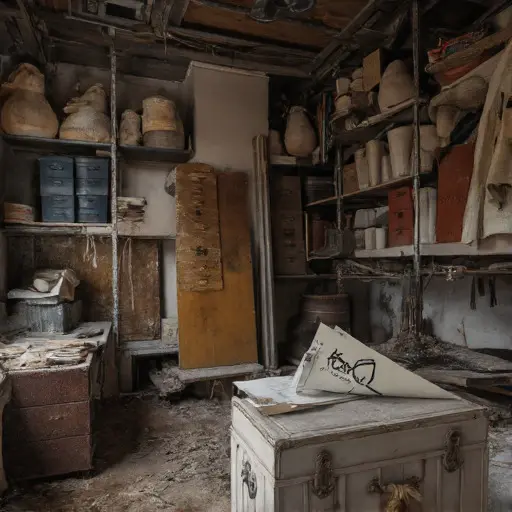
The house remains abandoned, the atelier untouched, canvases, molds, and fabrics frozen mid-creation. The atelier preserves the memory of labor and invention, halted by illness, leaving artistry, skill, and ambition suspended, silent, and haunting in absence.