The Shattered Ishikawa Villa: The Hidden Ledger of Postal Wealth
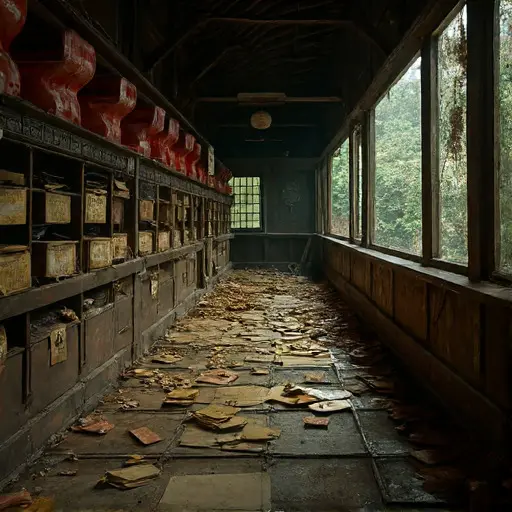
The Ishikawa Villa was constructed in 1902 on the edge of a forested basin for Kenzō Ishikawa (1867–1913), a postal savings inspector overseeing rural financial circulation networks tied to emerging national banking reforms. His wealth derived from administrative commissions on postal deposit expansion and the consolidation of village savings into state-backed instruments.
The villa was designed as both residence and working archive, where Ishikawa verified ledgers arriving from inland post stations.
His household included his wife Aiko and his younger sister Naori, both assisting in document reconciliation and seal verification. The estate became a private extension of state bureaucracy, its rooms filled with stamped registers, inked receipts, and routed financial summaries.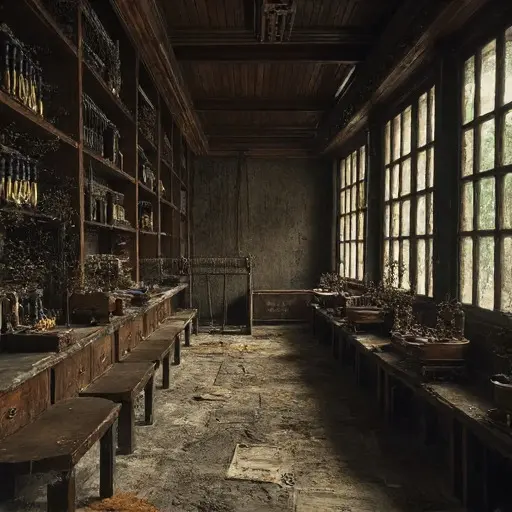
The turning point came in 1909 when a national postal savings scandal emerged after auditors discovered falsified rural deposit records used to inflate regional financial stability reports. Investigations rapidly expanded, implicating inspectors who had certified irregular accounts under administrative pressure.
Ishikawa’s division was dissolved within months, and all associated savings ledgers were frozen pending review. Confiscation orders arrived at the villa in sealed envelopes that were never opened publicly, only logged and stored without response.
By 1912, regional unrest surrounding financial reforms led to further seizure of postal archives. The villa was cut off from official correspondence entirely.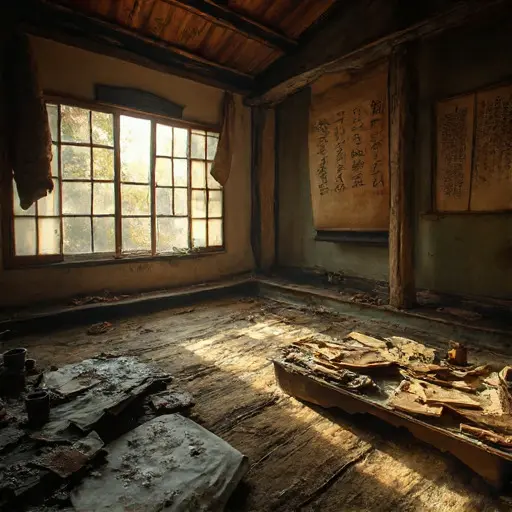
Inside the final ledger room, inspectors later found a complete registry of halted postal savings accounts, each marked with administrative suspension codes that were never resolved into closures.
Kenzō Ishikawa is recorded as having resigned shortly before formal charges were finalized, his whereabouts unrecorded thereafter.
The Ishikawa Villa remains abandoned within the inland basin, its postal records sealed in silence, its rooms untouched and unresolved under layers of dust and forgotten governance.