The Secret Liang Stairwell Where the Stroke Went Astray
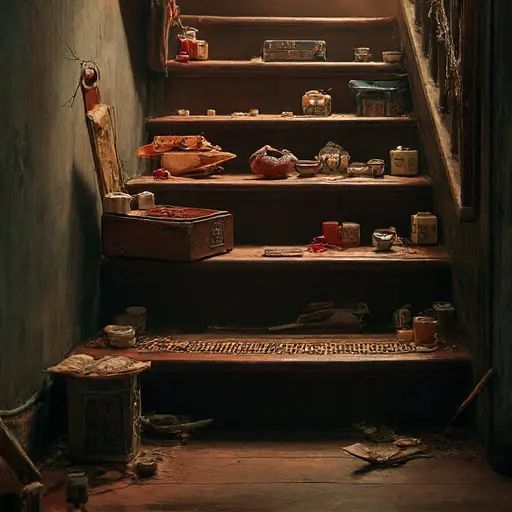
The stairwell holds a warmth gone thin, scented with pine boards and ink rubbed nearly dry. Each tread bears smudges from quiet hours spent bending over paper. Though nothing is overturned, the hush carries a shift—an intention pressed too far toward precision, then left behind.
The Calligrapher Shaping Silence Into Form
Liang Shenyi, born 1878 in Suzhou, practiced modest calligraphy for shop signs and ceremonial slips. A silk square from his cousin Meilin cushions ink cakes arranged by tone. Liang favored dawn grinding, midday drafting, and evening refinement beneath a swaying lantern. His simple upbringing shows in reused scroll edges and brushes trimmed by careful thrift.
Traces of Work Gathered on Each Step
A set of brushes lies fanned beside a shallow bowl, bristles stiff from incomplete washing. Along the banister, scrolls display disciplined strokes, though one character’s structure tilts shy of balance. A porcelain dropper, hairline-cracked, rests near a pile of practice sheets bearing faint red seals. The planks creak softly as though still warmed by steady footfalls climbing and descending in thoughtful rhythm.
Strain Beneath the Lantern’s Flicker
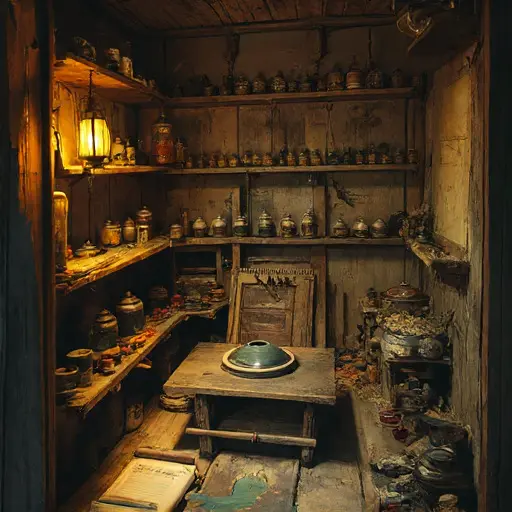
Behind the landing rail lies a returned note—“unsteady structure.” A scroll shows a wavering radical near its base. Liang’s stool stands turned toward the upper treads, as though he paused to test the light repeatedly. A brush with its tip bent faintly sideways rests beside a water jar, handle darkened where anxious fingers gripped.
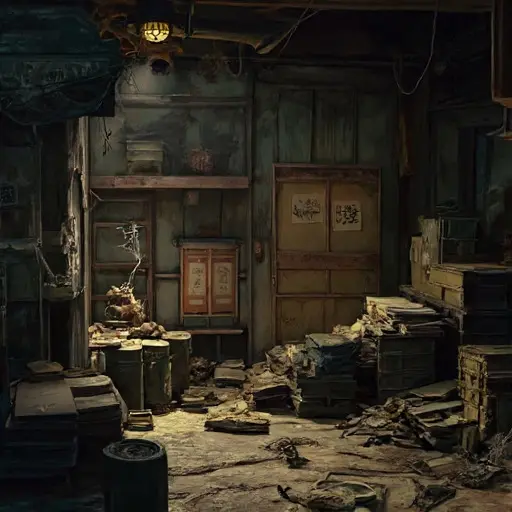
Returning to the stairwell, one final sign remains: a flawless character brushed on a small slip, placed beside its uneven companion—precision shadowed by doubt, held in lingering quiet.
The house remains abandoned.
