The Sea-Foam Copper Manor in the Tidal Marsh

The Tudor Revival Victorian manor was constructed at the edge of a tidal marshland where saltwater tides once reached deep into the surrounding meadow. Built from pale chalky limestone and dark flint stone, the three-story residence was designed to withstand a shifting, moisture-heavy environment while maintaining the visual language of English revival architecture. Its irregular steep roof, clad in weathered copper shingles now dulled to a sea-foam patina, was engineered to resist coastal corrosion, while its façade subtly expanded outward along the upper floors—an intentional response to both ground movement and atmospheric pressure from the marsh winds.
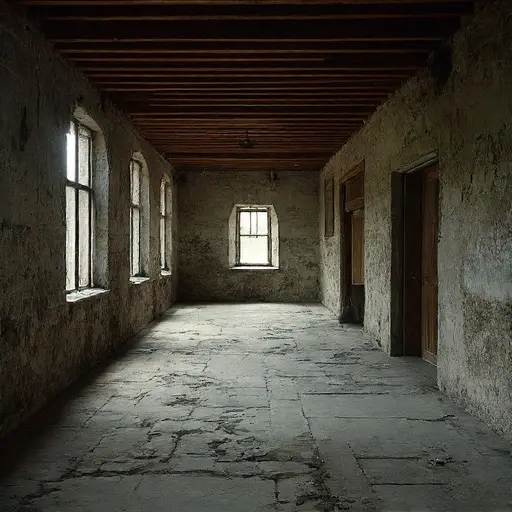
Heavy stone-framed diamond-pane windows were set at uneven intervals, capturing diffuse daylight and breaking it into fractured interior geometries that shifted throughout the day.
As tidal patterns gradually changed over decades, the marsh began to expand inland, altering the structural relationship between land and building. Salt-tolerant grasses overtook the surrounding meadow, and shallow reflective pools formed where dry ground once supported gardens. The manor’s central chimney cluster, already leaning slightly due to uneven foundation settling, became more pronounced in its tilt as subsurface moisture softened the soil beneath. The iron garden arch near the entrance corroded rapidly in the saline air, eventually collapsing into surrounding vines that now fully envelop its remains. Maintenance ceased as access routes became intermittently flooded, isolating the estate from nearby settlements.

Today, the Tudor Revival Victorian manor stands partially embraced by the tidal marshland. The broken stone sundial remains tilted in mud where shifting ground displaced it, and shallow pools mirror fragments of the leaning façade and sea-foam copper roof above. The structure persists as a slow, ongoing negotiation between architecture and encroaching wetland—its limestone softened, its flint darkened by salt, and its interior spaces gradually returning to the rhythms of tide and vegetation.