The Saltmarsh Port House Left Vacant After Harbor Drainage Failure
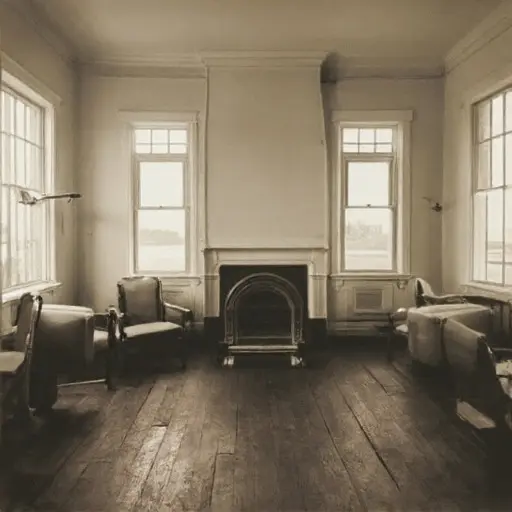
The Saltmarsh Port House was built in 1894 on a narrow spit of reclaimed harbor land at the edge of a small industrial estuary. Designed as a compact Italianate Victorian residence, it was intended for the family of Edwin Harrow, a civil engineer overseeing drainage and tidal control works for the surrounding harbor infrastructure. The house was constructed from pale cream stucco carefully scored into ashlar lines, giving it the appearance of cut stone while remaining economically efficient in its materials.
Its placement was deliberate: positioned along a grid of stone sluice channels and low retaining walls that once managed tidal flow, the house functioned both as residence and informal oversight point for the harbor’s drainage system. A strong rectangular mass defined the building, capped with a shallow hipped slate roof and punctuated by evenly spaced chimneys that served practical heating needs rather than ornamental expression.
Inside, the Harrow family maintained a disciplined domestic routine closely tied to harbor operations. Edwin Harrow monitored sluice maintenance schedules and seasonal drainage reports, while his wife Margaret managed correspondence with harbor authorities and coordinated visiting inspectors. The architecture reflected this functional clarity, with strict vertical alignment of windows and calm spatial organization across both floors.
Early infrastructural decline
By the early 1920s, changes in regional shipping routes and the gradual decommissioning of older harbor systems reduced the importance of local tidal engineering stations. Automated control systems and centralized oversight replaced on-site supervision, diminishing the need for residential engineering households at remote infrastructure points. As funding declined, maintenance of the sluice channels and retaining walls became irregular.
Gradual disuse of the harbor residence
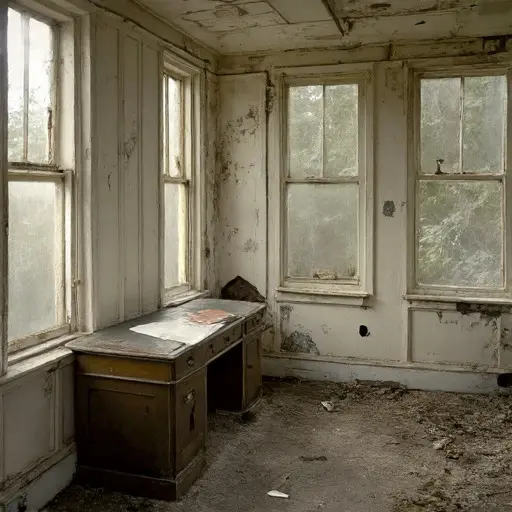
As harbor operations wound down, the Saltmarsh Port House gradually lost its functional purpose. The sluice network outside the property fell into disrepair, with channels drying out and retaining walls cracking under seasonal shifts. Inside the house, rooms were progressively closed off to reduce maintenance demands, and daily activity became increasingly limited to the central floors.
The surrounding environment changed in parallel. Salt-tolerant grasses and coarse weeds colonized the former garden space, following drainage lines left by the old harbor infrastructure. The iron fence enclosing the property began to sink unevenly into shifting silt, marking the slow transition from engineered land to neglected shoreline.
Final abandonment phase
By the late 1940s, the Saltmarsh Port House was no longer inhabited. Harbor infrastructure had been fully superseded, and no institutional responsibility remained for either the sluice system or the residence. Utility services were discontinued, and no repairs were undertaken. The building remained structurally intact, its stucco surface weathered but stable, standing quietly within a landscape that had outlived its original engineering purpose.
The house left behind
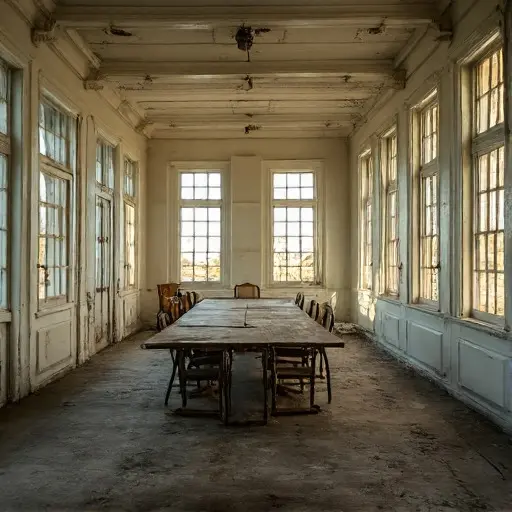
By the early 1950s, no ownership claims or restoration efforts had been made for the Saltmarsh Port House. Legal responsibility for the reclaimed harbor land remained unresolved, and the property was left unmaintained. The house continues to stand on its narrow spit of engineered ground, quietly enduring wind and salt air, a Victorian residence that outlasted the system that once sustained it, now permanently vacant within a forgotten coastal infrastructure.