The Ruined Castellan House
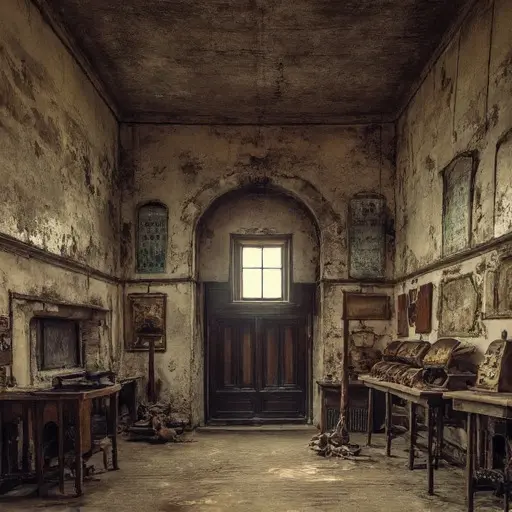
The Castellan House was constructed in 1901 along a minor lagoon channel for Domenico Castellan (1866–1912), a salt customs accountant employed by maritime republic trade authorities to calculate brine taxation, shipping duties, and commodity valuation for salt cargo moving between lagoon salterns and Mediterranean port exchanges.
The villa functioned as both residence and customs station, where Castellan and his assistants recorded salt purity levels, verified cargo weights, and maintained taxation registers used to regulate maritime trade tariffs across shallow-water shipping routes. His household included his wife Lucia and his assistant Marco Bellini, both responsible for maintaining customs ledgers and port clearance documentation.
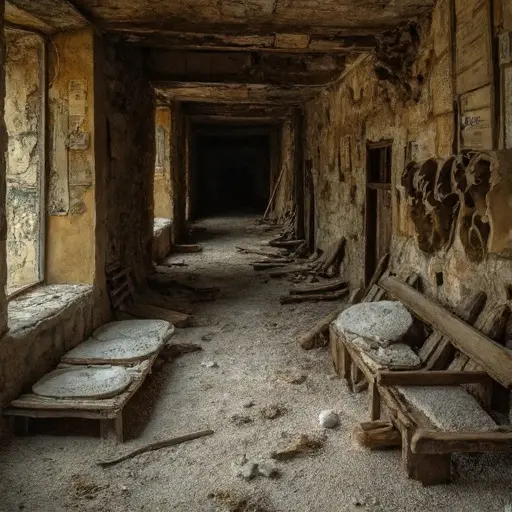
The turning point came in 1909 when large-scale industrial salt production and rail-connected inland distribution systems reduced the importance of lagoon-based salt taxation, shifting trade oversight to centralized inland fiscal offices.
At the same time, maritime republic reforms unified customs administration under port-wide authorities, eliminating independent lagoon customs houses like Castellan’s from official taxation structures.
Cargo declarations stopped arriving. Salt shipments were rerouted. The villa’s fiscal authority quietly dissolved.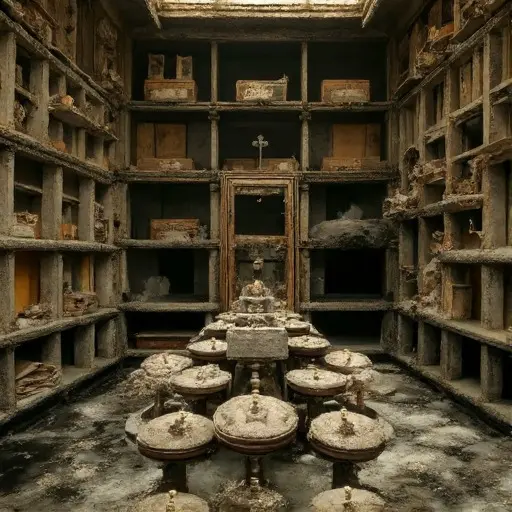
By 1912, Domenico Castellan was formally removed from maritime customs service following the dissolution of lagoon-based taxation offices and the consolidation of salt trade regulation under centralized inland finance authorities.
Inside the final customs ledger, inspectors found an incomplete brine valuation entry for a cargo that had already been reassigned to inland industrial processing before verification could be completed.
The Castellan House remains abandoned in the Venetian lagoon, its records eroded, its systems obsolete, and its rooms slowly dissolving into salt, water, and silence.