The Ruined Ashford House
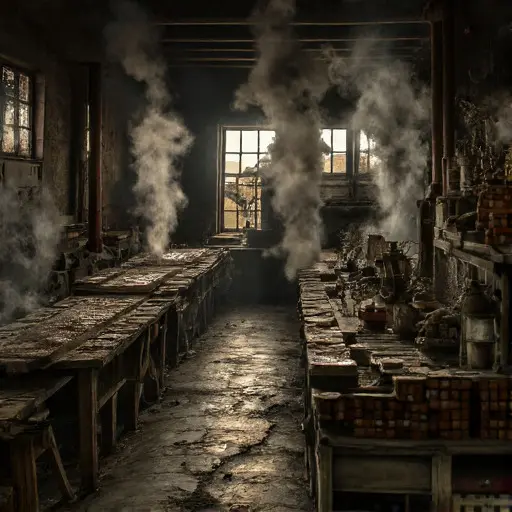
The Ashford House was constructed in 1900 on the edge of a geothermal basin in northern New Zealand for Edmund Ashford (1866–1912), a sulfur extraction chemist employed by colonial mineral enterprises to refine volcanic sulfur deposits, measure gas purity, and certify chemical output used in industrial explosives, fertilizer production, and early pharmaceutical manufacturing.
The villa functioned as both residence and chemical processing station, where Ashford and his assistants distilled geothermal gases, recorded sulfur yield ratios, and maintained export certification ledgers used to regulate mineral shipment quality across coastal industrial ports. His household included his wife Eleanor and his assistant Wiremu Kauri, both responsible for maintaining extraction logs and chemical assay documentation.
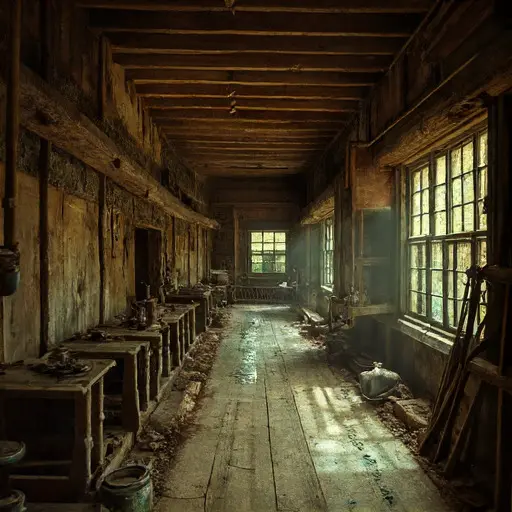
The decline began in 1909 when large-scale synthetic chemical production reduced dependence on naturally extracted volcanic sulfur, as industrial laboratories began manufacturing sulfur compounds more cheaply and consistently.
At the same time, seismic instability increased across the geothermal basin, causing repeated eruptions and gas surges that made sustained extraction operations too dangerous to maintain.
Extraction permits were revoked. Processing lines shut down. The villa’s chemical authority quietly dissolved.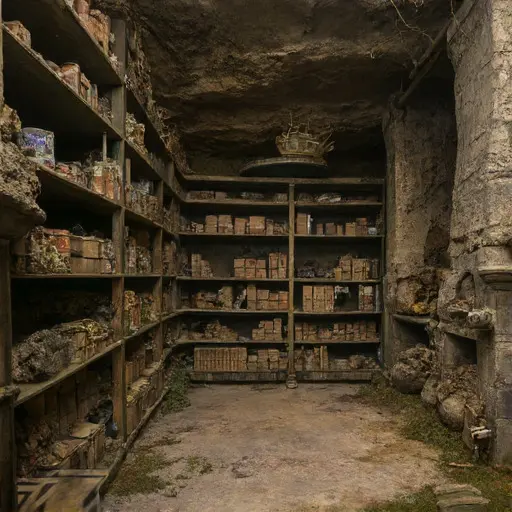
By 1912, Edmund Ashford was formally removed from colonial mineral service following the closure of independent geothermal extraction houses and the consolidation of chemical production under industrial laboratories in coastal cities.
Inside the final assay ledger, inspectors found an incomplete sulfur purity record for a batch that was never processed after the geothermal field was declared unstable and permanently restricted.
The Ashford House remains abandoned above the steaming valley, its chemicals unrefined, its systems obsolete, and its rooms slowly fading into steam, corrosion, and silence.