The Rose Stone Manor Beyond the Forgotten Lane
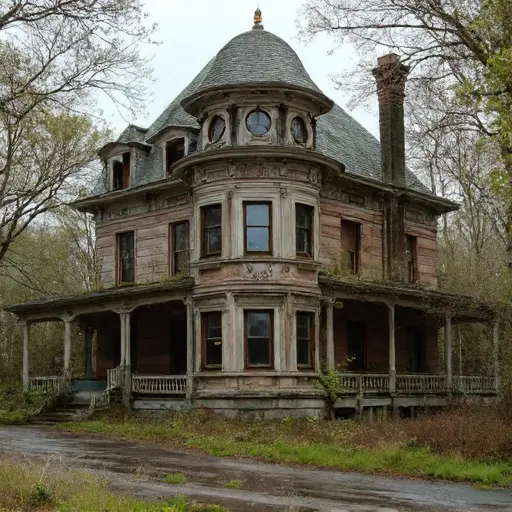
Beyond a forgotten wooded lane, a Second Empire Victorian three-story family house stands quietly beneath a canopy of mature oak trees. Built from dusty rose sandstone with ivory limestone trim, the residence carries a refined elegance that has slowly softened through decades of weather and abandonment.
The broad façade is shaped by gentle curves rather than strict lines.
A rounded corner tower rises above the main structure, creating a distinctive silhouette beneath the heavy mansard roof. Dark slate tiles cover the roof in layered sections, with subtle dips and uneven areas showing the gradual settling of the building over time.
Curved dormer windows sit within the mansard roof, their ornate frames surrounded by carved wooden brackets that decorate the softened eaves. The exterior walls have developed gentle bows, giving the house a natural irregularity that reveals its age while preserving its original grandeur.

The porch wraps around the uneven corner of the house, following the curved shape of the tower and creating a graceful outdoor space now reclaimed by time. Beneath peeling paint, a faded rocking chair remains positioned as though someone might return to sit there, surrounded by the quiet sounds of the surrounding woods.
The grounds have become a peaceful mixture of nature and forgotten landscaping. Wild grasses move through the gardens, moss spreads across old stone borders, and overgrown plants cover the paths that once connected the house to the surrounding neighborhood.
Near the tree line, a rusted swing set stands among tall weeds, its faded metal frame surrounded by years of unchecked growth. The forgotten play structure contrasts with the mansion’s formal architecture, leaving a subtle reminder of the family life that once filled the property.
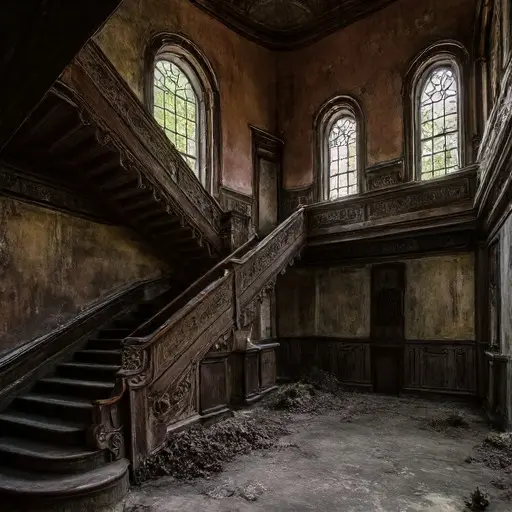
The interior remains completely silent, with empty rooms holding onto traces of craftsmanship and history. The sandstone walls, weathered roof, and surrounding woodland create a portrait of a Victorian residence that has not disappeared, but instead has become part of the landscape it has watched for generations.