The Rivermoss Greenhouse Manor Left Vacant After Railway Decline
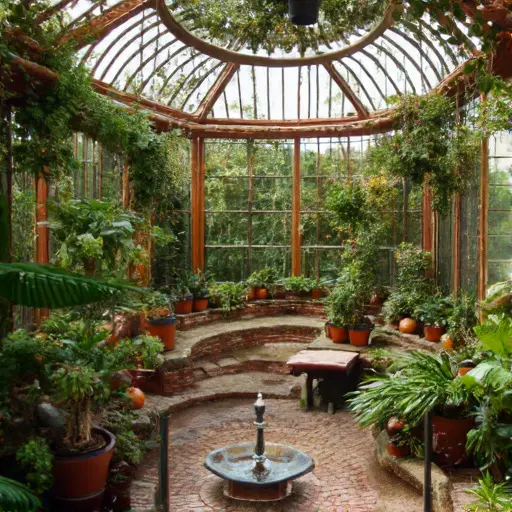
The Rivermoss Greenhouse Manor was established in 1903 on a quiet riverbank where an abandoned railway expansion project had left behind a massive stone bridge support. Rather than removing the structure, local engineer Frederick Ashcombe incorporated the railway pier into the foundation of a compact circular residence centered around an iron-and-glass greenhouse dome.
The house became home to the Ashcombe family—Frederick, his wife Eleanor, and their two daughters, Margaret and Alice.
The greenhouse served both as a private conservatory and a small commercial source of exotic plants sold to nearby estates and village gardeners.
Positioned between the river and the abandoned railway approach, the manor represented a blend of industry and domestic life. The old railway stonework provided stability and shelter, while the greenhouse allowed year-round cultivation despite the region’s unpredictable weather.
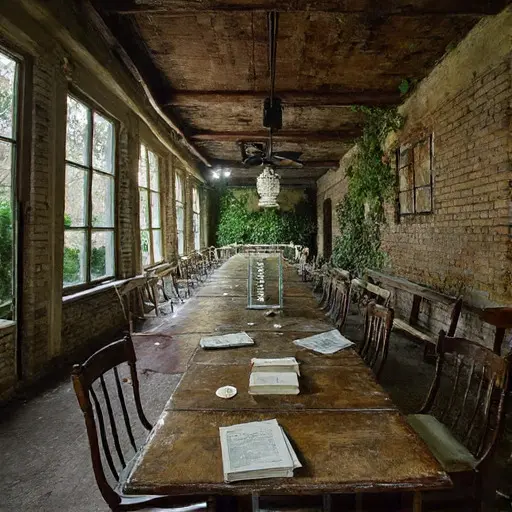
For nearly two decades, the property remained prosperous. The dome glowed with cultivated vegetation, and the surrounding brick rooms housed ledgers, seed inventories, and gardening equipment associated with the family business.
EARLY SIGNS OF FINANCIAL STRAIN
The first serious difficulties appeared after 1928. Regional railway operations that once supported nearby commerce were gradually reduced, causing economic decline throughout the river corridor. Customers for the Ashcombe nursery business became fewer each year as surrounding estates cut spending and agricultural priorities shifted.
Frederick attempted to compensate by expanding plant production, but transportation costs increased while sales continued to fall. Maintenance of the greenhouse became increasingly expensive. Cracked glass panels went unrepaired, iron supports received only minimal treatment against corrosion, and sections of the surrounding brickwork began showing signs of moisture intrusion.
Financial records discovered later revealed a growing stack of unpaid invoices. Tax obligations attached to the former railway property created additional strain. Several rooms in the manor were closed to reduce heating expenses during winter months.
By 1935, Margaret had moved to the city for employment, and Alice soon followed. The family workforce that once maintained the greenhouse was reduced to Frederick and Eleanor alone.
FINAL ABANDONMENT BESIDE THE RIVER
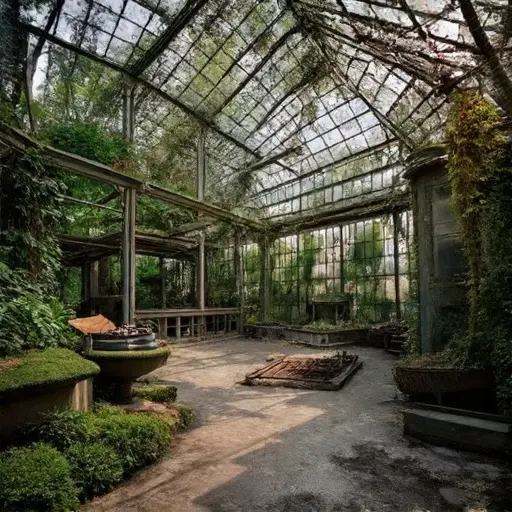
Frederick Ashcombe died in 1941 after a prolonged illness. Without sufficient income or family support, Eleanor struggled to maintain the increasingly fragile property. The greenhouse, once the economic heart of the household, became impossible to manage as vegetation outgrew its intended boundaries and structural repairs accumulated.
After Eleanor relocated to live with relatives in 1944, the manor stood empty. Legal ownership passed through several unresolved inheritance proceedings, but no heir possessed either the resources or interest required to restore the unusual structure.
The greenhouse continued to deteriorate slowly. River moisture encouraged moss growth along brick foundations, while vines spread through broken glazing and around rusting iron ribs. The old railway pier remained solid, but the residence attached to it steadily surrendered to neglect.
By the end of the 1940s, the Rivermoss Greenhouse Manor was formally recorded as vacant. No restoration was undertaken, no new occupants arrived, and no successful ownership claim resulted in rehabilitation. The house remains abandoned beside the river, its greenhouse overgrown, its rooms silent, and its future unresolved as weather, vegetation, and time continue their gradual work.